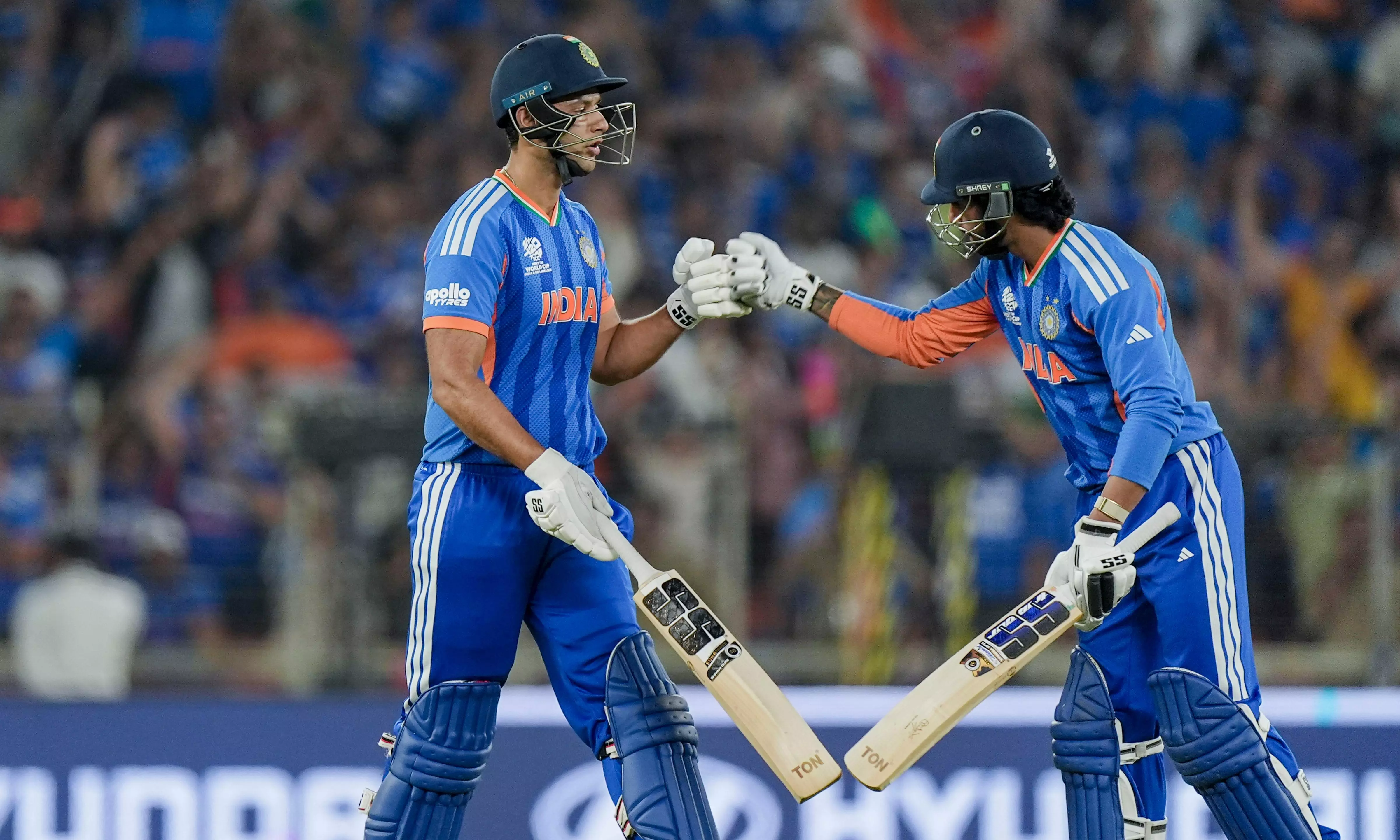
The India national cricket team secured its third T20 World Cup title on March 8, 2026, defeating New Zealand by 96 runs at the Narendra Modi Stadium. The final score rested on a significant mathematical imbalance: India produced 255 runs for the loss of 5 wickets, while New Zealand collapsed for 159 in 19 overs. This result marks the first instance of a team retaining the trophy in consecutive cycles, consolidating a specific brand of high-volume scoring favored by the current leadership under Suryakumar Yadav and coach Gautam Gambhir.

"India demonstrated a level of domination rarely seen in T20 cricket, outperforming New Zealand in all areas." — SportsMint Media framing of the lopsided total.
Technical Breakdown of the Disparity
The match was defined by India's initial 20-over block, where the batting order utilized a ' Mixed-soil track ' to isolate the New Zealand bowlers. Sanju Samson scored 89 runs, providing the bulk of the 255-run total, while James Neesham took 3 wickets for 46 runs in a losing defensive effort.
Read More: 2026 March Madness Round 2: Where to Watch Games on CBS, TBS, truTV, and Streaming

Early Volatility: A dropped catch in the first over allowed a New Zealand opener a brief reprieve, though it failed to alter the trajectory of the chase.
The Collapse: New Zealand’s response was fragmented. Tim Seifert (52) and Mitchell Santner (43) provided the only sustained resistance.
The Extraction: Jasprit Bumrah removed four batters for 15 runs, effectively ending the contest before the final over.
Statistical Comparison
| Metric | India (IND) | New Zealand (NZ) |
|---|---|---|
| Final Score | 255/5 (20 overs) | 159/10 (19 overs) |
| Top Scorer | Sanju Samson (89) | Tim Seifert (52) |
| Best Bowler | Jasprit Bumrah (4/15) | James Neesham (3/46) |
| Outcome | Won by 96 runs | Defeated |
Structural Advantage and Market Logistics
The event functioned as a massive logistics exercise in Ahmedabad, with the match broadcast globally via ' JioHotstar '. The win reinforces a predictable pattern of home-soil advantage, where the ' Narendra Modi Stadium ' acts as a centerpiece for local sports-industrial output.

Abhishek Sharma and Ishan Kishan opened the innings, setting a pace that New Zealand’s seamers, including Matt Henry and Lockie Ferguson, could not dampen.
Hardik Pandya and Axar Patel maintained the scoring rate in the middle period, exploiting the lack of ' Consistent partnerships ' from the opposition.
Background: The Consolidation of T20 Power
This victory is the third title for the India national team (2007, 2024, 2026). The transition from the previous veteran-heavy rosters to the current squad under Suryakumar Yadav suggests a shift toward a more aggressive, high-risk scoring model. New Zealand, led by Mitchell Santner, continues a decade-long trend of reaching late-stage tournament play without securing the final trophy.

The ' ICC Chairman Jay Shah ' presented the trophy in a ceremony that emphasized the institutional permanence of Indian cricket within the global T20 landscape. The spectacle in Ahmedabad serves as a reminder that the sport's financial and competitive centers have fully merged.
Read More: Gary Kirsten Says Pakistan Cricket Board Interference Made Coaching Hard