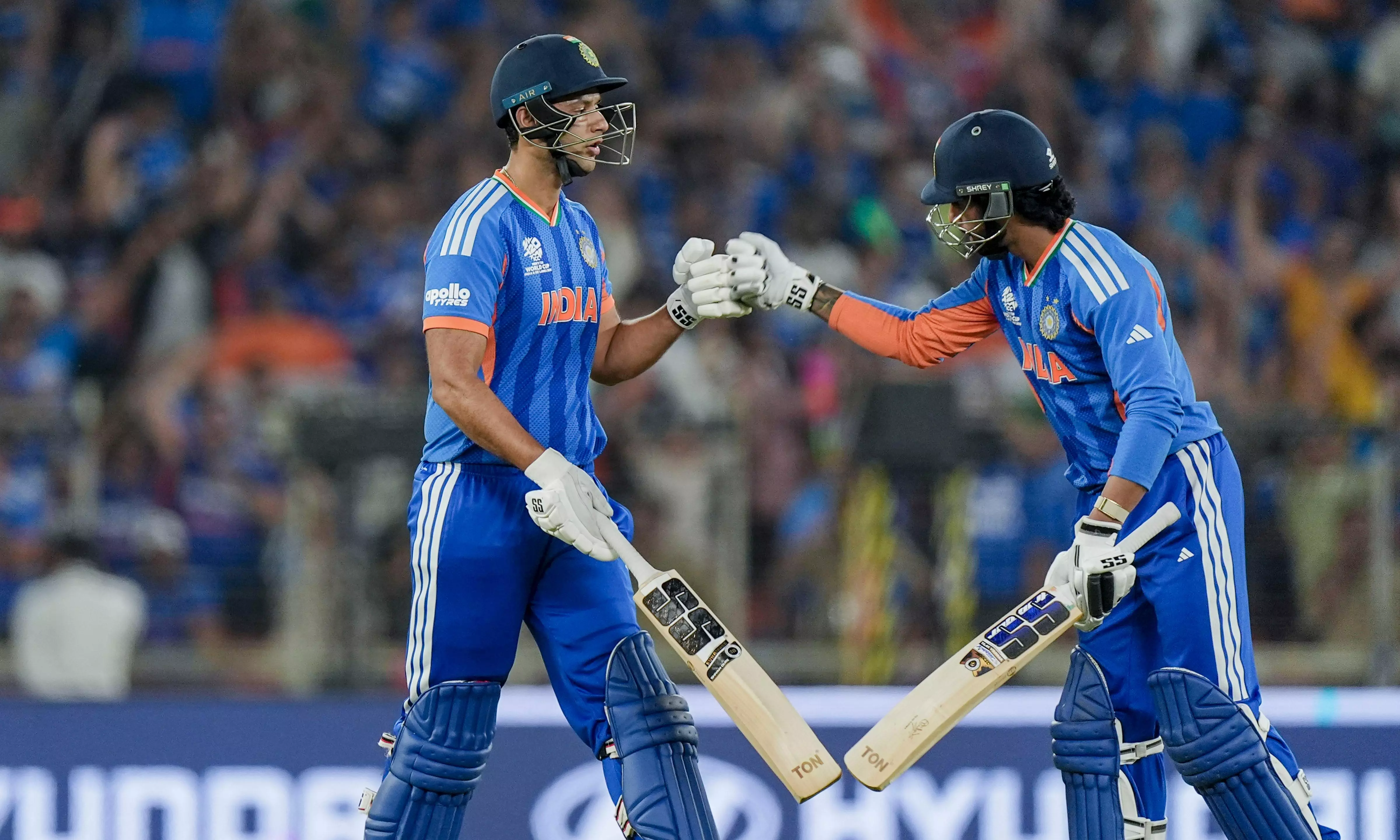
A record-breaking performance saw India defeat New Zealand by 96 runs in the T20 World Cup final, clinching their third title and becoming the first team to win on home soil. The dominant victory was cemented by a monumental score of 255/5, the highest ever posted in a T20 World Cup final.
The sheer offensive display, marked by 37 boundaries including 18 sixes, overwhelmed New Zealand, who were left chasing a seemingly insurmountable target. This offensive deluge not only shattered existing records but also ignited fervent celebrations across India, with fans pouring into the streets to mark the historic win.==

BATTING CARNAGE LEADS TO RECORD TOTAL
India's innings was a spectacle of aggressive batting, with key contributions from Sanju Samson, Abhishek Sharma, and Ishan Kishan. Samson was instrumental, crafting a blistering 89 runs off 46 balls, a knock described as a "batting masterclass" that kept the pressure on the opposition. Sharma provided a whirlwind start, while Kishan added a crucial 54 off 25 deliveries, maintaining a soaring run rate.

The late surge was powered by Shivam Dube, who unleashed an astonishing cameo of 26 not out off just 8 balls, a performance lauded as potentially game-changing. This explosive finish propelled India past the 250-run mark, leaving New Zealand with a daunting task. The opening partnership between Samson and Sharma also made history, being the first fifty-plus opening stand in a T20 World Cup final.
Read More: NBA Playoffs Second Round Game Times Not Yet Announced

HISTORIC ACHIEVEMENTS AND DEBATE
The victory marks significant milestones for India, solidifying their position as the most successful team in T20 World Cup history with their third title. Furthermore, they are the first nation to win the tournament as host and the first to successfully defend their crown.

However, the overwhelming nature of India's batting performance has also stirred discussion among some cricket purists. Critiques have emerged suggesting that the pitch conditions and the sheer imbalance of the contest did not provide a fair encounter between bat and ball, raising questions about the spectacle of the final.
BACKGROUND
The T20 World Cup final, held at the Narendra Modi Stadium in Ahmedabad, saw Suryakumar Yadav captain the Indian side against New Zealand. The win not only adds to India's impressive trophy cabinet but also signifies a dominant period for the team, having navigated a challenging tournament route, including a critical victory over the West Indies. The atmosphere in Ahmedabad was electric, with over 86,000 fans witnessing the historic event firsthand.
Read More: Kyle Jamieson's send-off for 15-year-old sparks cricket debate