New Research Reveals Deforming Particles Impact Spacecraft Design
Melting, Shifting Particles Challenge Engineering Norms
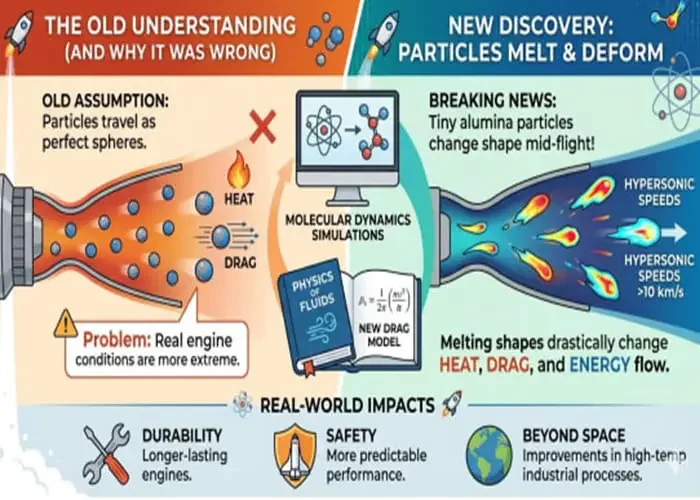
New findings concerning microscopic particles within rocket engines indicate a significant departure from established engineering models. Particles hurtling at extreme speeds, up to 10 kilometers per second, are not behaving as previously assumed. Instead of maintaining their shape, these particles undergo rapid melting and deformation mid-flight. This physical transformation directly influences the movement of heat, drag, and energy within rocket systems. The unexpected behavior of these hypersonic particles necessitates a re-evaluation of how propulsion systems are designed and materials are assessed for durability.
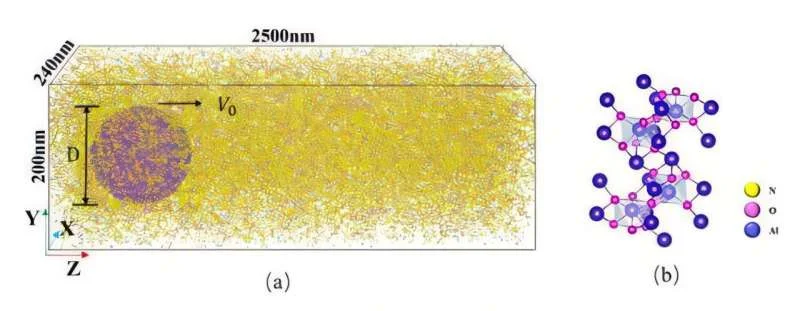
The study, published in 'Physics of Fluids', highlights a stark contrast between particles moving at different velocities. Slower particles exhibit relative stability. However, those subjected to hypersonic speeds encounter intense collisions with surrounding air molecules. This interaction generates substantial heat, causing the particles to melt and change form.
Read More: Indigenous Data Rights Now Key in Conservation Genomics
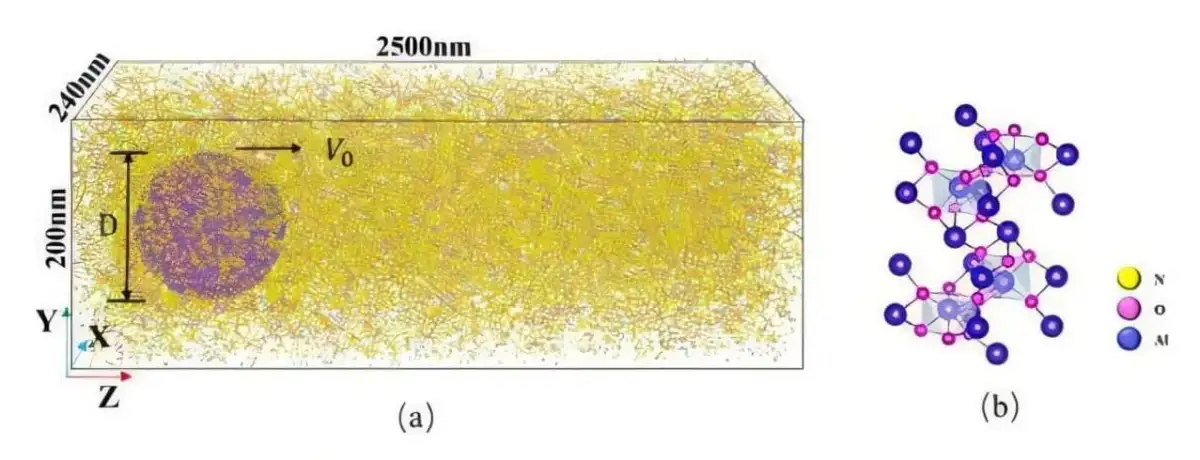
This revelation could prompt shifts in the design of future spacecraft and defense propulsion technologies. The research has already led to the development of an enhanced 'drag model' intended to provide more accurate predictions of particle behavior under these harsh conditions.
Associate Professor Qijun Zheng from Monash University's Mechanical and Aerospace Engineering department noted that this work offers fresh understanding of particle-air interactions in environments characterized by extreme heat and pressure. Such insights are crucial for engineers aiming to create more dependable propulsion systems and improve predictions of material wear inside rocket engines.
The implications extend to enhancing the longevity, safety, and overall performance of space and defense applications.