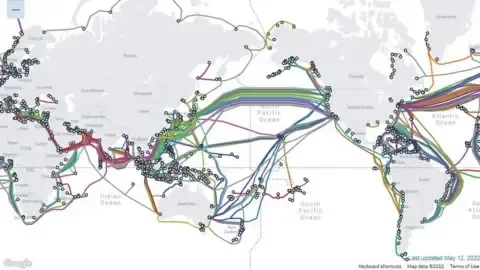
The vast majority of the Earth's surface is covered by oceans, yet the seafloor remains largely unmonitored. Currently, there are very few permanent sensors placed in deep-water zones to detect earthquakes or tsunamis because installing them is extremely expensive. However, a global network of over 1.5 million kilometers of telecommunication cables already rests on the ocean floor. Researchers are now testing ways to turn these cables into a massive scientific tool. By using existing fiber-optic technology, scientists hope to detect physical movements and temperature changes under the sea. This transition aims to provide faster warnings for coastal communities while reducing the high costs associated with traditional ocean monitoring.
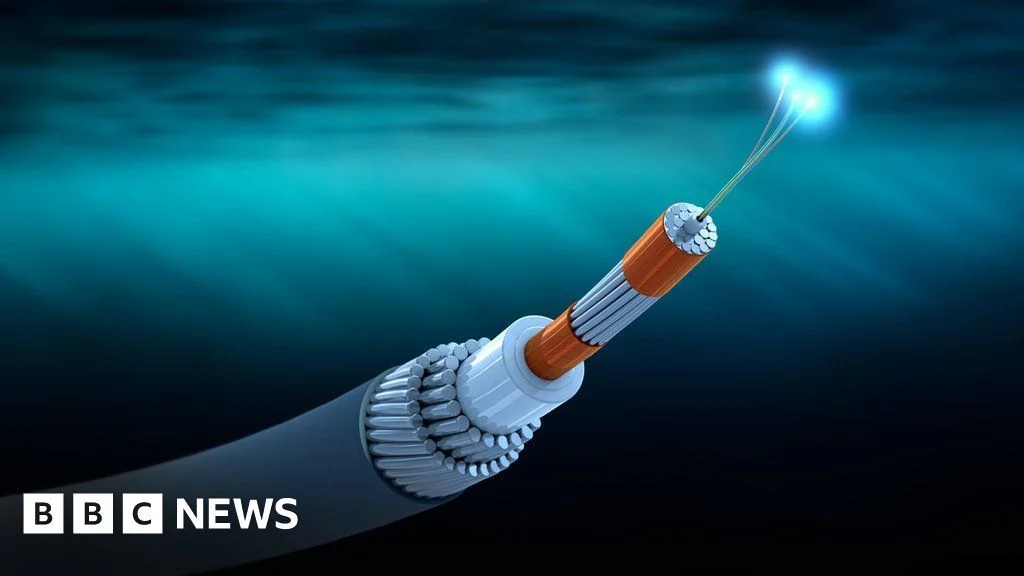
Current Developments and Projects
The effort to repurpose undersea cables involves several international groups and various technical methods. The timeline of testing has moved from theoretical models to real-world applications in the Atlantic, Mediterranean, and Pacific oceans.
Read More: Indigenous Data Rights Now Key in Conservation Genomics
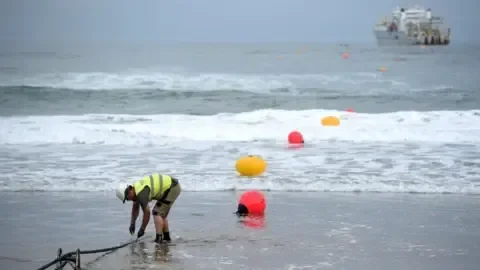
The FOCUS Project: Led by European researchers, this project tested a 6km-long "strain cable" near Catania, Sicily, and monitored fault lines in the Guadeloupe archipelago.
The SMART Cable Initiative: A joint task force is working to integrate sensors into the "repeaters" (signal boosters) of new cable systems.
The Southern Cross NEXT: This system uses a section of cable over 3,800km long between New Zealand and Australia to test light-based sensing.
SMART TAMTAM: A recently signed contract for a cable connecting Vanuatu and New Caledonia that will include 50 specialized repeaters for environmental monitoring.
"The sensors are there, ready… Scientists eager for the data wouldn’t need their own dedicated fiber—only a laser that piggybacks on the commercial cable." — Hjörleifsdóttir, Researcher (Source: Science.org)
Technical Evidence and Data
| Method | How it Works | Primary Use |
|---|---|---|
| DAS (Distributed Acoustic Sensing) | Measures how light scatters inside the fiber due to vibrations. | Immediate earthquake and tsunami alerts. |
| SMART Repeaters | Adds sensors for pressure and temperature directly into cable hardware. | Long-term climate and sea-level monitoring. |
| Interferometry | Detects tiny changes in the phase of light over long distances. | Detecting seismic waves across entire oceans. |
| Voltage Monitoring | Measures electrical spikes caused by water moving through Earth's magnetic field. | Tsunami detection for lower-budget systems. |
The core goal is to use "dark fiber" (unused capacity) or "piggyback" laser signals on active cables to turn the entire 1.5 million km network into a giant sensor.
Technology: Dedicated Fibers vs. Existing Lines
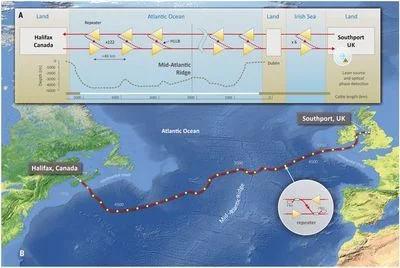
There are two main ways to use these cables. The FOCUS project used a specially designed cable with "tightly buffered" fibers that are more sensitive to physical strain. This cable is only 9 millimeters thick but can detect tiny movements in the seafloor. In contrast, other teams, such as the UK’s National Physical Laboratory (NPL), have tested techniques on standard commercial cables connecting the UK and Canada. These tests showed that even existing internet cables could detect earthquakes without needing special modifications to the fiber itself.
The Conflict: Industry Security vs. Scientific Access
A primary hurdle for this global network is the relationship between private companies and scientists.
Telecom Perspective: Companies are often hesitant to share the exact locations of their cables due to security concerns and the risk of intentional damage. There is also a concern that scientific hardware could interfere with internet traffic.
Scientific Perspective: Researchers argue that the data is vital for public safety. They suggest using lasers at different frequencies than internet data to ensure there is no interference.
Geographic Reach: From Europe to the Pacific
The implementation of these systems varies by region. In the Mediterranean, the focus is on mapping tectonic faults near Sicily. In the Pacific, the SMART TAMTAM project is one of the first to build a system with 50 specialized repeaters from the start. This suggests a shift from "fixing" old cables to "building" new ones with sensors already inside. In Portugal, projects are underway to ensure the "Atlantic gateway" of cables provides early warnings for the coast.
Read More: Nations Championship rugby starts 7 April 2026 with new point system
Expert Analysis
Dr. Bruce Howe, a lead figure in the SMART cable task force, suggests that the infrastructure is a "leveraging" opportunity. Since the telecom industry is already laying the cables, the cost of adding sensors is much lower than starting from scratch.
Investigators note that while the technology for DAS and Interferometry is proven in short-distance trials, scaling it to cover the entire global network requires international cooperation. The funding provided to groups like Subsea Data Systems ($300k from the University of Hawaiʻi) indicates that there is financial support for turning these scientific ideas into commercial products.
Read More: New Room Temperature Photon Source for Quantum Tech in Korea
Investigative Findings
The evidence suggests that converting undersea cables into a warning system is technically possible and currently being done on a small scale.
Effectiveness: Tests in the Mediterranean and the Tasman Sea have confirmed that fiber-optic cables can detect seismic events and temperature shifts.
Cost-Efficiency: Using existing cables is significantly cheaper than the current system of specialized buoys and seafloor stations, which are few and far between.
Unresolved Issues: It is not yet clear how many private telecom companies will allow scientists to access their "dark fiber." Furthermore, while the sensors can detect an earthquake, the speed of the "early warning" depends on the software and communication links on land.
Next Steps: The focus is shifting toward the SMART TAMTAM project in the Pacific as a model for future cable installations. If successful, this could set a standard where all new internet cables are required to have environmental sensors.
Sources Used
The Conversation: How undersea internet cables can double up as an earthquake and tsunami warning system (Context on Mediterranean and Guadeloupe studies).
Phys.org: Turning undersea cables into a global monitoring system (Technical details on 9mm cables and fiber types).
Science.org: Seafloor telecom cable transformed into giant earthquake detector (Insights on industry security and laser use).
University of Hawaiʻi News: Seafloor cable network gets $300K (Details on funding for commercializing SMART sensors).
BBC News: Subsea internet cables could help detect earthquakes (Details on the UK-Canada link test).
IMarEST: Ocean fibre-optic cables to predict tsunamis (Details on SMART TAMTAM and Southern Cross NEXT).