)
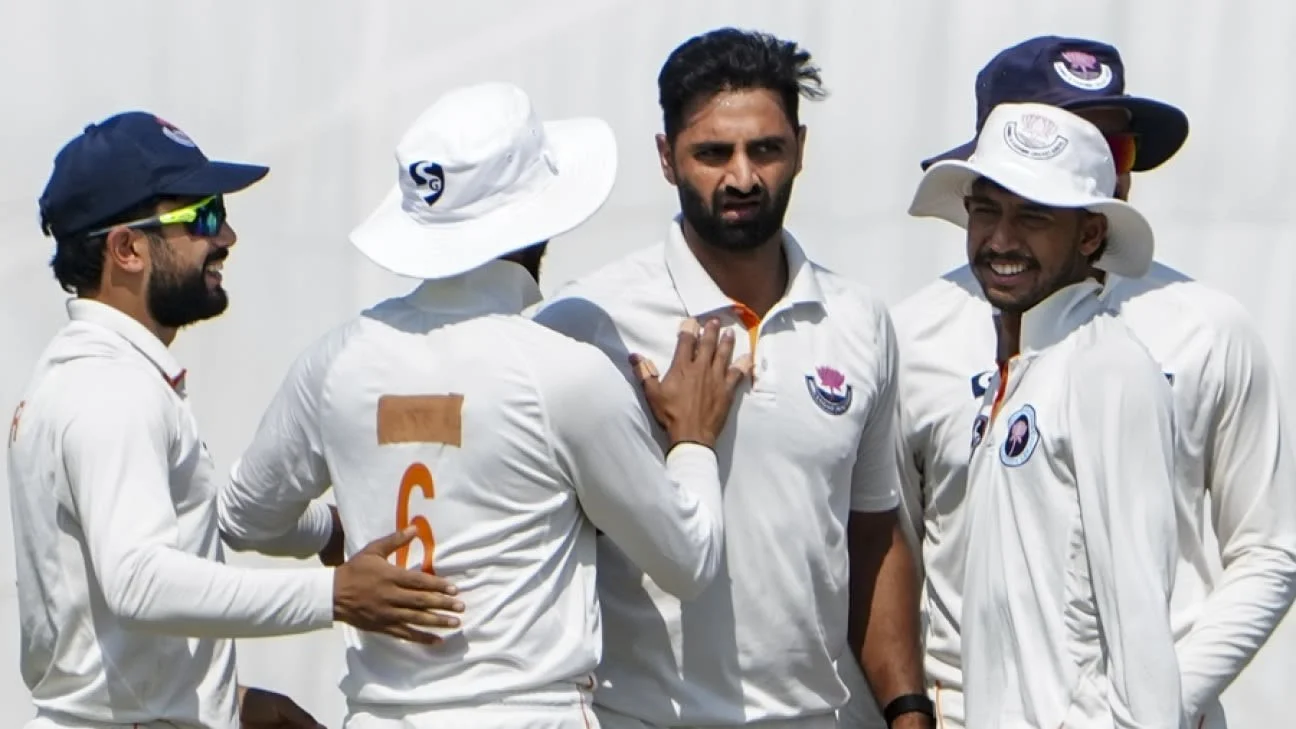
On Wednesday, February 18, 2026, the Jammu and Kashmir (J&K) cricket team achieved a result that has eluded them since they first joined the Ranji Trophy in 1959. By defeating a strong Bengal side by six wickets in the semi-final held in Kalyani, J&K secured their place in the final of India's premier domestic cricket tournament for the first time. The victory came after a match of shifting momentum, where J&K overcame a small first-innings deficit to bowl Bengal out for a low score in their second attempt. This win marks the end of a 67-year wait for the region. The team now moves to the final stage of the competition, having successfully managed the pressure of facing international-level bowlers like Mohammed Shami and Akash Deep.
The Path to the Final
The semi-final match was a four-day contest that saw J&K demonstrate consistent performance under pressure. Bengal began the match well, but their second-innings performance allowed J&K to take control.
Read More: Young Batsman Vaibhav Sooryavanshi Faces Bouncer Threat in IPL 2024
First Innings: Bengal scored 328 runs, led by a century from Sudip Kumar Gharami (146). J&K responded with 302 runs, staying close thanks to Abdul Samad (82) and Paras Dogra (58).
The Shift: Despite Bengal holding a 26-run lead, they were dismissed for only 99 runs in their second innings.
The Chase: J&K needed 126 runs to win. Despite losing early wickets to Bengal’s pace bowlers, they reached the target with six wickets remaining.
The Result: J&K won the match on the fourth day, sparking celebrations among fans and local officials.
| Team | 1st Innings | 2nd Innings | Total Wickets Lost (Match) |
|---|---|---|---|
| Bengal | 328 | 99 | 20 |
| Jammu and Kashmir | 302 | 126/4 | 14 |
J&K successfully chased a target of 126 in the fourth innings to secure their first-ever final appearance.
Evidence: Performance Metrics and Key Figures
The investigation of the match data shows that J&K’s success was built on a combination of disciplined bowling and composed batting during the final chase.

Auqib Nabi’s Impact: The pacer was the most effective bowler for J&K, taking a five-wicket haul (5/87) in the first innings and following it with 4/36 in the second.
Sunil Kumar’s Support: In the second innings, Sunil Kumar took 4/27, ensuring Bengal could not set a high target.
Bengal’s Bowling: Senior Indian pacer Mohammed Shami was the standout for Bengal, taking eight wickets in the match to keep his side competitive.
Batting Stability: Vanshaj Sharma (43 not out) and Abdul Samad (30 not out) shared an unbeaten partnership to finish the game after J&K were 43/2 at the end of Day 3.
"The team's progress over the past couple of years reflects sustained hard work, discipline and strong guidance from the coaching and support staff." — Omar Abdullah, Chief Minister of Jammu and Kashmir.
Analysis of the Match Dynamics
The Second Innings Collapse
Bengal entered their second innings with a lead, yet they were dismissed in just 25.1 overs for 99 runs. While the pitch conditions may have changed, investigators must ask if this was a result of superior bowling or a loss of focus by the Bengal top order. J&K bowlers Auqib Nabi and Sunil Kumar took advantage of the situation, but the speed at which Bengal lost ten wickets suggests a significant collapse under pressure.
Handling International Pace
J&K’s batters had to face Mohammed Shami and Akash Deep, both of whom have played for the Indian national team. Akash Deep reportedly used short-pitched bowling to trouble the J&K batters. However, the J&K middle order, specifically Abdul Samad and Vanshaj Sharma, remained calm. Their ability to score 126 runs against such an experienced bowling attack is a primary reason for the historic win.
Read More: India Lok Sabha Seats: Southern States Will Not Lose Seats Amidst Expansion Plans

The Role of Experience
While J&K is often seen as an underdog, the presence of Paras Dogra and the growth of Abdul Samad provided the team with necessary stability. In contrast, Bengal’s star-studded lineup was unable to prevent the match from slipping away on the third and fourth days. This raises the question of whether regional teams are now closing the gap with traditional domestic powerhouses through better preparation and mental strength.
Expert Analysis
Official observers and leaders have pointed to the long-term development of the J&K squad as the reason for this success. Chief Minister Omar Abdullah congratulated the team, noting that the achievement was a "collective effort" by the players and staff.
Read More: CSK IPL 2026 season struggles linked to post-auction bowling weakness

Analysts suggest that J&K’s ability to absorb pressure was the deciding factor. While Bengal relied heavily on individual performances from Sudip Kumar Gharami and Mohammed Shami, J&K saw contributions from multiple players across both innings. The performance of Auqib Nabi, who took nine wickets in the match, is being cited as one of the best individual bowling efforts in the tournament's recent history.
Conclusion
The evidence from the semi-final confirms that Jammu and Kashmir earned their place in the Ranji Trophy final through a dominant bowling performance in the second innings and a disciplined run chase. After 67 years of competing in domestic cricket, the team has overcome its "underdog" status to challenge for the title.
Read More: Decomposed Bodies Found in Hyderabad, Pune, Sagar, Mumbai, Mohali Raise Concerns
The implications of this win extend beyond the scoreboard. It validates the structural changes and coaching investments made in J&K cricket over the last few years. The next step for the team is the final, where they will attempt to win their first title. For Bengal, the result will likely lead to an internal review of why a team with several international players failed to defend a lead and collapsed for under 100 runs in a crucial match.
Sources Used
Zee News: Ranji Trophy 2025-26: J&K enter maiden final - Details on Auqib Nabi's 5-wicket haul and match turning points.
ESPNCricinfo: Nabi and Samad star as J&K book spot - Focus on the target chase and Akash Deep’s bowling.
India TV News: J&K qualify for maiden final beating Bengal - Match scores and Sudip Kumar Gharami’s 146.
Cricket Times: Fans go wild as J&K script history - Reporting on the emotional impact and the 66-67 year wait.
WION News: J&K beat Bengal to reach maiden final - Highlights of Vanshaj Sharma and Abdul Samad's partnership.
Sport Preferred: J&K Reach Ranji Trophy Final 2026 - Summary of scores and all-round performance.
New Indian Express: J&K enter Ranji final for first time in 67 years - Includes quotes from CM Omar Abdullah.
The Daily Jagran: J&K Create History, Beat West Bengal - Details on Shami's 8 wickets and Bengal's second innings 99.