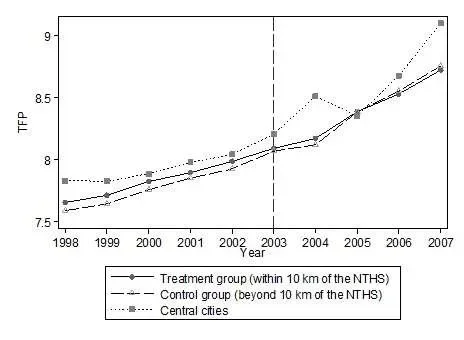
The discourse surrounding highway construction frequently centers on its capacity to fuel economic expansion, yet a closer look reveals a more intricate tapestry of impacts. While such infrastructure projects are lauded for creating immediate employment and facilitating commerce, their benefits are not universally distributed.

Highway construction is positioned as a potent economic engine, promising job creation, reduced transportation costs, and improved business efficiency. However, the actual distribution of these gains is far from uniform, with smaller, non-urban enterprises often lagging behind.

The Immediate Surge and Lingering Questions
Highway projects, characterized by substantial infrastructure investments, demonstrably inject vitality into local economies through a swift uptick in job opportunities. Studies indicate that even in challenging terrains, the economic advantages derived from adding road capacity frequently eclipse the ongoing expenses of upkeep. Governments have historically funneled significant sums into transportation infrastructure; in 2017 alone, highway spending in the U.S. amounted to approximately $177 billion, or about 0.9 percent of the Gross Domestic Product.
Read More: Top 10% Americans own 93% of stocks as of May 2026 market report

"Highway construction projects represent significant infrastructure investments that ripple through local and regional economies."
However, the broader narrative of economic uplift is complicated by nuanced findings. While connecting businesses in smaller locales to major urban centers via highway networks theoretically streamlines operations and enhances specialization, these same enterprises frequently find themselves relegated to the lower rungs of the industrial value chain. This suggests that while access is improved, the fundamental structures of economic advantage may not shift proportionally.

Costs, Challenges, and a Shifting Landscape
The economic calculus of highway spending is not straightforward. Investment in even a minor road segment can have cascading effects on traffic patterns and economic activity across an entire network. Furthermore, recent observations highlight a disconnect: despite robust spending on highways, the actual volume of construction has not kept pace. This discrepancy is partly attributed to a scarcity of construction bids, which in turn drives up prices and potentially diminishes the efficacy of infrastructure funding, a situation exacerbated by high demand for construction services coinciding with the passage of legislation like the IIJA.
"The DoT’s National Highway Construction Cost Index let’s us take a deeper look, and the picture isn’t pretty. IIJA passed at a time when the demand for construction services was greater than what contractors could supply."
Varied Impacts on Commerce
The effect of new roadways extends beyond macro-economic indicators to directly influence adjacent businesses. While transit projects are often associated with commercial gentrification, the specific ramifications of highway and transitway construction can be highly variable. Investigations reveal that smaller businesses, particularly those with a single location, tend to absorb the brunt of negative impacts, experiencing reductions in sales, employment, or the number of establishments.
"The investigations found that the specific impacts vary widely, depending on many factors—but small business sales take the biggest hit."
The Financial Architecture of Development
The development of highways is increasingly guided by sophisticated financial models. These tools are employed to quantify inherent uncertainties and assess their influence on project performance, offering investors a clearer view of potential returns and associated risks. The structure of these financial arrangements, including how cash flows are managed, dictates who shoulders risk and when payments are made. The trend towards more data-driven and transparent financial models is expected to refine project selection, pricing, and risk allocation, ultimately aiming to create more resilient infrastructure.
Read More: Hong Kong Economy Grows Most in 5 Years Due to Tourists
Broader Economic Connections
A well-maintained highway network is understood to be crucial for maintaining a nation's competitive standing on the global stage. Research suggests considerable economic benefits accrue to industries from key features of such networks, particularly in enhancing productivity. The interconnectedness of highway systems and other public capital, when developed concurrently, may even lead to an underestimation of highway infrastructure's impact on productivity. In countries like India, road networks are fundamental to economic progress, with the government actively pursuing projects to enhance them, supported by a growing private sector, given the significant share of passenger and freight traffic reliant on these routes.
Keywords: Economic Growth, Infrastructure Investment, Employment Opportunities, Transportation Costs, Business Efficiency, Value Chain, Construction Costs, Small Business Impacts, Financial Models, Industrial Productivity