Decoding the Frame Rate Frenzy
Recent advancements signify a shift in the landscape of AI-driven video synthesis, pushing the boundaries of what's achievable on a solitary processing unit. What once demanded considerable time and computational heft for even brief visual sequences, is now rendered with startling rapidity.

Helios, an open model, achieves 19.5 frames per second (FPS) on a single H100 GPU. This breakthrough represents a notable moment, marking the first instance of an open model attaining real-time performance in video generation. Prior to this, producing even short clips often meant protracted rendering times, measured in hours for mere seconds of footage.

Other systems, such as LTX-Video, have also demonstrated significant gains. As of January 2025, LTX-Video was reported to achieve 40 FPS on a single GPU, producing high-quality clips through latent diffusion. This system combined video VAE with temporal modeling to create short, high-resolution videos from text prompts.
Read More: AI Demand Cuts GPU Supply for Gamers in New York

The Persistent Need for Scale
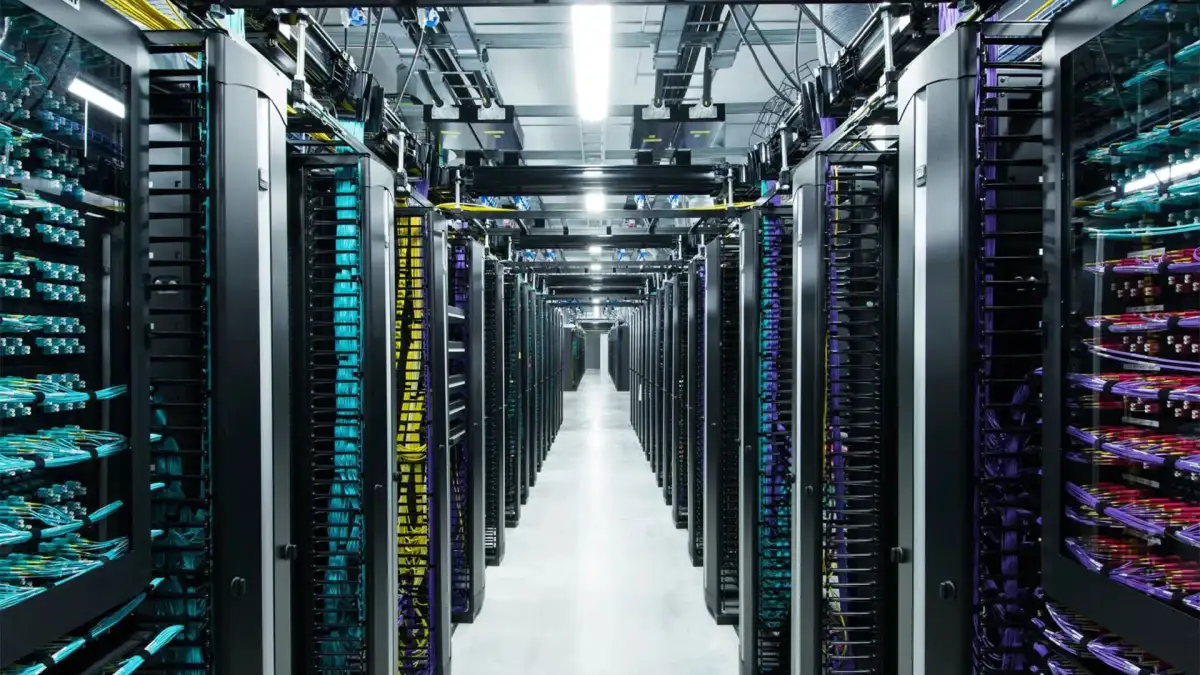
Despite these individual unit triumphs, the demand for massive computational power for complex AI and rendering tasks remains. The idea of simply linking multiple GPUs into a single machine doesn't capture the intricacy involved.

GPU clusters, while offering superior cost-per-performance in many scenarios despite their higher initial outlay, introduce their own set of hurdles. These include the complex management of multiple memory hierarchies – spanning GPU, system, and distributed node memory – and the challenge of orchestrating heterogeneous computing environments where different GPU types and architectures coexist.
Decentralization as a Scaling Vector
In this context, decentralized computing networks are emerging as a crucial component for scaling AI and rendering. Platforms like the Render Network connect independent GPU providers with those needing substantial compute power, operating outside traditional centralized cloud structures.
This model utilizes blockchain-based coordination for scheduling and billing, rather than relying on a singular administrative entity. While not positioning itself as a direct replacement for established cloud services, such networks offer an alternative pathway for accessing vast, distributed GPU resources, particularly for demanding AI workloads through initiatives like Dispersed. This allows for dynamic allocation of GPU memory across the network based on workload needs, maximizing overall utilization.