Pentagon Defends "Strike-First" Doctrine Amidst Evolving Conflict
Washington D.C. - Defense Secretary Pete Hegseth has emerged as a leading voice in articulating the Trump administration's offensive posture against Iran, a stance that sharpens the administration's "strike-first" doctrine. Hegseth, speaking at a press conference on March 2, 2026, directly addressed concerns that the escalating conflict could devolve into an "endless war," a sentiment he previously voiced regarding other military engagements.
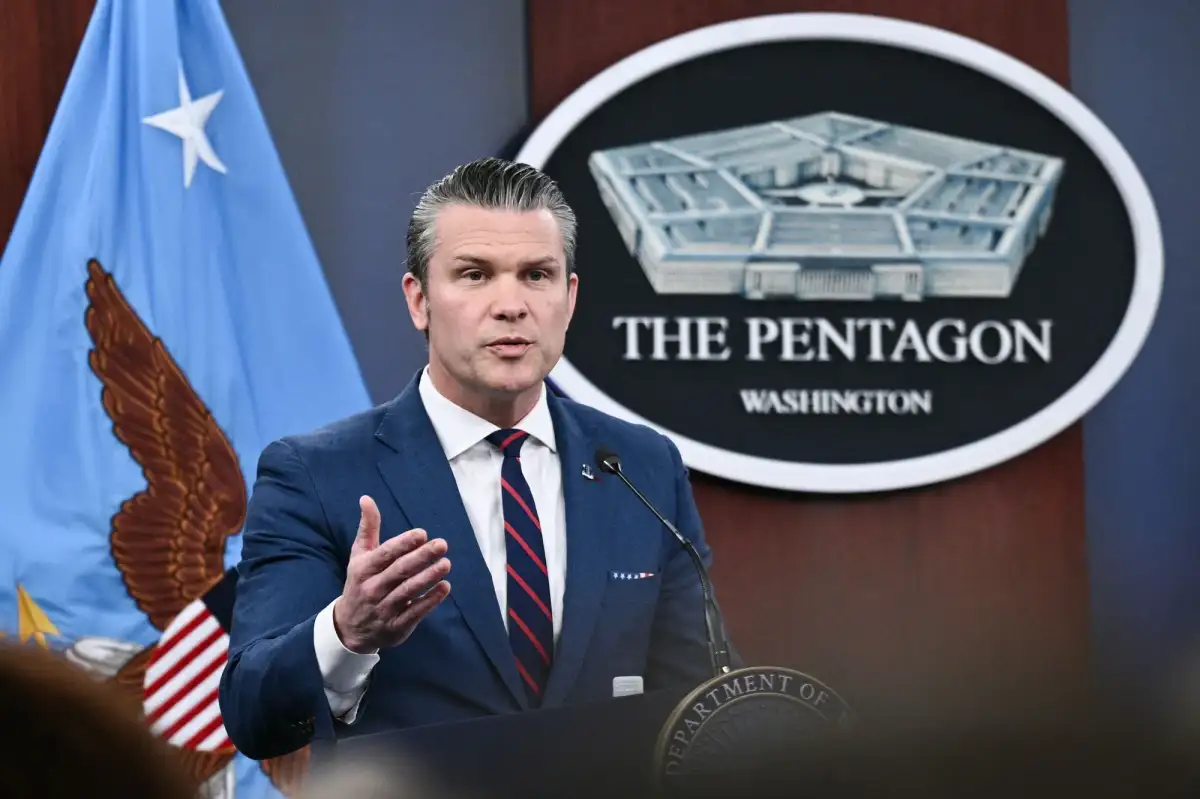
The core message from Hegseth's pronouncements is a definitive rejection of the "endless war" paradigm, emphasizing a "fight to win" objective. He declared, "This is not endless… We fight to win." This declaration frames the current operations not as prolonged occupations or nation-building exercises, but as decisive actions aimed at specific, achievable outcomes. Hegseth specifically decried what he termed 'politically correct' warfare, suggesting a more aggressive, unvarnished approach to military objectives in Iran.
Read More: Rubio Invites Modi to US: India Key to Indo-Pacific Plan

Objectives and Casualties: A Stark Forecast
While the stated primary objective of the ongoing U.S. military actions is to "eliminate Iran’s ability to build a nuclear weapon," the conflict has already resulted in the death of Iran's Supreme Leader, Ayatollah Ali Khamenei. This significant development, occurring amidst the U.S. strikes, was acknowledged alongside predictions of further U.S. casualties. Air Force Gen. Caine and Secretary Hegseth both indicated expectations of additional American losses, a point also echoed by President Trump, who stated that he wasn't ruling out U.S. forces being deployed on the ground if "necessary."

Shifting Narratives and Lingering Questions
Hegseth's Rebuttal to Critics
During his press conference, Hegseth did not shy away from criticizing perceived adversaries of the administration's policy. He specifically targeted "fake news" media outlets and the "political left," accusing them of perpetuating the idea of an "endless war." His rhetoric also extended to encouraging Iranians to pursue regime change, suggesting a belief that the conflict could create an opening for such an outcome.
Read More: Gulf Oil Exports Rise in June but Still Below Pre-War Levels

A "Dangerous" Approach?
However, Hegseth's pronouncements have not been universally accepted. Some observers have characterized his public demeanor as "brash and bellicose," more akin to a "cartoon bully than a sombre statesman." His self-professed alignment with a "white Christian nationalist" ideology, coupled with the "arsenal of the United States government at his disposal," has raised concerns among critics who view him as a potentially volatile figure given the authority he wields. This perspective suggests that his rise within the administration might be intrinsically linked to Trump's specific worldview and operational mandate.
Background: A Contradictory Past?
The current engagement in Iran marks a notable shift for Pete Hegseth, who had previously expressed reservations about prolonged military entanglements. His current role as a vocal proponent of a swift, decisive military action in Iran, however, appears to align with a broader strategic reorientation under President Trump. This pivot away from the cautious approaches of previous administrations, characterized by a willingness to engage preemptively, marks a significant departure in U.S. foreign policy. The administration maintains that intelligence did not indicate an imminent preemptive strike by Iran against the U.S., a detail that has surfaced in briefings to congressional staffers. This context fuels ongoing debate about the rationale and scope of the ongoing military operations.