The tech world is buzzing. Once dismissed as a laggard, Google, under its parent company Alphabet, has seemingly staged a dramatic comeback, reportedly surpassing OpenAI in the AI capability race. This seismic shift, if true, represents a monumental pivot, turning the narrative from a tech titan struggling to keep pace with nimble rivals to a dominant force once again. But how did this happen, and what does it truly mean for the future of artificial intelligence and the tech landscape?
For years, the conversation around AI dominance has been a relentless saga of OpenAI's groundbreaking releases and Microsoft's strategic backing, leaving giants like Google in the dust. Investors punished Alphabet's stock, while whispers of Microsoft's ascendancy grew louder. Yet, reports now suggest a dramatic turnaround, with Google's Gemini 3 model reportedly pushing it ahead in capability indexes. This abrupt reversal demands scrutiny. Did Google truly engineer a revolutionary leap, or are we witnessing a carefully crafted narrative? What hidden factors might be at play in this seemingly overnight transformation?
Read More: MIT Boron-Oxygen Molecule Acts as Builder in Chemical Reactions
The Long Road from Laggard to Leader: A Shifting AI Landscape
The narrative of Google as an AI laggard is a relatively recent one, emerging in the past few years as OpenAI, fueled by significant investment from Microsoft, captured the public imagination and Wall Street's attention with models like ChatGPT.
Early Days: Google, through its DeepMind and Google Brain research divisions, had been a pioneer in AI for years, with significant contributions like AlphaGo. However, translating these research breakthroughs into widely accessible, impactful products seemed to falter.
The ChatGPT Moment: OpenAI's 2022 launch of ChatGPT created a paradigm shift, demonstrating a level of conversational AI capability that felt truly revolutionary to the public. This, coupled with Microsoft's aggressive integration of OpenAI's technology into its products (like Bing and Microsoft 365), cemented the perception of OpenAI as the frontrunner.
Investor Skepticism: This perceived lag led to significant investor doubts about Alphabet's AI strategy. Alphabet's stock reportedly suffered, reflecting a market that believed the company was outmaneuvered and struggling to capitalize on the AI revolution. Microsoft, conversely, saw its stock benefit from its strong ties to OpenAI.
The Gemini Reveal: The recent emergence of Gemini 3 is cited as the catalyst for Google's supposed ascent. Launched in November 2025, its performance in the AI Capability Index is now reportedly placing Google ahead of OpenAI for the first time.
| Key AI Players & Perceived Status (Pre-2026) | Key Milestones/Actions | Market Perception |
|---|---|---|
| OpenAI | ChatGPT launch (2022), partnership with Microsoft | Leader, innovator, first-mover |
| Microsoft | Significant investment in OpenAI, product integration | Strategic partner, benefiting from AI wave |
| Google (Alphabet) | DeepMind research, initial Gemini models, perceived lag | Laggard, struggling to translate research to market |
This timeline paints a picture of a tech giant that, despite its deep roots in AI research, seemed to be losing the public relations and market perception battle. The question now is whether the "Gemini crossover" is a genuine technological leap or a calculated repositioning.
The "Structural Advantage": Google's Integrated Ecosystem
One of the key arguments for Google's resurgence centers on its "structural advantage," a concept suggesting that its ownership of the entire AI stack—from research to distribution—provides a more robust and sustainable lead than OpenAI's perceived "first-mover advantage."
Research Powerhouse: Google houses its AI research under DeepMind and Google Brain, fostering internal synergy and development.
Proprietary Infrastructure: The company designs and utilizes its own custom Tensor Processing Units (TPUs), optimizing hardware for its AI workloads, a crucial element for efficient large-scale AI operations.
Product Integration: Unlike standalone AI labs, Google can deeply integrate its AI advancements into its massive existing product suite, including:
Search: The world's dominant search engine.
Android: The most widely used mobile operating system globally.
Chrome: A leading web browser.
Cloud Services (Google Cloud): A growing enterprise offering.
Massive Distribution: With billions of users across its various platforms, Google possesses an unparalleled distribution network to deploy and gather feedback on its AI models.
This "full-stack ownership" implies a control and efficiency that a company like OpenAI, reliant on external partners for infrastructure and distribution, might struggle to replicate.
Read More: Anthropic Refuses China Access to Latest AI Models
Consider the potential impact of this integration:
Faster Iteration: Direct integration allows for rapid deployment, testing, and refinement of AI models based on real-world user data from billions of interactions.
Deeper Insights: Understanding user behavior across search, mobile, and web provides a richer dataset for training more sophisticated AI.
Defensible Moat: This integrated ecosystem creates a significant barrier to entry for competitors, as replicating this level of synergy across research, hardware, software, and distribution is an immense undertaking.
But is this advantage truly insurmountable? How effectively has Google leveraged these components in the past? And does the sheer scale of its ecosystem automatically translate to superior AI capabilities, or simply a wider reach for potentially less advanced models?
The Apple-Google Alliance: A New Power Concentration?
The recent Apple–Google deal, which reportedly positions Google's AI models as a default on Apple devices, has sent shockwaves through the tech industry. This strategic partnership, according to some reports, is a critical factor in Google's dramatically strengthened position, effectively endorsing its AI at a massive consumer scale.
Endorsement by Proxy: Apple's decision to feature Google's AI lends significant credibility and visibility to Alphabet's technology, particularly to developers and enterprises considering which AI platforms to adopt.
Massive Scale Deployment: Integrating with Apple's ecosystem guarantees Google's AI reaching hundreds of millions, if not billions, of new users, offering an immediate and vast platform for data collection and refinement.
Developer Gravity: When major platforms default to a specific AI stack, it often incentivizes developers to build tools and applications compatible with that stack, creating a powerful network effect.
Strategic Win for Google: For Google, which was perceived as struggling, this deal is a lifeline and a powerful statement of intent, demonstrating its ability to forge crucial partnerships in a competitive landscape.
The Apple–Google deal isn't just a partnership; it's a potential new nexus of power in the AI era.
This collaboration raises crucial questions:
Competition Concerns: Does this create an unassailable duopoly in AI, potentially stifling innovation from smaller players or even Microsoft?
User Data Privacy: What are the implications for user privacy when sensitive AI interactions are channeled through such a concentrated partnership?
Dependency: Does Apple become overly dependent on Google's AI, potentially limiting its own long-term AI development? Conversely, does Google's AI progress become beholden to Apple's strategic whims?
Microsoft's Position: How will Microsoft, a key partner to OpenAI, react to this significant consolidation of AI power favoring its rival?
The Market's Verdict: Stock Swings and Shifting Perceptions
The financial markets are often seen as a barometer of investor sentiment. In recent times, the performance of Alphabet's stock has diverged sharply from that of Microsoft, which holds a significant stake in OpenAI.
Read More: Irish Times AI Scam and Deepfake Election Threat

| Company | Recent Stock Performance (Reported) | Primary AI Association |
|---|---|---|
| Alphabet | Jumped ~36% | Development of Gemini models, integrated AI strategy |
| Microsoft | Slid >20% | Significant investment in and partnership with OpenAI |
Alphabet's Surge: Reports indicate that Alphabet's stock has seen a substantial jump of approximately 36%, with its Cloud unit revenue surging 48% in the December quarter. This growth is directly linked to the perception that Google is now leading the AI race.
Microsoft's Decline: Conversely, Microsoft's shares have reportedly slid by more than 20% over the same period. This downturn is attributed, in part, to heightened concerns about its heavy reliance on OpenAI. Investors appear to be re-evaluating the risks associated with this dependency.
Investor Re-evaluation: This divergence suggests a significant shift in Wall Street's perception. A year ago, Alphabet was seen as lagging; now, it's perceived as the leader, prompting a reassessment of its long-term growth potential.
The market's sharp reaction suggests that the perceived AI leadership shift from OpenAI to Google is not merely a technological blip but a significant economic event.
However, we must ask:
Is this sustained growth or a temporary surge? Market sentiment can be volatile.
To what extent is this driven by genuine AI superiority versus clever marketing and strategic deals like the one with Apple?
Could Microsoft's stock dip be a temporary correction, or does it signal deeper structural issues in its AI strategy?
Expert Analysis: Navigating the Nuances of AI Leadership
The claims of Google's AI supremacy warrant careful examination from industry experts who can dissect the technical merits and strategic implications beyond the headlines.
"The AI Capability Index is a useful, but not definitive, metric," notes Dr. Anya Sharma, a former AI researcher at a leading university, now a consultant in AI ethics. "It often measures benchmark performance, which is crucial, but doesn't always capture the nuances of real-world application, user experience, or the broader ecosystem effects that drive adoption."
She adds, "Google's advantage lies in its deep integration. They can push AI into Search, Maps, Android, Workspace – billions of touchpoints. OpenAI, while a pioneer, has been more of a standalone entity, relying on Microsoft for broader distribution. This pivot is significant, but the true test will be in sustained innovation and how these models actually improve daily life and work, not just how they score on a test."
Read More: Dolphin Network Uses Idle GPUs for Cheaper AI Tasks
Another perspective comes from tech analyst Ben Carter: "The Alphabet-Apple deal is a masterstroke of distribution. It guarantees Google's AI a massive audience, similar to how Apple’s integration of Siri gave it a huge head start in voice AI. However, we need to see if Gemini 3's capabilities truly outstrip GPT-4 or future iterations in terms of reasoning, creativity, and safety. The race is far from over, and Microsoft is a formidable player that won't cede ground easily."
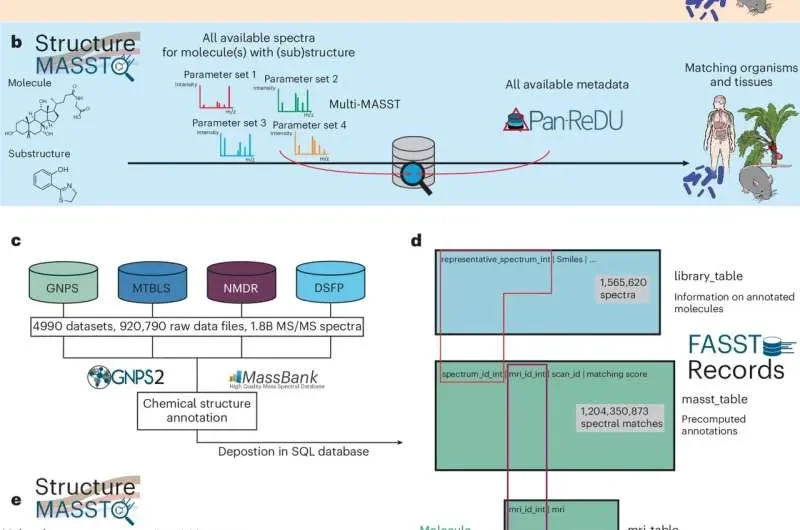
Read More: New StructureMASST tool helps find molecules in samples
The consensus among many observers is that while Google's recent moves are impressive and indicate a strong comeback, the AI landscape remains fiercely competitive and fluid.
Critical questions remain:
How will OpenAI and Microsoft respond to this perceived shift in dominance?
What are the specific technological breakthroughs that propelled Gemini 3 ahead?
Are there any undisclosed limitations or ongoing challenges with Gemini that aren't being highlighted?
Conclusion: A Fragile Crown or True Reign?
The reports suggest Google has achieved a remarkable feat: transitioning from a perceived AI laggard to a potential leader, overtaking OpenAI for the first time according to key capability indexes. This narrative is bolstered by a strong integrated ecosystem, a critical Apple-Google alliance, and a corresponding positive reaction in Alphabet's stock performance, while Microsoft's shares have seen a notable decline.
However, as critical observers, we must maintain a healthy skepticism. The AI race is a marathon, not a sprint, and the finish line is constantly shifting.
Technical Superiority: The true depth of Gemini 3's capabilities compared to OpenAI's evolving models needs ongoing, independent verification. What constitutes "leading" in AI is complex and multifaceted, extending beyond benchmark scores.
Ecosystem vs. Innovation: While Google's integrated "structural advantage" is undeniable, it remains to be seen if this automatically translates to perpetual AI superiority, or if nimble, focused AI labs can continue to innovate at a faster pace.
Strategic Alliances: The Apple deal is a powerful distribution play, but the long-term implications for competition, user privacy, and technological independence are significant and warrant careful monitoring.
Market Volatility: Stock performance is a reaction to perceived future value. Sustained market confidence will depend on Google's continued ability to innovate and monetize its AI advancements.
Google's apparent ascent is a compelling story of strategic turnaround and technological resurgence. Yet, the questions surrounding its long-term dominance, the true depth of its capabilities, and the responses of its rivals suggest that this may be a fragile crown. The AI arena is dynamic, and the coming months will reveal whether this is a lasting shift in power or merely a significant, but temporary, crossover.
Read More: Apple Intelligence Strategy: On-Device AI, Privacy, and Partnerships
The next phase of this AI contest will likely involve:
OpenAI's response: Further model releases and strategic adjustments.
Microsoft's adaptation: Exploring alternative AI partnerships or accelerating its own AI development.
Google's sustained execution: Proving that its leadership is built on solid, enduring technological advancements and strategic integration, not just on impressive benchmark numbers and high-profile deals.
Regulatory scrutiny: Increased attention on the concentration of power in AI, particularly with the Apple-Google alliance.
Sources:
FourWeekMBA: https://fourweekmba.com/the-gemini-crossover-google-leads-openai-for-first-time-in-ai-capability-index/
AI digitalnews: https://aidigitalnews.com/ai/from-ai-laggard-to-4-tn-titan-how-google-won-the-first-great-pivot-of-ai-era/
Channel News Asia: https://www.channelnewsasia.com/business/google-goes-laggard-leader-it-pulls-ahead-openai-stellar-ai-growth-5908911
Nasdaq: https://www.nasdaq.com/articles/alphabets-breakout-potential-laggard-ai-leader
Global Banking and Finance: https://www.globalbankingandfinance.com/google-goes-laggard-leader-pulls-ahead-openai-stellar-ai/
The Outpost: https://theoutpost.ai/news-story/google-emerges-from-ai-laggard-status-to-lead-the-race-against-open-ai-and-nvidia-22110/