

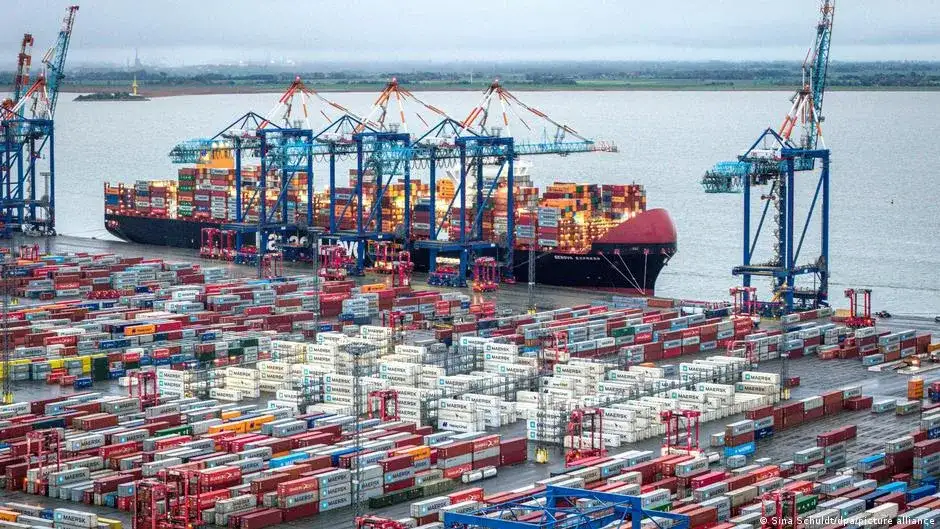
Germany's position as a global economic player is being reshaped by evolving trade patterns, with recent data indicating a dynamic shift between its two largest partners: the United States and China. For years, these nations have vied for the top spot in bilateral trade with Europe's largest economy. This report examines the evidence surrounding this evolving relationship, the factors influencing it, and the potential implications for Germany's economic strategy.
The flow of goods and services between Germany, the US, and China has become a critical indicator of global economic realignment. The period under review shows fluctuating positions, highlighting the delicate balance of international commerce. Key actors involved include German Chancellor Friedrich Merz, Germany Trade & Invest CEO Robert Hermann, and various German industries, particularly the automotive sector. The recent years have seen notable shifts, with different reports placing either the US or China at the forefront of Germany's trade.
Read More: FIFA World Cup 2026 Revenue Reaches $15 Billion With New Ticket Prices
Evidence of Trade Fluctuations
Official data and news reports from late 2025 and early 2026 paint a picture of continuous movement in Germany's trade partnerships.
February 2026: A report indicates China has overtaken the US as Germany's top trading partner, coinciding with Chancellor Friedrich Merz's planned visit to China. This suggests a recent shift, with China reclaiming the top position.
November 2025: Another report states China had reclaimed its spot as the top German trade partner from the US. This further supports the notion of a recent resurgence in China-Germany trade.
January 2025: Conversely, a press release from Business Location Germany stated that the US had overtaken China as Germany's largest trading partner. This was attributed to increased exports to the United States and challenges in China.
August 2025: An earlier report noted that China was inching closer to overtaking the US, with its lead dwindling to a "razor-thin margin." This suggests that even before late 2025, China was rapidly closing the gap.
The contrasting timelines presented in these reports raise questions about the precise period each nation held the leading trade position and the consistency of these shifts.
Factors Influencing Trade Dynamics
Several underlying factors appear to be driving these changes in Germany's trade relationships.
The Automotive Sector's Role
Germany's robust automotive industry plays a significant role in its trade with both nations.
Car manufacturers have a substantial manufacturing presence in China, making their operations and the broader German economy sensitive to trade conditions with Beijing.
Germany's approach to Chinese imports is described as "less black and white" due to the need to support its car industry, a major employer. This suggests a balancing act between economic interests and trade policy.
Broader Global Trade Realignment
The shifts are not isolated to Germany but reflect larger global trends.
Reports mention "shifting dynamics" and "broader global trade realignments," indicating that Germany's situation is part of a larger international reordering of trade flows.
The impact of tariffs introduced under the Trump administration is noted as a disruptive force that compelled countries to adjust their trade strategies.
Germany's Diversification Strategy
Germany itself is actively managing its trade relationships.
Robert Hermann, CEO of Germany Trade & Invest, highlights Germany's focus on "economic diversification and resilience."
The adoption of a "China plus X" strategy is mentioned, aimed at avoiding over-reliance on any single trading partner. This indicates a proactive effort by Germany to manage its exposure to geopolitical and economic risks associated with major trade partners.
Conflicting Perspectives on Dominance
The evidence presents a complex picture, with different reports highlighting opposing trends at similar times.
Pro-China Trade Dominance: Reports from November 2025 and February 2026 explicitly state that China has reclaimed or is currently the top trading partner. These are the most recent accounts, suggesting a current state of Chinese leadership in trade volume.
Pro-US Trade Dominance: The January 2025 report from Business Location Germany firmly places the US ahead of China. This report attributes the US's leading position to strong exports to the US and challenges within China's economy.
Ambiguous Situation: The August 2025 report suggests a very narrow margin between the two, indicating that the situation was highly fluid and either nation could have held the top spot depending on the exact period and data points.
The discrepancies raise a pertinent question: Which nation consistently held the title of Germany's largest trading partner in late 2025, or was the situation too volatile to ascertain a definitive leader?
Read More: Australia-US Trade Dispute: New Tariffs Cause Friction
Expert Insights and Analysis
The observed trade shifts are seen as indicators of deeper economic currents.
Robert Hermann of Germany Trade & Invest views these shifts as part of Germany's strategic push for "economic diversification and resilience." His comments suggest that Germany is actively shaping its trade policy to mitigate risks, implying a deliberate management of its relationship with both the US and China.
The mention of "economic challenges in China" as a factor in the US's temporary rise suggests that internal economic conditions within China can directly impact its trade standing with major partners like Germany.
The notion of "strengthened US-German economic ties" also points to bilateral factors influencing the trade balance, independent of Germany's relationship with China.
Conclusion and Implications
The evidence gathered indicates a period of significant flux in Germany's trade relationship with the United States and China. While recent reports from late 2025 and early 2026 suggest China has reasserted its position as Germany's top trading partner, earlier data from January 2025 placed the US in the lead. This suggests that the top spot has been a contested and shifting title.
The automotive industry's deep ties to China, coupled with broader global trade realignments and tariff impacts, have likely contributed to these fluctuations. Germany's stated strategy of "economic diversification and resilience," including a "China plus X" approach, signifies a deliberate effort to manage these complex dependencies.
The core implication is that Germany is navigating a more complex geopolitical and economic landscape. Its trade policy is likely to remain a delicate balancing act, influenced by the strategic importance of its key industries and the broader international environment. Further data, particularly from official German statistical agencies covering the most recent periods, would be crucial to definitively establish the current and ongoing trajectory of these critical trade partnerships.
Read More: Hunter Region Gets $12 Billion Train Factory
Sources Used:
The Guardian: Published 19 minutes ago (relative to data compilation). Covers recent developments with China overtaking the US as Germany's top trading partner, noting Chancellor Merz's upcoming visit and the complex role of the automotive industry.🔗 Link: https://www.theguardian.com/business/2026/feb/22/china-overtakes-us-as-germany-top-trading-partner
Germany Trade & Invest (gtai): Published Jan 20, 2025. A press release from Business Location Germany stating the US had overtaken China as Germany's largest trading partner, citing strong exports to the US and Germany's diversification strategy.🔗 Link: https://www.gtai.de/en/meta/press/us-overtakes-china-as-germany-s-largest-trading-partner-1861070
WION: Published Aug 9, 2025. Reports on China inching closer to overtaking the US, noting a dwindling lead and the impact of past tariff shifts.🔗 Link: https://www.wionews.com/business-economy/china-inches-closer-to-overtaking-us-as-germany-s-largest-trading-partner-amid-tariff-shifts-1754727934473


