:max_bytes(150000):strip_icc()/GettyImages-2235423405-3eedce52b463446285c296e9c3080921.jpg)
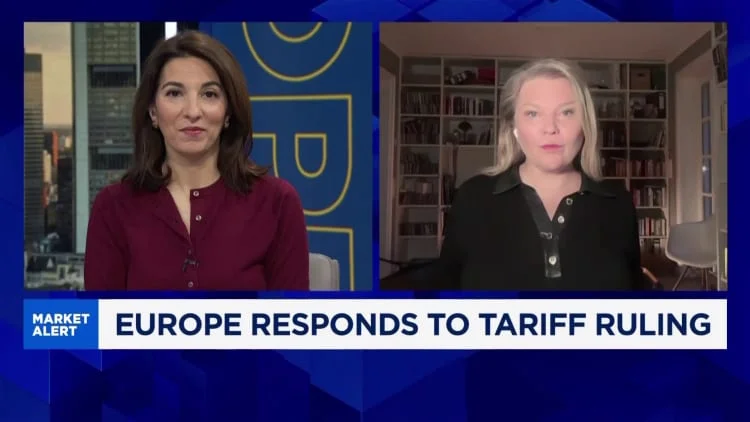
A recent decision by the Supreme Court regarding tariffs has had minimal impact on the outlook for interest rates, according to a top Federal Reserve official. This assessment comes amidst ongoing debate among Fed policymakers about the pace and extent of potential rate cuts. The central bank is navigating a complex economic landscape, balancing signals of moderate growth and stable unemployment against concerns about inflation and the labor market's health. The nuanced perspectives within the Fed highlight the challenges in forecasting future monetary policy.

Economic Crossroads: The Fed's Policy Debate
The Federal Reserve finds itself at a critical juncture, with officials holding diverse opinions on the future direction of interest rates. While there is general agreement on the need to lower rates in response to economic conditions, the extent and timing of these cuts remain points of contention. This divergence stems from differing interpretations of incoming economic data, including inflation trends and labor market dynamics.
Read More: New US Tariffs Raise Costs for UK and EU Businesses

Recent Rate Cut: The Fed recently reduced its key lending rate, a move met with varied reactions.
Future Cuts: Some officials advocate for further reductions, while others prefer to hold rates steady.
Inflation Concerns: Lingering worries about inflation, potentially exacerbated by tariffs, contribute to the cautious approach of some policymakers.
Labor Market Data: Simultaneously, signs of weakness in the labor market suggest a need for accommodative monetary policy.
Voices within the Federal Reserve: A Spectrum of Views
Discussions among Federal Reserve officials reveal a range of perspectives on monetary policy. The minutes from recent meetings indicate a broad expectation of rate cuts, but a clear division exists regarding the aggressiveness of such actions.

Governor Christopher Waller: Has publicly stated his belief that the Fed should consider reducing interest rates in the upcoming months, suggesting a readiness for multiple cuts if inflation remains in check.
Chicago Fed President Austan Goolsbee: His views on inflation and Fed policy have been noted, though a correction in reporting highlighted specific nuances of his stance.
Fed Governors Michelle Bowman and Christopher Waller: Have both indicated a willingness to support rate cuts as early as the July meeting, contingent on sustained inflation control.
Cleveland Fed President Beth Hammack: Does not vote on policy moves this year but has expressed views on the economic situation.
Boston Fed President Susan Collins: As a voting member, her perspective carries direct weight in policy decisions.
Differing Projections: Minutes from the June meeting showed that while most officials anticipated rate cuts, there were significant differences in how many cuts they envisioned. Some of these differences were signaled in projections of appropriate policy.
"Federal Reserve officials diverged at their June meeting about how aggressively they would be willing to cut interest rates, split between concerns over tariff-fueled inflation and signs of labor market weakness and economic strength." - CNBC Report
The Influence of Tariffs on Policy
The economic implications of tariffs, including their potential to drive up prices, present a complex challenge for the Federal Reserve. While some data suggests tariffs have not yet broadly impacted consumer prices, the uncertainty they introduce into the economic outlook is a significant consideration for policymakers.
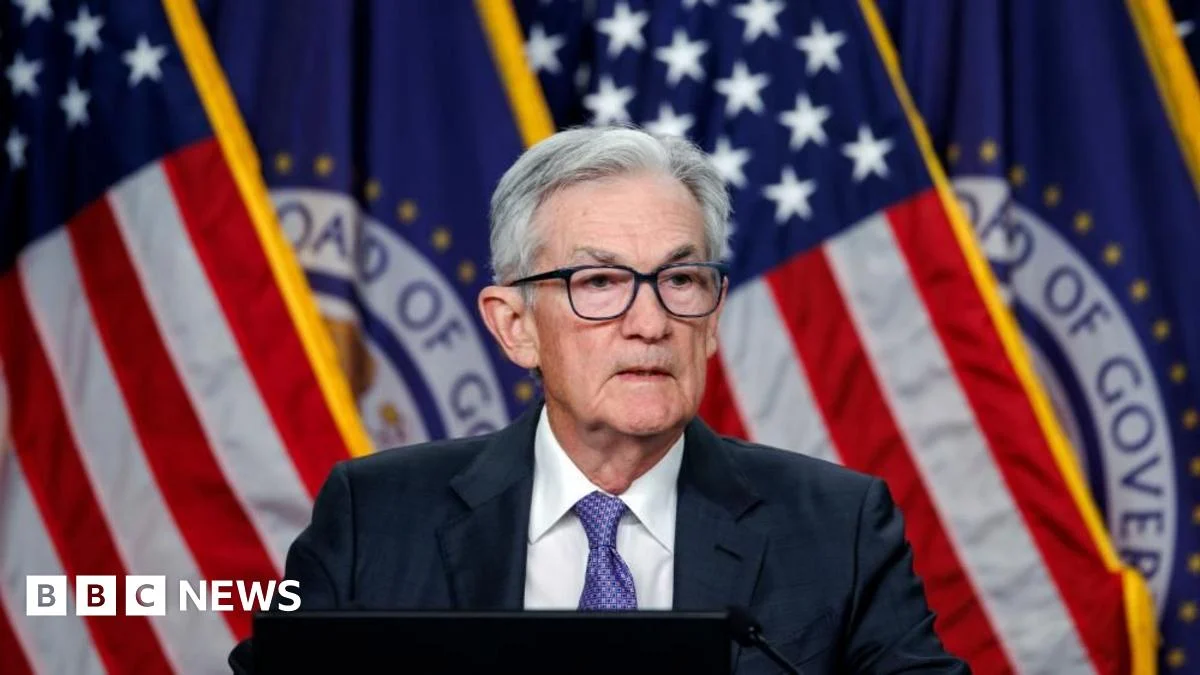
Limited Price Impact: Recent data indicates that tariffs have not yet translated into widespread price increases on a large scale.
Official Optimism: At least one official has expressed optimism that tariff-related inflation will not spread throughout the broader economy.
Complicated Puzzle: The Fed is described as facing one of its most intricate economic puzzles in decades, with tariffs being a contributing factor to this complexity.
"Conversely, he said he was optimistic that tariff-related inflation would not spread to the wider economy." - BBC News Report
The Fed Chair's Role in Consensus Building
The authority of the Federal Reserve Chair is primarily derived from their ability to foster agreement among the diverse members of the Federal Open Market Committee (FOMC). While the Chair has latitude in public communication, official statements and core messages must reflect the consensus of the committee to maintain credibility.
Read More: Glasgow Council Tax to Rise 5-7.5% from April 2026 Due to Funding Issues
Consensus is Key: The Chair's influence lies in building agreement among the 19 committee members, who hold varied viewpoints.
Communication Latitude: The Chair has freedom in press conferences and speeches, but official communications must represent the committee's consensus.
Maintaining Credibility: Adhering to committee consensus is crucial for the Fed's credibility and consistency.
Economic Outlook: Moderate Growth and Divided Opinions
Current economic indicators point towards moderate growth, stable unemployment, and decelerating inflation. Despite this generally positive outlook, the Federal Reserve remains divided on the optimal course of action regarding interest rates.
General Agreement on Lowering Rates: Most Fed officials concur that lowering interest rates is generally needed.
Disagreement on Pace: However, there is a split on how quickly or aggressively these rate cuts should occur.
Rate Cut Support: Some officials support one more rate cut, while a larger group prefers to keep rates unchanged after the recent reduction.
Dissenting Voices: At least one member has signaled disagreement on the necessity of the recent rate cut.
"Fed officials agree on the economic outlook—moderate growth, stable unemployment, and slowing inflation—and the general need to lower rates. However, they are split on how aggressive those rate cuts should be, with some foreseeing a need for more cuts than others." - Investopedia Report
Expert Analysis: Navigating Policy Divergence
Analysts observe that the Federal Reserve is experiencing a notable divergence in views among its officials regarding the future path of interest rates. This internal debate is shaped by a variety of economic signals and potential risks.
Dovish Leanings: Recent comments from some officials, such as former Fed Governor Kevin Warsh, have suggested a more accommodating stance, aligning with certain policy preferences. However, there's an expectation that these leanings could shift, particularly after significant political events.
Power of Consensus: The Fed Chair's influence is acknowledged as being in building consensus rather than dictating policy, underscoring the committee-based nature of monetary decisions.
Hawkish Tendencies: The potential for a return to a more stringent monetary policy viewpoint, or a "hawkish view," is noted, especially as political calendars progress.
Conclusion: A Path Forward Defined by Uncertainty
The Federal Reserve's upcoming policy decisions are likely to be influenced by a complex interplay of economic data and internal deliberations. While a consensus exists on the general direction of lower rates, the magnitude and sequence of these adjustments remain subject to varying interpretations among policymakers. The impact of tariffs on inflation continues to be a factor, albeit one that current data suggests may not be broadly significant. The central bank's approach is characterized by a careful balancing act, aiming to foster economic stability while managing the inherent uncertainties.
Read More: Bill Kelty Says Labor Tax Plan Not Big Enough for Young Workers
Tariff Impact: A top Fed official believes the Supreme Court's tariff ruling has had little effect on the outlook for interest rates.
Internal Disagreement: Federal Reserve officials are divided on the number and pace of future interest rate cuts, despite agreement on the overall economic outlook.
Inflation vs. Labor Market: Policymakers are weighing concerns about inflation, potentially linked to tariffs, against signs of weakness in the labor market.
Consensus-Driven Policy: The Fed Chair's effectiveness is tied to building agreement within the committee, with official communications reflecting this consensus.
Future Policy: The Fed's next move on interest rates is not expected to be immediate, with ongoing debate shaping the eventual decision.
Sources
J.P. Morgan Global Research: Published 3 days ago. Focuses on the outlook for Fed rate cuts in light of labor market data and Fed chair nominations, with analysis on consensus-building within the Fed.🔗 https://www.jpmorgan.com/insights/global-research/economy/fed-rate-cuts
Investopedia: Published Sep 17, 2025. Details a recent Fed rate cut and the differing views among officials regarding subsequent rate adjustments.🔗 https://www.investopedia.com/the-fed-cut-interest-rates-wednesday-but-the-path-ahead-is-much-less-clear-11812427
Business Insider: Published Jun 24, 2025. Reports on Fed officials supporting rate cuts, including specific comments from Governors Bowman and Goolsbee, and touches upon the impact of tariffs and criticism from the administration.🔗 https://www.businessinsider.com/rate-cuts-july-fed-meeting-bowman-goolsbee-inflation-trump-tariffs-2025-6
CNN Business: Published Sep 3, 2025. Examines the Fed's complex decision-making process, including differing views on tariffs and inflation, and notes Fed Governor Christopher Waller's call for rate cuts.🔗 https://www.cnn.com/2025/09/03/economy/fed-rate-cuts-mixed-signals
CNBC: Published Jul 9, 2025. Analyzes the divergence in views among Fed officials regarding the number of rate cuts, as revealed in meeting minutes, and mentions concerns over tariff-fueled inflation and labor market weakness.🔗 https://www.cnbc.com/2025/07/09/most-fed-officials-see-rate-cuts-coming-but-opinions-vary-widely-on-how-many-minutes-show.html?msockid=17e76bdb3c5a61731f867cd23d2d60c3
BBC News: Published (date not specified in summary, but likely recent based on context). Reports on a quarter-point cut in the key lending rate and highlights the significant division among Fed members regarding future actions, with several dissents and reservations.🔗 https://www.bbc.com/news/live/c04vqyy7zkgt
Financial Times (FT): Published Dec 10, 2025. Discusses a Federal Reserve rate cut to its lowest level in three years, with an emphasis on subscription offerings for access to its journalism. (Summary did not contain detailed policy information.)🔗 https://www.ft.com/content/7a30a8ca-ba43-46d3-bbb9-796610a13d8b