Facebook 'likes,' once simple digital nods of approval, have become potent signifiers of intricate personal attributes, according to a constellation of studies. Beyond mere preferences for curly fries or musical artists, these seemingly innocuous clicks can, with surprising accuracy, delineate intelligence levels, sexual orientations, and even political leanings. This algorithmic dissection of user behavior challenges the notion of online anonymity and raises pointed questions about the persistent surveillance embedded in our digital interactions.
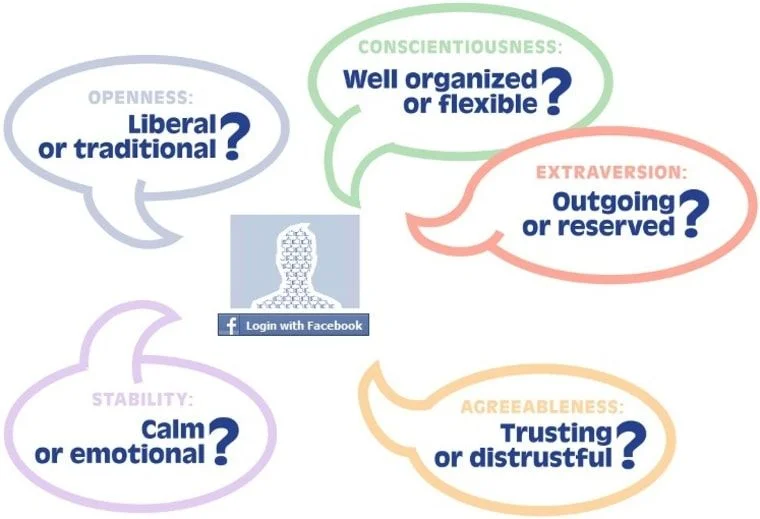
Research conducted using Facebook profiles and a related app has demonstrated that computer algorithms can indeed predict a user's sensitive personal traits. By analyzing tens of thousands of Facebook 'likes,' researchers have built statistical models capable of inferring characteristics such as gender, age, race, political affiliation, and sexual orientation. The accuracy of these predictions extends to more nuanced traits like intelligence, with liking certain cultural items or brands correlating with specific cognitive capacities.
Read More: Chrome mimeHandler API lets extensions handle file types

While obvious connections might suggest liking scientific pages points to higher intelligence, the reality is more complex. Studies indicate that less apparent links, such as an affinity for shows like "Desperate Housewives" or musicals like "Wicked," can be stronger indicators of intelligence than one might assume. This suggests a sophisticated interplay between digital expression and underlying personal attributes, often defying common-sense interpretations.

Beyond personal characteristics, the digital footprint left on platforms like Facebook has also shown a remarkable capacity to predict professional aptitude. One study controversially suggests that a Facebook profile can be a more accurate predictor of job performance than a traditional IQ test. This implies that an employer's review of a job applicant's social media presence might offer deeper insights into personality attributes relevant to work success, even if the applicant has attempted to curate a pristine online persona.
Read More: Trump Uses Taylor Swift Wedding Buzz For Campaign

The underlying mechanism for this predictive power lies in Facebook's foundational design, which shifted from facilitating connections to becoming an "entertainment giant built on content its users produced for free." This evolution significantly increased user engagement by leveraging user-generated content, inadvertently creating a rich, albeit often unsolicited, dataset for behavioral analysis. The sheer volume of activity and the intimate nature of shared content mean that even carefully managed profiles may not fully obscure an individual's underlying traits from discerning algorithms.
Roots of Algorithmic Insight
The origins of this line of inquiry trace back to experiments utilizing Facebook profiles and questionnaires, often through dedicated apps like "MyPersonality." Participants, in some instances, granted researchers permission to anonymously correlate their survey results with their Facebook 'likes.' The PNAS paper, "Private Traits and Attributes Are Predictable From Digital Records of Human Behavior," highlights the methodology, though it also notes potential conflicts of interest, such as researchers receiving revenue from such applications.
Read More: BEREC Asks for Mobile Network API Ideas from Developers
The Privacy Paradox
The findings prompt a stark reminder about digital privacy. Even with an awareness that one's online activities are being "digitally snooped, categorized, and looked at," the pervasive nature of data collection means complete control over one's digital identity remains elusive. The capacity for these platforms and associated research to categorize individuals based on their digital behavior underscores the need for caution in how users engage with social media.
Beyond IQ and Connections
In a broader context, discussions around success and personal advantage often revolve around intellect, financial standing, or social networks. However, the insights gleaned from Facebook 'likes' suggest that these traditional metrics may be complemented, or even supplanted, by the quantifiable data of digital interaction. This raises questions about what constitutes genuine advantage in an increasingly mediated world, where a digital trail can offer profound insights into the self, sometimes more so than traditional assessments.
Read More: WhatsApp adds usernames to hide phone numbers from April 7, 2026