The recent seminar at Dravidian University on the "Role of Non-Teaching Employees" has, on the surface, signaled a commitment to recognizing these vital workers. However, beneath the pronouncements of partnership and institutional support lie persistent issues and unanswered questions that demand a deeper, more critical examination. Are these seminars mere talking points, or do they herald genuine change for the backbone of our educational institutions?
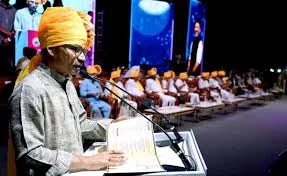
The event, which brought together non-teaching staff from across the state, ostensibly aimed to foster a collective voice for institutional growth and employee welfare. Dr. Kancharla Srikanth, an MLC and Government Whip, reportedly emphasized the necessity of robust administrative systems and pledged to address "genuine issues." Yet, the lingering concerns, often whispered rather than declared, paint a different picture. What constitutes a "genuine issue," and who decides? How long must these issues remain "unaddressed" before they gain traction?
Read More: New Coursera Money and Banking Course Offers Emerging Market Examples
A History of Unfulfilled Promises?
The history of non-teaching staff advocacy in Indian universities is not a new one. For decades, these employees have voiced concerns ranging from delayed salaries and promotions to inadequate working conditions and a lack of clear career progression. While seminars and committees are often formed, the tangible impact on the ground has frequently been minimal.
Past Incidents & Concerns:
Timely Salary Payments: This remains a perennial issue across many higher education institutions, including reports of salaries being credited late, causing significant financial strain for employees.
Filling Vacant Posts: Chronic understaffing due to delayed recruitment processes leads to increased workloads and burnout among existing non-teaching staff.
Service-Related Benefits: Issues such as timely promotions, career advancement opportunities, and access to welfare measures often become points of contention.
Recognition and Respect: A consistent theme is the feeling of being undervalued, with non-teaching staff often seen as mere administrative functionaries rather than integral members of the academic ecosystem.
| Issue | Common Grievance | Potential Impact ||—-|—-|—-|| Salary Delays | Employees often face uncertainty about when their salaries will be credited. | Financial hardship, reduced morale, difficulty in meeting financial obligations. || Vacant Positions | Significant delays in filling administrative, technical, and support roles. | Overburdened staff, reduced efficiency, potential decline in service quality. || Career Progression | Lack of clear pathways for promotion and professional development. | Stagnation, demotivation, and a feeling of being "stuck" in a role. |
The "Partnership" Paradox
Doraswamy's statement that non-teaching staff are "equal partners in university development" is a laudable sentiment. However, true partnership implies shared decision-making and genuine influence, not just participation in discussions. The seminar's adoption of resolutions, such as timely salary credit, filling vacant posts, and welfare measures, highlights that these are not new demands but rather reiterations of long-standing concerns.
Read More: Andhra Pradesh APGENCO makes record 6,160 MW power output on March 11

"Several resolutions, including timely salary credit, filling vacant posts and welfare measures, were unanimously adopted."
If these resolutions were adopted unanimously, what is the timeline for their implementation? Who is accountable for ensuring these resolutions translate into concrete actions? The very fact that such resolutions are still being adopted suggests a gap between stated intentions and actual outcomes.
Furthermore, the call for "transparency and timely service-related decisions" by Kiran Kumar points to a systemic problem. What makes service-related decisions untimely? Is it bureaucratic inertia, a lack of clear processes, or something more deliberate? And what are the specific mechanisms for ensuring transparency?
Beyond the Seminar: The University's Broader Framework
Dravidian University, like any higher education institution, operates within a framework of quality assurance and ranking systems. The university website highlights bodies like NAAC, NIRF, and IQAC, which are designed to assess and improve educational quality. While these bodies focus primarily on academic aspects, the efficiency and well-being of non-teaching staff are indirectly linked to the overall quality and functioning of the institution.
Read More: College Advisor Harlan Cohen: Share Your Money Story for Help
Institutional Mechanisms:
IQAC (Internal Quality Assurance Cell): Primarily focuses on academic quality. How does it incorporate the efficiency and morale of administrative staff into its quality matrix?
NAAC (National Assessment and Accreditation Council): Assesses institutions. Does the working condition and satisfaction of non-teaching staff form a significant part of its evaluation?
NIRF (National Institutional Ranking Framework): Ranks institutions. How do operational efficiencies, driven by a motivated workforce, factor into these rankings?
AISHE (All India Survey on Higher Education): Collects data. Is data on non-teaching staff welfare and operational efficiency collected and analyzed comprehensively?
A well-functioning university relies on a seamless integration of academic and administrative support. When non-teaching staff feel undervalued or are bogged down by administrative inefficiencies, it inevitably impacts the student experience and the institution's overall performance.
Questions That Linger
As we move beyond the news of this seminar, several critical questions remain for Dravidian University and its stakeholders:
Accountability and Implementation: What are the specific, measurable, achievable, relevant, and time-bound (SMART) goals for implementing the resolutions adopted at the seminar? Who is the designated individual or body responsible for their execution and reporting?
Defining "Genuine Issues": How does the university define "genuine issues"? Is there a clear, transparent, and accessible grievance redressal mechanism for non-teaching staff?
Measuring "Partnership": Beyond seminars, what tangible steps are being taken to involve non-teaching staff in decision-making processes that affect their work and the university's development?
Impact on Quality: How is the university measuring the impact of non-teaching staff morale and efficiency on its overall quality of education and institutional rankings?
Transparency in Service: What concrete steps are being implemented to ensure transparency in service-related matters and timely decision-making? Are there public dashboards or regular updates on pending service issues?
Resource Allocation: Are adequate financial and human resources being allocated to address the core issues of timely salary payments, filling vacant posts, and enhancing welfare measures?
The "Role of Non-Teaching Employees" seminar at Dravidian University has opened a door. Whether it leads to substantive change or remains a closed loop of discussions will depend on the sustained commitment to addressing the persistent concerns and transforming pronouncements into tangible improvements. The true test lies not in the holding of seminars, but in the enduring impact on the lives and work of the people who keep the university running.
Read More: Mylavaram Headmaster Suspended After Substandard Mid-Day Meal Video
Sources:
The Hindu: https://www.thehindu.com/news/national/andhra-pradesh/dravidian-university-holds-seminar-on-role-of-non-teaching-employees/article70600137.ece
Dravidian University Official Website: https://dravidianuniversity.ac.in/