Race Against Time for Local Elections
Local authorities across England are facing a significant challenge to organize elections scheduled for May. The government's recent decision to abandon plans for delaying these elections has left councils with a compressed timeline for preparation. This abrupt shift follows a legal challenge by the Reform UK party, which argued the proposed delays were undemocratic. Electoral officials report that months of planning have been lost, creating an "uphill struggle" to ensure the elections proceed smoothly and fairly.

Background to the Election Delay and Reversal
In December, the government proposed postponing local elections in 63 councils. This was linked to a large-scale reorganisation of local government, where many authorities were set to be merged or significantly altered. The intention was to avoid running elections in areas undergoing such substantial structural changes, potentially saving costs and simplifying the process.
Read More: Kerala Minister Says Ruling Party Will Win Again

However, this plan faced immediate opposition. The Reform UK party launched a legal challenge, contending that the delay was undemocratic and disenfranchised voters. This legal action was scheduled to be heard in the High Court.

Faced with the legal challenge and the prospect of a costly court battle, the government reversed its decision. This U-turn was confirmed on Monday, giving councils just over 11 weeks to prepare for polling day on May 7th. The government has also agreed to cover Reform UK's legal costs, reportedly a six-figure sum.

Evidence of Disruption and Urgency
Lost Preparation Time: The Association of Electoral Administrators (AEA) has stated that electoral teams have lost months of preparation time. Laura Lock, the AEA's deputy chief executive, noted that returning officers, electoral registration officers, and electoral administration teams would be affected.
"Whiplash" for Councils: Matthew Hicks, leader of Suffolk County Council, described the situation as councils experiencing "whiplash as major government decisions shift repeatedly and without warning." He added that councils had paused planning to avoid unnecessary costs, but this now meant they were "playing catch-up."
Legal Challenge Impact: The Reform UK legal challenge, due to be heard on Thursday, was a direct catalyst for the government's U-turn.
Financial Implications: The government's agreement to pay Reform UK's legal fees suggests a significant cost associated with the abandoned delay plan.
Affected Areas: Councils initially slated for a delay included city councils in Lincoln, Exeter, Norwich, Peterborough, and Preston, along with districts such as Cannock Chase, Harlow, Welwyn Hatfield, and West Lancashire. Polling day postponements were also planned for county council voters in East Sussex, West Sussex, Norfolk, and Suffolk.
Contrasting Perspectives on the U-Turn
Reform UK's Claim of Victory
Nigel Farage, leader of Reform UK, has publicly declared the government's decision a "victory" for his party. He stated that the appeal brought by Reform UK was instrumental in forcing the government to backtrack on its plans to cancel local elections. The government's agreement to pay Reform UK's legal costs further supports this narrative.
Concerns from Electoral Officials and Council Leaders
The AEA and various council leaders have expressed significant concern over the tight schedule. They argue that the sudden reversal has created an "unnecessary race against time."
Read More: Royal Mail Staff Say Parcels Are More Important Than Letters
Democratic Faith Undermined: Heads of major local government organizations have voiced anger, stating that the move undermines faith in local democracy.
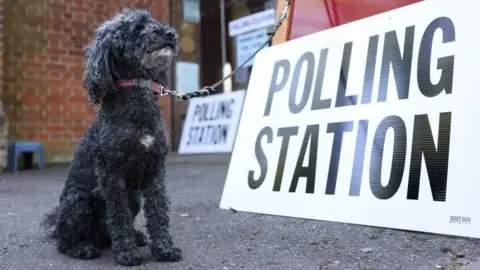
Logistical Hurdles: Councils now face the challenge of quickly rebooking polling stations, confirming electoral staff availability, and re-establishing communication channels that may have been scaled down or paused.
Impact on Local Government Reorganisation: The leader of Suffolk County Council raised doubts about the achievability of wider plans to merge councils into single, unitary authorities, given the disruption to the electoral calendar.
Expert Analysis
"The councils affected face an unnecessary race against time to ensure elections proceed smoothly and fairly, with polling stations booked and electoral staff available." - Unnamed source quoted in Sky News.
"They have paused planning to avoid unnecessary cost, but this means they are now playing catch-up." - Quote attributed to an electoral official, cited by BBC News and Your Local Guardian.
Conclusion and Implications
The government's about-face on delaying local elections has placed significant pressure on electoral administration teams across England. While the reversal is seen as a win by Reform UK, it has created considerable logistical and planning challenges for local authorities.
Read More: Jesse Jackson, Civil Rights Leader, Dies at 84
Immediate Task: Councils must now rapidly mobilize resources to ensure all necessary arrangements for polling day on May 7th are in place.
Potential for Disruption: The compressed timeline increases the risk of operational errors or reduced public engagement due to rushed preparations.
Trust in Democracy: The repeated shifts in government policy have led to criticism that faith in local democracy is being undermined, a sentiment echoed by leaders of local government bodies.
Future of Reorganisation: The disruption may also cast a shadow over the ongoing local government reorganisation plans, with concerns raised about their practical implementation.
The coming weeks will be critical in determining whether councils can successfully navigate this "uphill struggle" and deliver fair and efficient elections.
Sources
BBC News: Councils face 'uphill struggle' to be ready for elections by Mayhttps://www.bbc.com/news/articles/c043z5rzwg7o
LBC: Starmer to face the voters: PM abandons plan to cancel local elections in 14th major U-turnhttps://www.lbc.co.uk/article/starmer-abandons-plans-to-cancel-30-local-elections-in-major-government-u-turn-5HjdSPd2/
Sky News: Farage claims 'victory' as councils face 'race against time' to reinstate plans after elections U-turnhttps://news.sky.com/story/farage-claims-victory-as-councils-face-race-against-time-to-reinstate-plans-after-elections-u-turn-13508404
The Guardian: English councils face ‘race against time’ to arrange elections, leaders sayhttps://www.theguardian.com/society/2026/feb/16/english-councils-unnecessary-race-against-time-organise-elections-leaders-say
Your Local Guardian: Councils ‘race against time’ to organise elections in time for May after U-turnhttps://www.yourlocalguardian.co.uk/news/national/25860423.councils-race-time-organise-elections-time-may-u-turn/
inews: Crumbling Blue Wall: The councils where Tories are bracing for a 'pasting'https://inews.co.uk/news/politics/crumbling-blue-wall-councils-bracing-local-elections-3012087
Read More: Doctors Removed from Register for Misconduct Against Junior Staff