


Washington D.C. — Amid escalating hostilities in the Middle East, former Secretary of State Condoleezza Rice, a prominent figure from the 'Iraq War' era, has publicly endorsed the Trump administration's military actions against Iran. Rice, who served under President George W. Bush, has called for decisive measures to "render Iran incapable" of posing a threat to the United States and its allies. Her remarks frame the ongoing conflict as a necessary, long-overdue effort to neutralize a persistent adversary.

Rice, speaking in interviews following the launch of 'Operation Epic Fury'—a joint U.S.-Israeli military campaign that began in late February—asserted that Iran has maintained a state of "war" with the U.S. for at least 47 years. She pointed to Iranian support for proxy groups like Hamas and Hezbollah, and the use of Iranian-made explosives in Iraq, as evidence of its enduring hostility. The stated objective of 'Operation Epic Fury', according to Rice, is to strip Iran of its military capabilities both domestically and abroad, and to curtail its ability to coordinate with allied groups.
Read More: Trump Monitored Iran Strikes from Mar-a-Lago During Charity Gala
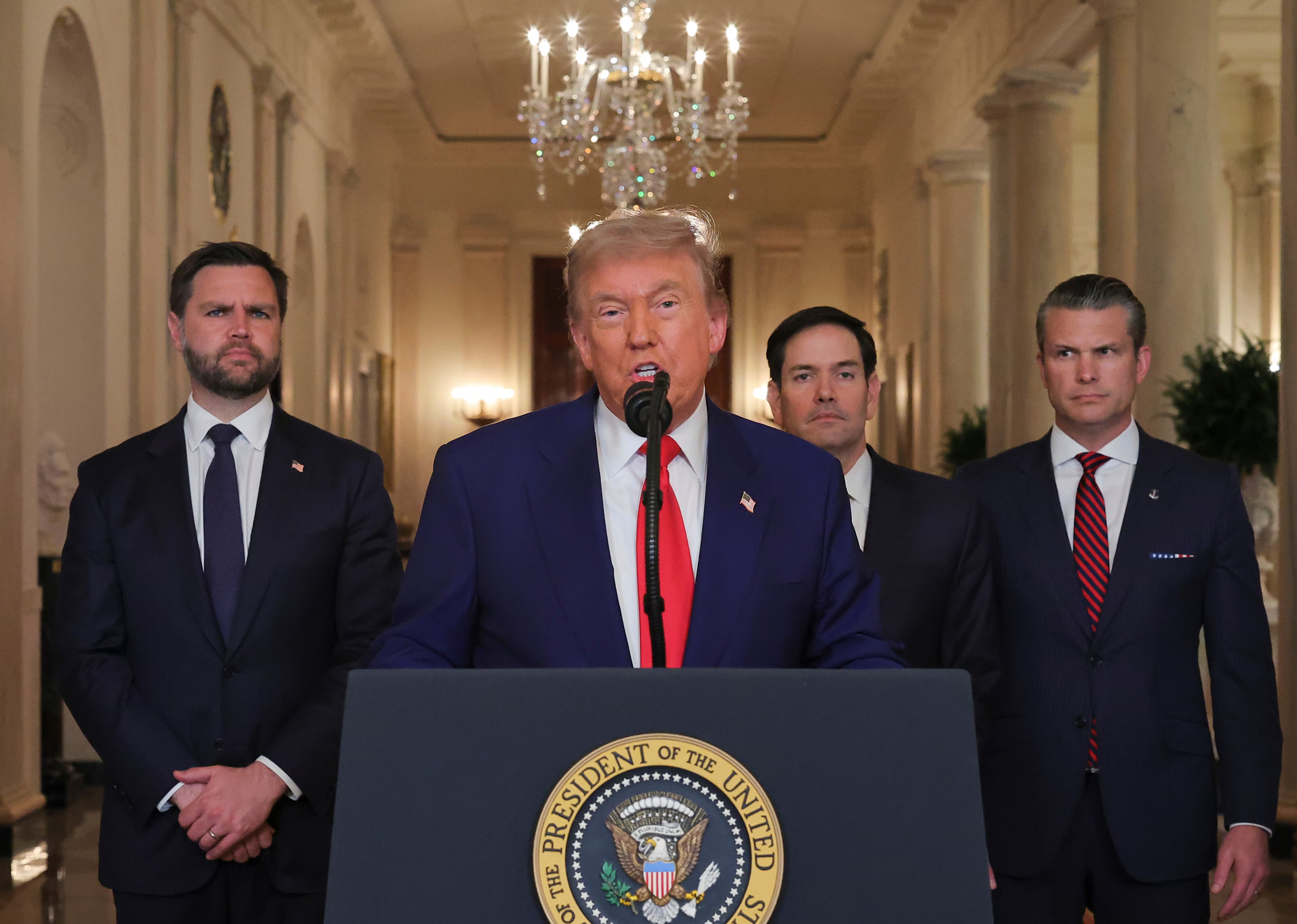
Concerns Over 'Mission Creep' Emerge
While expressing support for the administration's aims, Rice also cautioned against "mission creep," acknowledging concerns that the conflict could devolve into a prolonged engagement, reminiscent of the 'Iraq War'. This sentiment echoes criticisms from Democratic lawmakers, such as House Minority Leader Hakeem Jeffries, who have labeled the conflict an "endless war" and forecast significant American casualties and financial costs.
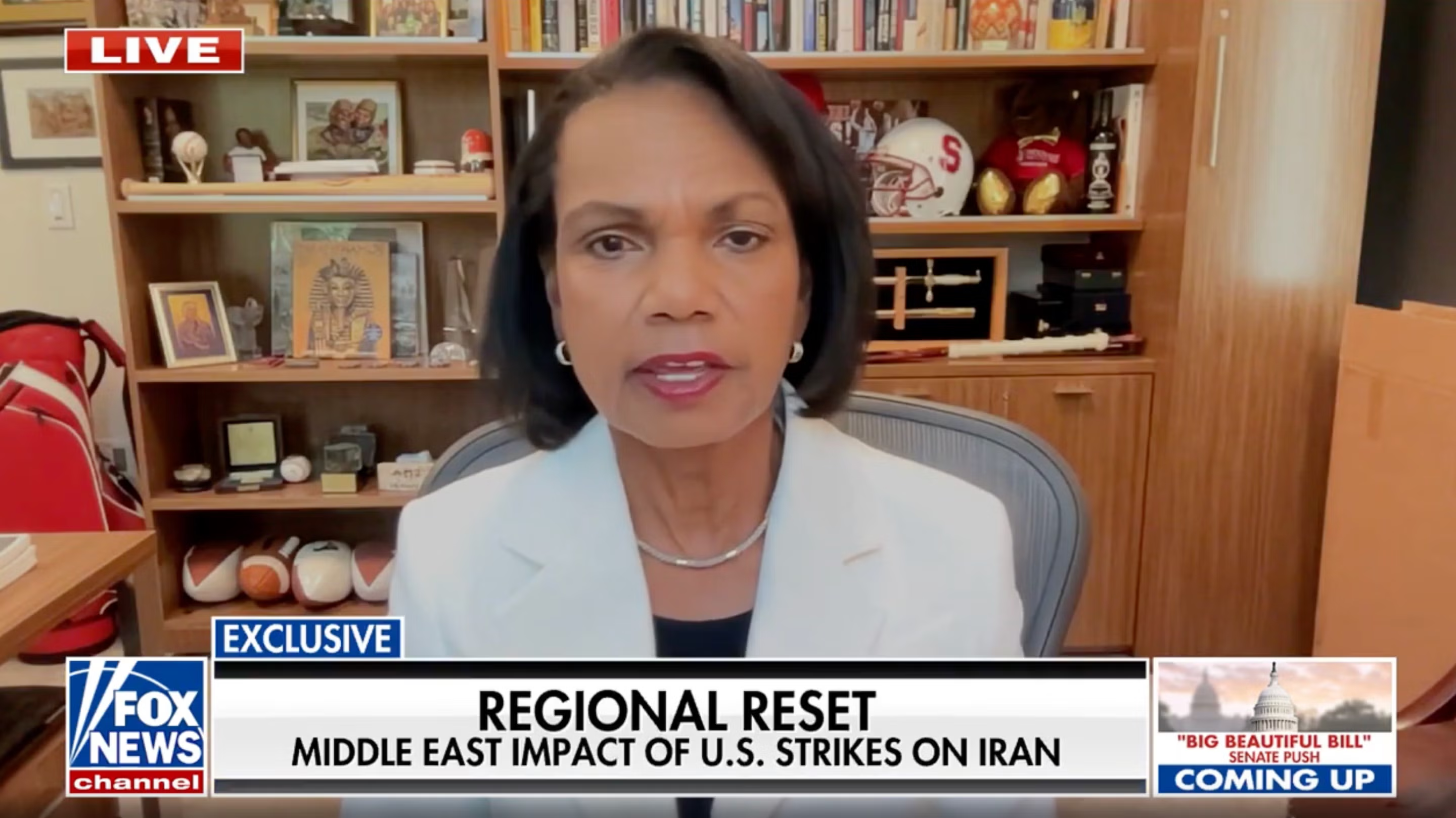
"If the goal of the administration is to render Iran incapable of using its military forces outside of its borders, of threatening our neighbors – our allies – of threatening our bases abroad… that is a worthy goal."— Condoleezza Rice
The administration has presented various justifications for the strikes, some of which are rooted in decades-old grievances. These reasons have been met with a spectrum of responses, from accusations of entanglement in a protracted conflict to calls for a more definitive resolution.

A Return to Washington Amidst Regional Tension
Rice's reappearance in Washington D.C. during this heightened period of Middle Eastern conflict has drawn considerable attention. While official confirmations remain elusive regarding specific meetings, her presence has been noted by political observers and media analysts, linking her to past significant foreign policy decisions. Rumors suggest her visit may have also touched upon other policy debates, including matters related to collegiate athletics, an area of her continued involvement since leaving public office.
Read More: DOJ Builds Cases Against Cuba, Venezuela Leaders in Florida
The U.S. strikes against Iran, reportedly utilizing substantial air power and naval assets, have already resulted in casualties on both sides. CENTCOM reports indicate that six American service members have been killed, and 20 Iranian ships have been struck or sunk. The broader regional escalation has seen retaliatory attacks throughout the Middle East.
Background: The Shadow of the 'Iraq War'
Condoleezza Rice's tenure as Secretary of State from 2005 to 2009, and earlier as National Security Advisor, placed her at the center of the George W. Bush administration's foreign policy, most notably the '2003 invasion of Iraq'. Her current commentary on Iran comes at a time when the efficacy and consequences of that earlier intervention continue to be debated. The parallels drawn between the justifications and potential outcomes of the 'Iraq War' and the current operations against Iran are a recurring theme in analyses of the evolving situation. The stated aims of weakening Iran's nuclear ambitions and curbing its regional influence are framed against this backdrop of past military engagements and their complex legacies.
Read More: Trump fires Kristi Noem from Homeland Security on March 5 over $220 million ad bill