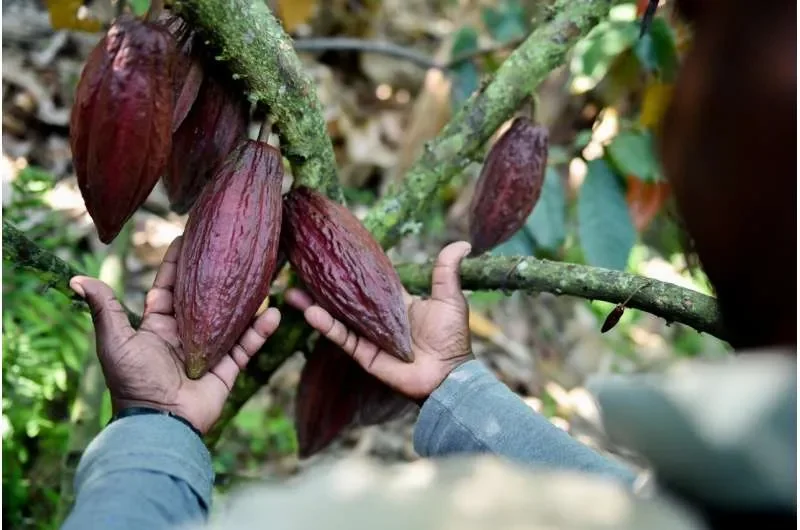
Colombia faces a significant recalibration of its cocoa-growing territories by 2050, with projections indicating a potential loss of up to one-fifth of current suitable land. The impacts are expected to be most acutely felt in the northern lowlands, prompting a potential migration of cultivation toward higher elevations, particularly within the Andean foothills. Despite these shifts, core production zones, currently concentrated in these same Andean foothills, are anticipated to retain favorable climate conditions, suggesting the crisis is one of displacement rather than outright eradication.
Key adaptation strategies, including the establishment of 'agroforestry systems' where cocoa thrives under the shade of other trees, are highlighted as crucial. These methods aim to moderate escalating temperatures and preserve vital soil moisture, offering a bulwark against increased crop stress and the economic precarity facing cocoa-farming families. The study’s findings are slated for integration into platforms like 'www.cacaodiversity.org', intended to guide on-farm adaptation choices.
Read More: New Wheat Makes Bigger Starch for Food and Industry
Regional Shifts and Economic Uncertainty
Rising temperatures and increasingly erratic rainfall patterns are flagged as primary drivers behind the projected land suitability changes. These climatic shifts are expected to diminish crop yields and amplify economic instability for those dependent on cocoa cultivation. The northern regions of the country, particularly lowland areas along the Caribbean and northeastern parts, are identified as areas most vulnerable to these changes. Conversely, models suggest a modest, around three percent, expansion of suitable growing areas at higher elevations, indicating a gradual geographical pivot for the crop.
Biodiversity and Resilience
Beyond agricultural adjustments, the research underscores the importance of conserving wild cocoa populations. Protecting the natural habitats of wild 'Theobroma cocoa' relatives is deemed essential for safeguarding the genetic diversity necessary to fortify cocoa crops against environmental pressures. This integration of biodiversity conservation with agricultural innovation represents a multi-pronged approach to climate adaptation.
Read More: Amazon Land Use Changes Cause Disease Clusters in Brazil
Strategic Outlook
While climate change will undoubtedly alter the contours of Colombian cocoa production, the study refrains from framing it as an existential threat. Instead, it calls for a calculated, science-informed response. This involves leveraging genetic diversity, promoting sustainable agroforestry, implementing precise irrigation techniques, and bolstering climate information systems. The research, published in the scientific journal 'Regional Environmental Change', sought to combine future climate projections with existing cocoa production data and the distribution of wild species to forecast these potential shifts over the next quarter-century.