A significant quantity of cocaine, estimated to be over 190,000 "lethal doses," was intercepted by U.S. Customs and Border Protection (CBP) officers at the Laredo Port of Entry in Texas. The seizure occurred on a Tuesday during Valentine's Day week, specifically on February 6, 2025, from a commercial truck that was reportedly carrying flowers. This interdiction represents a notable effort in the ongoing campaign against illicit drug trafficking along the southern border.
Context of the Seizure
The operation unfolded at the World Trade Bridge in Laredo, Texas. CBP officers, utilizing a combination of canine units and non-intrusive inspection systems, identified a suspicious shipment within a truck. A subsequent secondary examination led to the discovery of 211 packages containing approximately 516.76 pounds of alleged cocaine. The estimated street value of the seized narcotics is over $6.8 million.
This incident occurred alongside other law enforcement activities at the southern border. Notably, over the preceding Super Bowl weekend, a separate operation at the Juarez-Lincoln Bridge in Laredo resulted in the apprehension of three fugitives wanted for alleged child sex crimes.
Homeland Security Investigations (HSI) special agents have taken the lead in the investigation stemming from the cocaine seizure. The CBP's Laredo Field Office has made its operational activities available for public updates via social media platforms.
Read More: Texas Rangers beat Detroit Tigers 10-4 on July 2 2026 in Arlington
Evidence of the Seizure
Quantity of Cocaine: 516.76 pounds were seized, packaged in 211 individual parcels.
Estimated Value: The drugs are valued at over $6.8 million.
"Lethal Doses": The amount seized is described as enough for over 190,000 "lethal doses," a metric used to convey the potential harm of the confiscated substance.
Method of Concealment: The cocaine was discovered within a commercial truck reportedly delivering flowers.
Date of Seizure: Tuesday, February 6, 2025.
Location of Seizure: World Trade Bridge, Laredo, Texas.
Investigating Agencies: U.S. Customs and Border Protection (CBP), and Homeland Security Investigations (HSI).
Broader Drug Interdiction Efforts
This specific seizure at the southern land border is part of a larger, ongoing effort by U.S. agencies to intercept illegal narcotics. Data from other reports illustrates the scale of these operations:

| Agency | Seized Quantity (Approximate) | Timeframe | Notes |
|---|---|---|---|
| CBP (Laredo) | 516.76 lbs cocaine | Feb. 6, 2025 | Intercepted in a flower truck at World Trade Bridge. |
| CBP (San Diego) | 184 lbs narcotics | Two-week period | Included cocaine, meth, heroin, and fentanyl. |
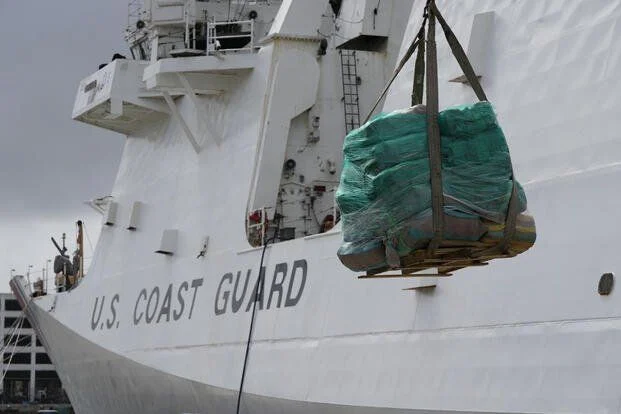
| Coast Guard | 242,244 lbs cocaine | Since Jan. 20, 2017 | Reported by DHS, representing a doubling of interdictions over the previous year. |
| Coast Guard | 61,740 lbs cocaine | Operation Pacific Viper | Part of a larger offload including 14,400 lbs marijuana; largest in Coast Guard history. |
| Coast Guard | Over 100,000 lbs cocaine | Operation Pacific Viper | Seized in approximately a two-month span, averaging over 1,600 lbs daily. |
| Coast Guard | Over 511,000 lbs narcotics | FY25 | Valued at over $3.8 billion; prevented over 193 million lethal doses from reaching the U.S. |
| Homeland Security | 188,218 lbs illicit drugs | During San Diego visit | Reported by Secretary Kristi Noem; equating to over 1.7 billion doses. |
Maritime vs. Land Border Interdictions
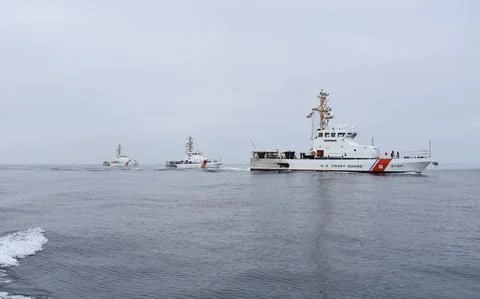
While the February 6th seizure occurred at a land port of entry, a significant portion of drug interdictions, particularly of cocaine, is conducted at sea. The U.S. Coast Guard is a primary agency in these maritime operations.
Maritime Interdictions: Reports indicate that 80 percent of all U.S.-bound drugs are seized on the high seas. The Coast Guard leads efforts to interdict these drugs and disrupt international smuggling rings.
Scale of Maritime Seizures:
In FY25, the Coast Guard reportedly seized over 242,000 pounds of cocaine.
Operation Pacific Viper, a joint Coast Guard and Navy effort, resulted in offloads of substantial amounts, including 61,740 pounds of cocaine and 14,400 pounds of marijuana in one instance.
Overall, the Coast Guard's maritime drug interdiction efforts in a record-setting year (FY25) saw the seizure of over 511,000 pounds of narcotics valued at more than $3.8 billion. These seizures are estimated to have prevented over 193 million potentially lethal doses from reaching the United States.
Investigative Developments and Related Cases
The investigation into the February 6th seizure is being handled by HSI. This type of drug trafficking often involves sophisticated networks. For instance, an investigation led by HSI in March 2025 resulted in charges against 47 defendants linked to the Sinaloa Cartel, involving conspiracy to distribute methamphetamine, fentanyl, and heroin, alongside money laundering charges.

The description of the Laredo seizure as involving a truck carrying flowers raises questions about the methodologies employed by trafficking organizations to obscure illicit cargo. The presence of migrants hidden within the same truck also suggests a potential, albeit unconfirmed, nexus between human smuggling and drug trafficking operations, a phenomenon observed in other border incidents.
Read More: Texas Plans Fly Factory to Fight Cattle Parasites
Expert Analysis
"The interdiction of significant drug quantities at ports of entry, like the one in Laredo, underscores the persistent challenge of cross-border smuggling. While maritime interdictions by agencies like the Coast Guard often capture larger volumes, land border seizures highlight the diverse tactics used to introduce narcotics into the country."
— Analysis from U.S. Customs and Border Protection operational reports.
The reporting emphasizes the use of metrics like "lethal doses" to communicate the gravity of drug seizures. For example, a DHS report stated that Coast Guard seizures prevented over 193 million potentially lethal doses from reaching the U.S. This metric aims to translate seized narcotics into a tangible measure of potential harm averted.
Conclusion and Implications
The seizure of over 190,000 "lethal doses" of cocaine at the World Trade Bridge in Laredo, Texas, on February 6, 2025, demonstrates the continued commitment of U.S. law enforcement agencies to interdicting illegal drugs. The method of concealment within a flower-transporting truck indicates the adaptive strategies of drug trafficking organizations.
Read More: Moran's Senate Endorsement Fails, Tyler Mayor Race Unclear
The operation, conducted by CBP and now under investigation by HSI, is part of a broader, multi-agency effort that includes significant maritime interdictions by the U.S. Coast Guard. These combined efforts, spanning both land and sea borders, are crucial in disrupting the flow of illicit substances into the United States. Further investigation by HSI is expected to provide more details regarding the source, intended destination, and the specific network responsible for this shipment.
Sources
Fox News: Over 190,000 "lethal" doses of cocaine seized in Valentine's Day week bust at southern border
https://www.foxnews.com/us/190000-lethal-doses-cocaine-seized-valentines-day-week-bust-southern-border
U.S. Customs and Border Protection (CBP): CBP officers at World Trade Bridge seize over $6.8 million in cocaine, enough for more than 190,000 lethal doses
https://www.cbp.gov/newsroom/national-media-release/cbp-officers-world-trade-bridge-seize-over-68-million-cocaine
U.S. Department of Homeland Security (DHS): Coast Guard Seizes Over 240,000 Pounds of Cocaine, Doubling Amount Interdicted Over Previous Year
https://www.dhs.gov/news/2025/07/15/coast-guard-seizes-over-240000-pounds-cocaine-doubling-amount-interdicted-over
U.S. Customs and Border Protection (CBP): San Diego Sector Border Patrol seizes over 184 pounds of narcotics over two-week period: Coke, meth, heroin, and fentanyl prevented from reaching communities
https://www.cbp.gov/newsroom/local-media-release/san-diego-sector-border-patrol-seizes-over-184-pounds-narcotics-over
Military.com: Major Drug Busts: US Coast Guard Seizes Record Amount of Cocaine
https://www.military.com/daily-news/2025/11/06/major-drug-busts-us-coast-guard-seizes-record-amount-of-cocaine.html
GlobalSecurity.org: Coast Guard sets historic record with amount of cocaine seized in FY25
https://www.globalsecurity.org/security/library/news/2025/11/sec-251106-uscg01.htm
U.S. Department of Homeland Security (DHS): Operation Pacific Viper: U.S. Coast Guard Announces Largest Drug Offload in its History
https://www.dhs.gov/news/2025/08/26/operation-pacific-viper-us-coast-guard-announces-largest-drug-offload-its-history
U.S. Immigration and Customs Enforcement (ICE): Archived: 47 defendants charged in HSI-led drug trafficking investigation linked to Sinaloa Cartel
https://www.ice.gov/news/releases/forty-seven-defendants-charged-hsi-led-drug-trafficking-investigation-linked
USA Today: 76,000 pounds of cocaine and marijuana seized, offloaded in Florida. What we know
https://www.usatoday.com/story/news/crime/2025/08/27/coast-guard-seizes-cocaine-record-florida/85845471007/
Military.com: Coast Guard Seized $4 Billion Worth of Narcotics in Record-Setting Year
https://www.military.com/daily-news/2026/01/09/coast-guard-seized-4-billion-worth-of-narcotics-record-setting-year.html
Miami Herald: 38 tons of narcotics worth $470M seized in historic bust off South Florida coast
https://www.miamiherald.com/news/local/community/miami-dade/article311846506.html
CBS News Miami: Record cocaine haul had "enough to fatally overdose the entire population of Florida," Coast Guard says
https://www.cbsnews.com/miami/news/coast-guard-offload-76000-pounds-cocaine-port-everglades/
PolitiFact: Have U.S. strikes on Venezuelan boats saved 25,000 lives?
https://www.politifact.com/factchecks/2025/oct/16/donald-trump/US-military-drug-boat-strike-Venezuela-save-25000/
Stripes: Coast Guard seized a record $3.8 billion in narcotics at sea in 2025, service says
https://www.stripes.com/branches/coastguard/2026-01-11/coast-guard-2025-drugs-force-design-20372804.html
PBS NewsHour: Fact-checking Trump's claim that each boat strike off Venezuela's coast saves 25,000 lives
https://www.pbs.org/newshour/politics/fact-checking-trumps-claim-that-each-boat-strike-off-venezuelas-coast-saves-25000-lives