Concerns are rising that Britain's long-held commitment to free speech is under threat. Recent events and proposed legislation suggest a shift towards what some describe as a "de facto blasphemy ban," where criticism of religion, particularly Islam, is being curbed through existing laws. This development has sparked a debate about the balance between protecting religious sensitivities and upholding fundamental freedoms.
The Context: Shifting Legal Landscapes and Religious Criticism
The discussion around blasphemy in the UK has been largely dormant for decades, with the last successful prosecution under formal blasphemy laws occurring nearly fifty years ago. However, recent years have seen what campaigners call an "alarming revival" in efforts to enforce de facto anti-blasphemy norms. This resurgence is linked to the misuse of public order and communications legislation, rather than new statutes specifically banning blasphemy.
Read More: Politician Worries Wealth Tax Will Hurt Economy

The Freedom of Expression (Religion or Belief System) Bill (Bill 257), backed by MPs including Robert Jenrick, Richard Holden, and Sir Gavin Williamson, aims to address this perceived loophole.
Campaigners point to incidents where individuals face legal challenges for actions or speech deemed offensive to religious groups, such as the case of Hamit Coskun, who was on trial for burning a copy of the Quran.
The definition of "Islamophobia" has also become a point of contention, with some critics suggesting that its proposed legal codification could further restrict the criticism of religious practices or beliefs.
Evidence of Growing Restrictions
Several indicators suggest a growing unease among free speech advocates regarding the current state of religious discourse in Britain.
Legislative Proposals: The Freedom of Expression (Religion or Belief System) Bill directly confronts the issue, with its proponents arguing it is a "necessary reaffirmation of Britain’s moral and constitutional inheritance." Robert Jenrick explicitly stated, "The Public Order Act is increasingly being used as a blasphemy law to protect Islam from criticism. My Bill will put a stop to this."
Legal Challenges and Public Order Offenses: The trial of Hamit Coskun is cited as a pivotal case. The outcome of his trial was seen by some, including Toby Young of the Free Speech Union, as a potential benchmark. If Coskun were to lose his case, it could empower "violent thugs" to dictate public expression, according to Young.
Academic and Activist Concerns: Publications and commentary from organizations like the Free Speech Union and The Spectator highlight a belief that Britain is moving towards a system where religious criticism is effectively prohibited. These sources argue that while formal blasphemy laws are absent, existing legislation is being weaponized.
Deep Dive: The Role of Public Order Legislation
A central argument from those concerned about free speech is that existing laws, designed for public order, are being repurposed to suppress religious criticism.
Read More: UK Banks Worry About Trump's Trade Plans

Public Order Act Misuse
"The Public Order Act is increasingly being used as a blasphemy law to protect Islam from criticism."– Robert Jenrick, Shadow Justice Secretary
This statement suggests that charges under the Public Order Act, intended to prevent harassment, alarm, or distress, are being applied in cases where the primary offense is perceived religious offense rather than a direct threat to public order. This creates a situation where an individual's actions or words can lead to legal repercussions solely because they are critical of religious tenets or figures.
Communications Legislation Concerns
While not as explicitly detailed in the provided text, the mention of "communications legislation" being misused implies concerns about online speech. This could encompass laws related to hate speech or the malicious use of communication, which may be interpreted to cover religious criticism in a manner that free speech advocates find overly restrictive.
Read More: Liberal Ideas Changing in How People Talk About Them

Deep Dive: The "De Facto Blasphemy Ban" Argument
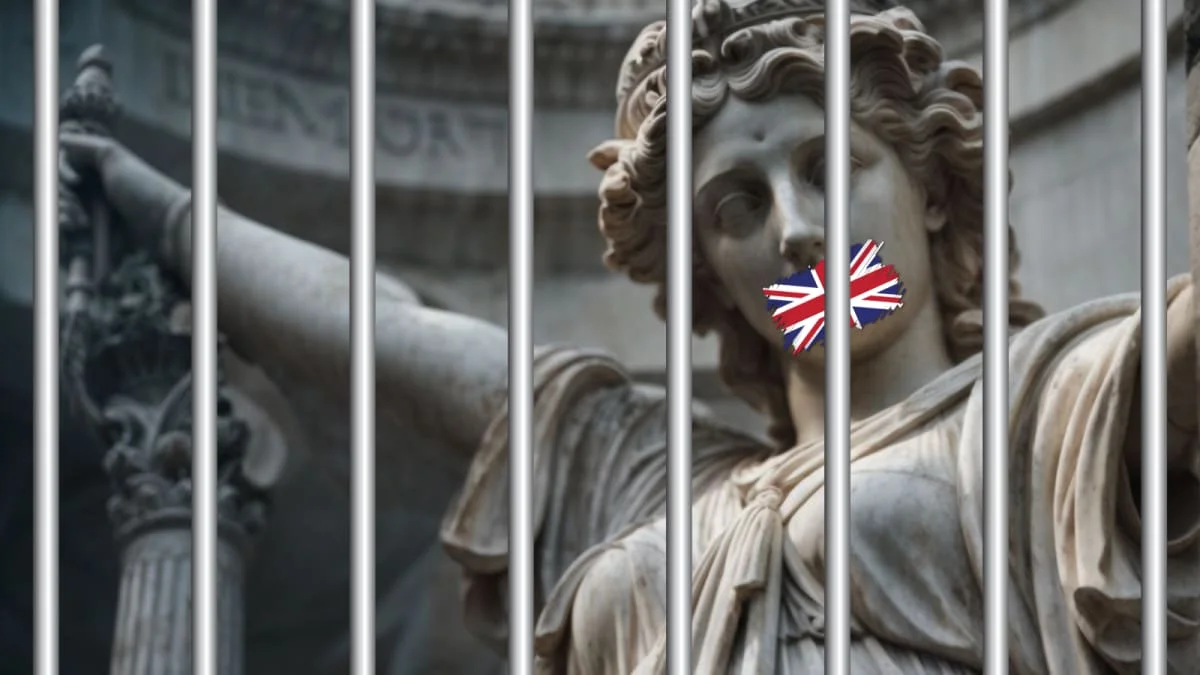
The core of the debate revolves around whether Britain is experiencing a de facto blasphemy ban, even without explicit laws.
The Absence of Formal Blasphemy Laws
For decades, Britain has not had active, statute-based blasphemy laws. The last successful prosecution was nearly fifty years ago, and the laws were largely considered obsolete. This historical context is important because the current concerns are not about the reintroduction of old laws, but about new ways of achieving similar outcomes.
The Mechanism of a "De Facto" Ban
Advocates of this view argue that the effect of current legal applications is similar to a blasphemy ban. This is achieved through:
Religiously Aggravated Offenses: Laws that increase penalties for crimes motivated by religious hatred can, in some interpretations, be used to punish speech that is critical but not necessarily hateful in intent.
Social and Political Pressure: High-profile cases, coupled with activism from religious groups, can create an environment where institutions, like state schools, become hesitant to allow any criticism of religious practices to avoid conflict. This can lead to self-censorship and the adoption of de facto prohibitions.
Legal Pursuits by Private Individuals or Groups: Cases like the one involving Hamit Coskun highlight how private legal actions, or the support for them, can influence the boundaries of acceptable speech.
Expert Analysis and Commentary
Commentators and politicians involved in the debate offer contrasting views on the situation.
Read More: Government Will Not Delay Local Elections After Court Case
"If the CPS succeeds, violent thugs will get a veto over what the rest of us are permitted to say, write, draw, or burn."– Toby Young, Director of The Free Speech Union
Toby Young frames the issue as a critical juncture where the state's legal processes could empower individuals to censor public discourse based on religious offense.
"The Freedom of Expression (Religion or Belief System) Bill is not a radical departure but a necessary reaffirmation of Britain’s moral and constitutional inheritance."– Article 1 Summary (selsey.org)
This perspective positions the proposed legislation as a defensive measure to protect existing freedoms, rather than an aggressive attempt to introduce new restrictions. It implies that the current trend is a deviation from historical British values that the bill seeks to correct.
"Christian anti-blasphemy activists used to concentrate on the arts and public life. But in recent high-profile blasphemy-related cases state schools have run into conflict with Islamist social activists."– Article 6 Summary (The Times)
Read More: People Talk About Donald Trump's Health After Late-Night Posts
This observation by The Times points to a shift in the nature of religious activism and its intersection with public institutions. It suggests that while historically certain religious groups advocated against blasphemy, the current landscape involves different religious groups and a broader range of public spheres being affected.
Conclusion and Implications
The current discourse surrounding blasphemy and free speech in Britain indicates a significant tension. The absence of formal blasphemy laws is contrasted with the perceived de facto implementation of such restrictions through the application of public order and communications legislation.
The Freedom of Expression (Religion or Belief System) Bill represents a legislative attempt to draw a clearer line, aiming to ensure that criticism of religion is not criminalized.
The case of Hamit Coskun and similar incidents serve as practical examples of the concerns raised by free speech advocates.
The debate highlights the complex challenge of balancing the right to express oneself freely with the need to prevent religious offense and maintain public order.
The outcome of these legal and political developments will have significant implications for the future of free speech in the United Kingdom.
Sources
selsey.org: Provides an overview of the Freedom of Expression (Religion or Belief System) Bill, framing it as a defense of British values against de facto blasphemy laws. https://selsey.org/2025/07/24/no-special-treatment-how-nick-timothys-free-speech-bill-challenges-britains-new-blasphemy/
express.co.uk: Reports on Robert Jenrick's support for the bill, directly quoting him on the Public Order Act being used as a blasphemy law. https://www.express.co.uk/news/politics/2066297/robert-jenrick-backs-bid-stop
gbnews.com: Features Toby Young's opinion piece, connecting the Hamit Coskun case to the potential erosion of free speech and the reintroduction of blasphemy laws. https://www.gbnews.com/opinion/islam-blasphemy-law-muslim-hamit-coskun
spectator.com: Discusses the broader concept of free speech in Britain, referencing concerns about the codification of Islamophobia and its potential impact. https://spectator.com/article/the-death-of-free-speech-in-britain/
afurtherinquiry.substack.com: Argues against new blasphemy laws, referencing a Labour MP's call to criminalize desecration of sacred texts and disparagement of prophets. https://afurtherinquiry.substack.com/p/defending-free-speech-why-britain
thetimes.com: Provides commentary from The Times, noting the historical context of blasphemy laws and the recent increase in de facto enforcement linked to conflicts between state schools and Islamist activists. https://www.thetimes.com/comment/the-times-view/article/the-times-view-on-blasphemy-laws-freedom-of-speech-ll02slr2g
Read More: Former Carillion Boss Fined For Misleading Investors