The Old Grain of Truth: Rice vs. Wheat and Growing Collectivism
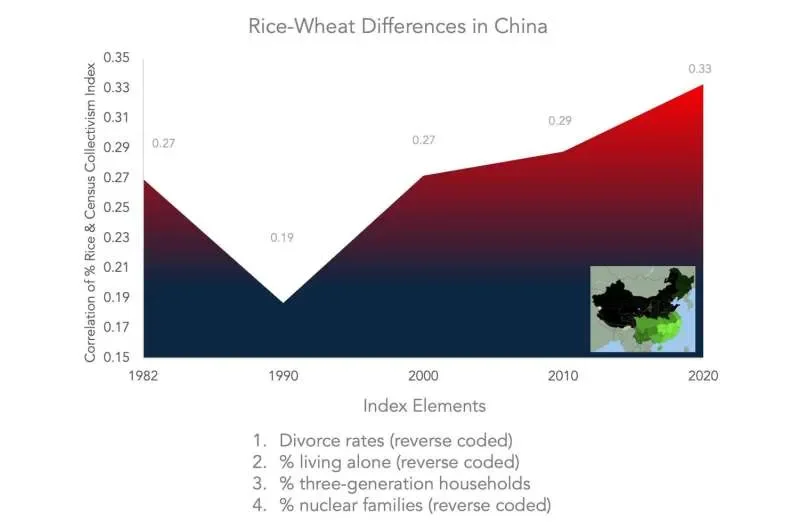
New data indicates that modernization, far from leveling cultural differences, may actually be amplifying them, particularly concerning collectivist tendencies rooted in agricultural history. In regions historically dependent on rice farming, which demanded extensive labor and communal effort, a tendency towards collectivism has not waned with economic advancement and urbanization. Instead, recent census data from China suggests this correlation has strengthened since the 1980s. This contrasts with expectations that increased wealth and a shift away from agriculture would dissolve these ingrained cultural patterns.
Families in traditionally rice-growing areas continue to exhibit a higher propensity for large, multigenerational households and a lower incidence of individuals living alone, compared to their counterparts in wheat-growing regions. This observation holds even as agriculture becomes a less dominant sector and societies become generally wealthier. The expectation that modernization would uniformly lead to more individualistic societal structures appears, in this specific context, to be misplaced.
Read More: Why the New Atheism movement lost public influence by April 2026

The Shifting Landscape of Values
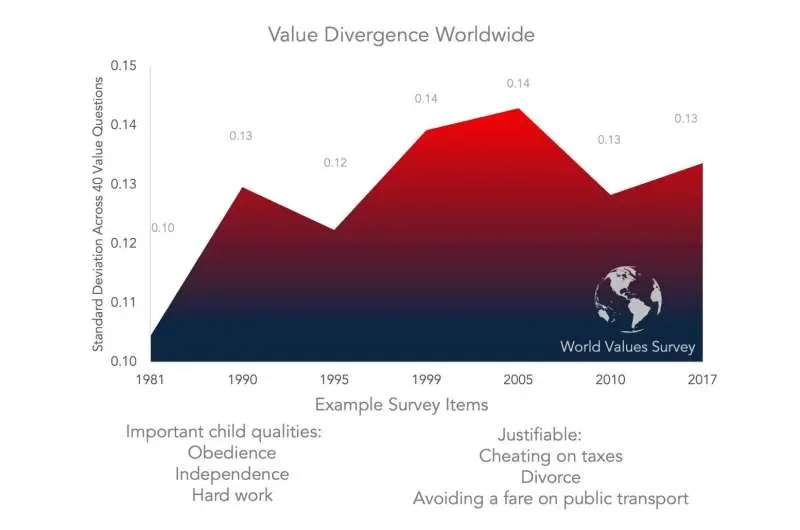
The broader impact of modernization on cultural values is complex, presenting a dual-edged sword. While the transition from traditional societal frameworks to contemporary organization brings about changes, the outcome isn't a simple erasure of distinctiveness. Instead, modernization introduces new dynamics.
Individualism vs. Group Harmony: Traditionally, societies prioritizing collective responsibility and group harmony are now increasingly placing emphasis on personal achievement and individual rights. This is a notable shift, particularly as societies move towards 'post-industrial' economies.
Innovation and Service Economies: These evolving economies rely heavily on creativity and innovation. The success of service-based sectors hinges on information, relationships, and ingenuity, rather than purely on agricultural or industrial output.
Quality of Life Emphasis: Post-industrial societies, in many instances, prioritize personal freedom, environmental concerns, and overall quality of life over solely pursuing economic growth.
Cultural Preservation in the Face of Change
Despite these shifts, there remains an ongoing effort to maintain cultural identities amidst rapid global change.
Archiving and Support: Institutions and communities actively work to archive cultural artifacts and support traditional artists.
Platforms for Exchange: Creating avenues for cultural exchange serves to highlight the enduring importance of cultural distinctiveness.
Integrating Modernity: Some communities are finding ways to incorporate modern conveniences while consciously retaining traditional values, suggesting a selective adoption of modernization's effects.
Background: The Traditional Divide
The foundation of the collectivism observed in rice-growing regions is traced back to the intensive labor and coordinated efforts required for successful rice cultivation. This necessity for communal engagement, unlike the generally less labor-intensive and more individualistic nature of wheat farming, historically fostered more cohesive and interdependent social structures. The recent data, however, suggests that these deeply embedded cultural inclinations are proving more resilient and perhaps even exacerbated by the very forces of modernization that some predicted would dilute them.
Read More: Tibetan Permafrost Thaw Releases Ancient Carbon, Risks Climate Tipping Point