China is actively mapping potential landing sites for a crewed lunar mission, aiming for a touchdown by 2030. This pursuit involves identifying regions rich in diverse geological materials, with a particular focus on the Rimae Bode area.

The nation's roadmap includes multiple launches using the Long March 10 rocket, designed to ferry a Lanyue lunar lander and a Mengzhou manned spacecraft into lunar orbit. Key components for this ambitious project, such as the Long March 10 carrier rocket, Mengzhou spacecraft, Lanyue lander, Wangyu lunar suit, and Tansuo crew rover, are currently in preliminary development. The stated goal is to make China the second nation to land astronauts on the Moon, significantly enhancing its standing in space exploration.

Initial reports suggest a two-person crew will occupy the Lanyue lander, with two crew members descending to the lunar surface. Once there, astronauts are slated to utilize the Tansuo rover for scientific tasks and sample collection. This development is generating what the US space sector describes as "concern," especially as NASA's Artemis program has seen its own timeline for crewed lunar landings adjusted, with Artemis III now designated for testing in low Earth orbit rather than an immediate lunar touchdown.
Read More: NASA Robot Mission Launched to Raise Swift Telescope Orbit, Add 10 Years
Progress and Hardware
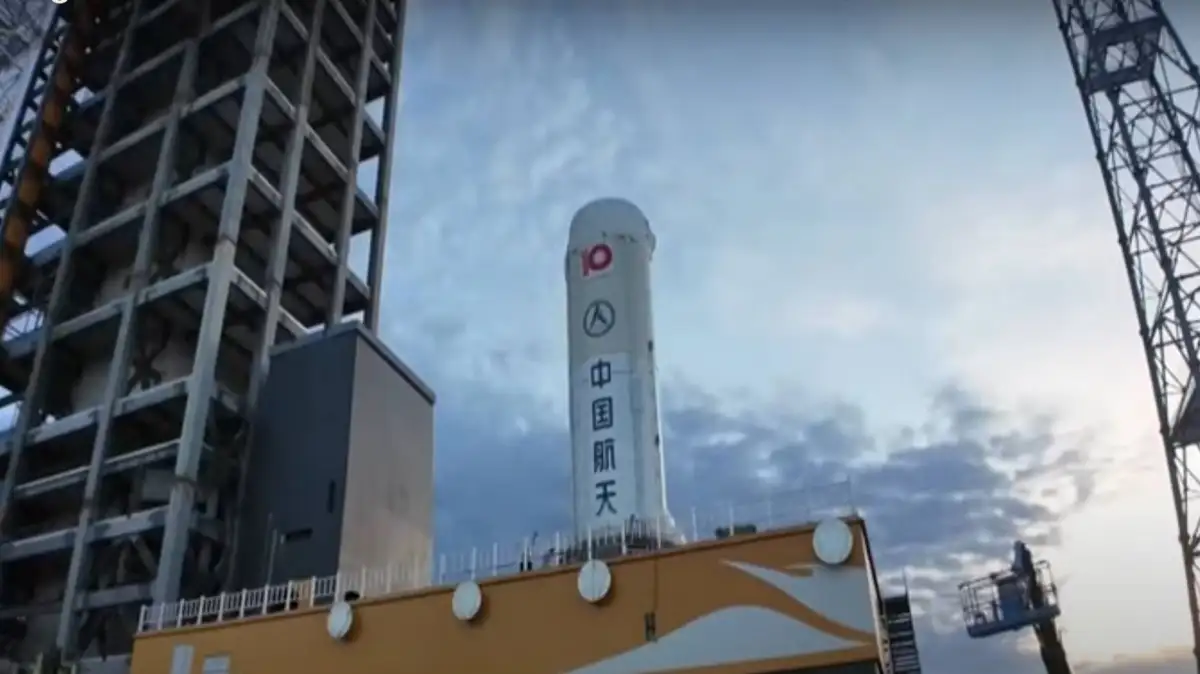
China's program is moving with a declared steady pace. The development phase for critical hardware, including the superheavy launch vehicle, the crewed lunar lander, and specialized lunar spacesuits, is reportedly proceeding on schedule. These suits are engineered to protect astronauts from the harsh lunar thermal environment and pervasive dust. The Lanyue lander itself is designed to accommodate two astronauts, facilitating travel between lunar orbit and the surface. The Mengzhou spacecraft will transport astronauts to orbit, remaining there while the Lanyue descends.
Strategic Location
Four prospective landing sites have been put forward by researchers from the China University of Geosciences in Wuhan. These locations, situated within the Rimae Bode region, are chosen for their potential to yield a variety of geological samples. The chosen areas are noted for offering volcanic debris, mare basalts, and terrains with high thorium concentrations, which are associated with rare-earth metals. This scientific focus aims to provide astronauts with access to a diverse range of materials.
Read More: China Ethnic Unity Law starts July 1 2026 for all citizens
The Broader Context
The push towards a lunar landing by 2030 signifies a remarkable trajectory for China's space program. This initiative is part of a larger vision, with commentators suggesting that lunar exploration missions will continue to expand following a successful landing. The recent launch of an uncrewed mission, Chang'e 6, utilizing a Long March 5 rocket, indicates ongoing activity in lunar exploration. Discussions about China's long-term space plans often frame this endeavor as a significant geopolitical statement. Some Chinese observers refer to the lunar exploration domain as "China's backyard," underscoring a perceived sense of territorial ambition. The competitive dynamic with the US is evident, with pronouncements from figures like a NASA nominee declaring the US will "beat China to the Moon," while simultaneously, a former NASA chief suggested China is likely to land humans on the Moon before the US does again.
Read More: ISS Crew Moves to Dragon Spacecraft Due to Air Leaks
"Based on this information, we propose four prospective landing sites in the traversable areas, which provide a range of diverse geological samples."- Paper in Nature Astronomy
The program's progress has been noted by observers, with one report suggesting that even an "unstated, even illusory" challenge from China might serve to expedite NASA's Artemis program. This perception of a "hot race" between the US and China for lunar activities, including the potential for nuclear reactors on the Moon, highlights the strategic significance attributed to lunar dominance.