Subsea Capabilities and Autonomous Systems Emerge
China has unveiled advanced underwater anti-mine technology, including submarine-launched drones capable of deep-sea reconnaissance and threat neutralization. These systems, showcased at the Chengdu Defence Technology Industry Expo, can be outfitted with specialized modules for detecting and eliminating underwater targets. The drones are designed for high-precision surveys and seabed mapping, with variants capable of reaching depths of up to 3,000 meters. They can also carry weapon modules to deal with threats like mines.
Separately, reports indicate the AJX002 underwater minelaying drone was revealed at a military parade. This platform is seen as a significant expansion of China's naval capabilities, particularly enhancing blockade potential. Its covert nature raises concerns about potential use in maritime denial operations, especially around Taiwan, thereby increasing the likelihood of naval mine deployment. The AJX002 is part of a growing family of Unmanned Large Underwater Vehicles (XLUUVs), signaling a push toward dominating uncrewed underwater warfare.
Read More: Space Force Mission: Private Satellites Inspect Target in 61 Hours
The emergence of dedicated underwater minelaying drones and sophisticated mine neutralization systems suggests a strategic focus on asymmetric naval warfare and control of maritime chokepoints.
Robotic Systems Integrated with AI
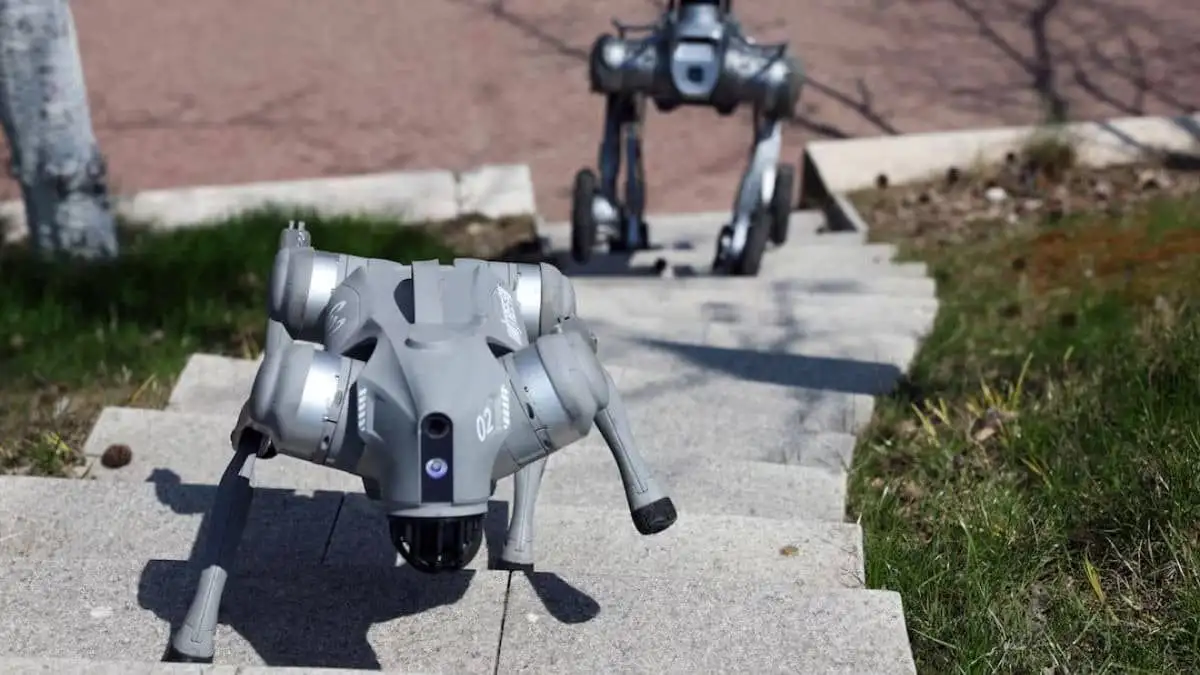
Beyond subsea assets, China is showcasing advancements in robotic ground systems, including "robot dogs." These are being integrated with artificial intelligence, with some systems utilizing domestic chip architectures like Huawei's Ascend. Marketing materials from Chinese defense contractors highlight the reliance on these domestically produced components to enable advanced AI models. Reports suggest that research institutions are working on autonomous battlefield aerial swarms and robot dogs, reflecting a move toward more automated combat systems.
While defense officials often emphasize the need for human control over weaponry, the trends point towards greater autonomy.
Background and Broader Context
These developments occur amidst a backdrop of China's broader military modernization. Recent events have seen the display of various advanced military hardware, including hypersonic missiles and intercontinental ballistic missiles, as well as the full nuclear triad. The emphasis on AI-powered systems, both on land and underwater, aligns with a broader global trend in military technology development. The reliance on domestically produced chips, such as Huawei's, is presented as a point of national technological development in AI. Reports, however, note that the actual operational status of all advertised technologies remains to be independently verified.
Read More: China Ethnic Unity Law starts July 1 2026 for all citizens