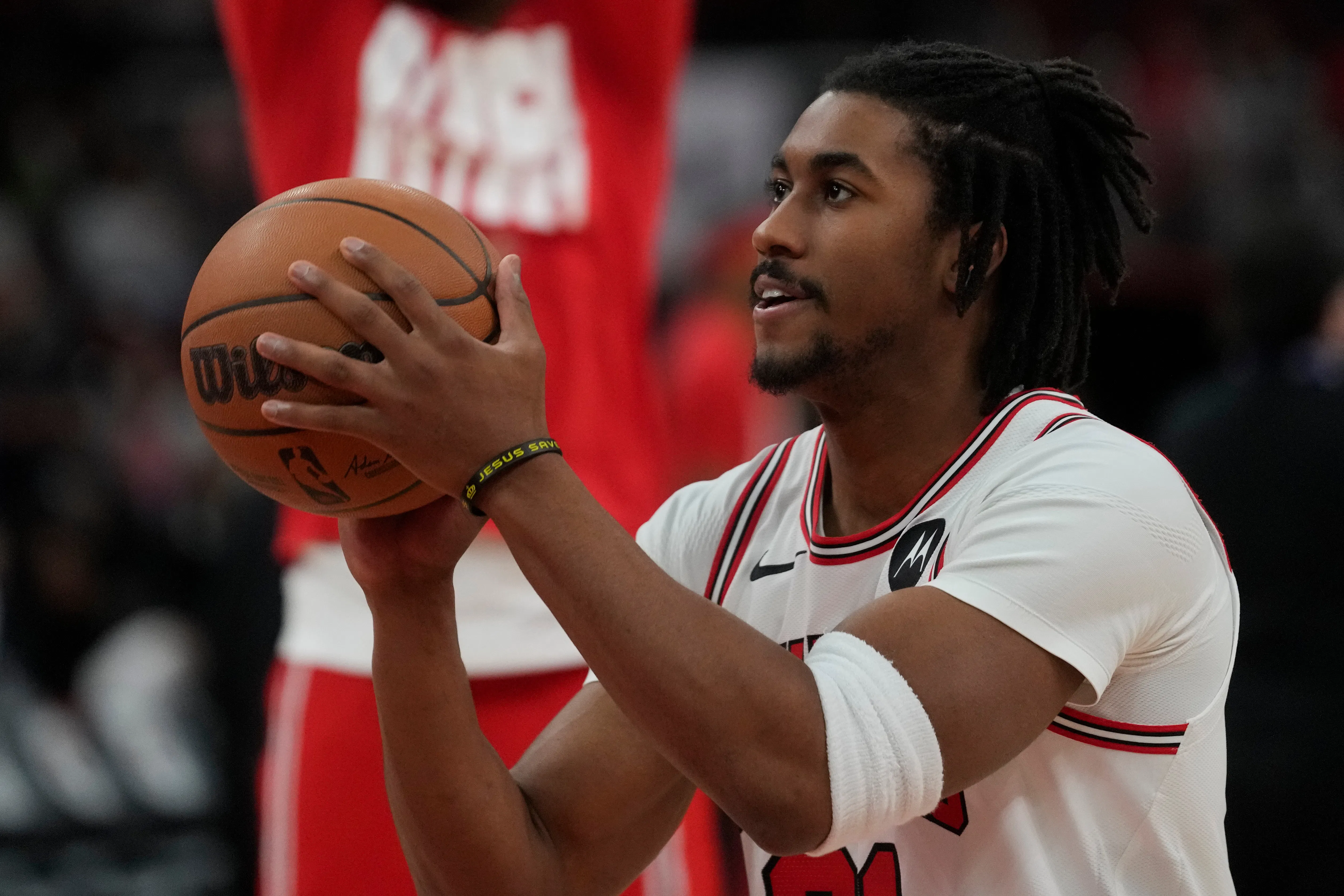
The Chicago Bulls have officially released guard Jaden Ivey, citing "conduct detrimental to the team" following a series of social media broadcasts. In these videos, Ivey, a former top-five NBA draft pick, expressed hostility toward the league’s institutional support for Pride Month, coupling these statements with expansive commentary on his personal religious beliefs.

The termination marks a convergence of corporate branding and athlete utility: a player whose on-court value had already eroded due to injury and performance inconsistency became an unmanageable liability the moment his public rhetoric clashed with the league’s marketing alignment.
The Anatomy of the Split
While headlines categorize this as a moral or ideological purge, the timing suggests a more mechanical reality of professional sports. Ivey’s professional standing was already fragile before his posts appeared:

| Metric | Context |
|---|---|
| Contract Status | In the final year of his rookie deal; no extension secured. |
| Physical Status | Currently sidelined with a left knee injury. |
| Team Role | Recent healthy scratch; fell out of rotation post-trade. |
Institutional Alignment: The NBA has positioned itself as an explicitly pro-LGBTQ+ organization for over a decade. Ivey’s public critique functioned as a direct negation of that brand identity.
The Threshold of Tolerance: In the insular ecosystem of professional locker rooms, divergent personal views are often compartmentalized. However, by moving his rhetoric to a public, unfiltered digital stage, Ivey bypassed the league's ability to curate or mitigate the fallout, effectively forcing the franchise's hand.
Fragility and Expendability
Beyond the ideological friction, this situation exposes the precarious nature of the modern athlete’s labor contract. When a player maintains high output, organizations often absorb the friction of controversial personal conduct. When output is low—or when a player is already perceived as a liability—the organization exercises its right to severance with immediate, calculated efficiency.
Read More: 2026 World Cup 48 Teams: How Many Games and Where is the Final?
The discourse surrounding Ivey’s mental health, referenced in reports concerning his recent shift in behavior and social media output, highlights a tension in how the league handles those it views as both underperforming and unpredictable.
Contextual Undercurrents
The dismissal of Jaden Ivey serves as a case study in how corporations navigate individual dissent. Ivey, traded from the Detroit Pistons to Chicago earlier this year, had been struggling to regain form following recurring physical setbacks. His transition to social media "ranting"—a shift that concerned observers—coincided with a period of professional isolation.
While some observers point to this as a win for institutional inclusion, others see a more clinical exchange: a business eliminating a depreciating asset that had become a threat to its established cultural marketability. There is no nuance here; the league operates on a binary of protection versus disposal. When a player ceases to be an asset, the franchise simply stops protecting the narrative.
Read More: St. John's Zuby Ejiofor's NCAA Run Ends With Sweet 16 Loss and Injury