Tamil Nadu, a state with significant potential for renewable energy, is seeing localized successes in solar power adoption, even as broader implementation faces hurdles. A notable example is the Bollineni Hillside Residential Township Owners Association (BHRTOA) in Chennai, which has taken a substantial step towards energy independence. This initiative highlights a growing interest in solar power among communities, set against a backdrop of state-level efforts to boost renewable energy generation and absorption.
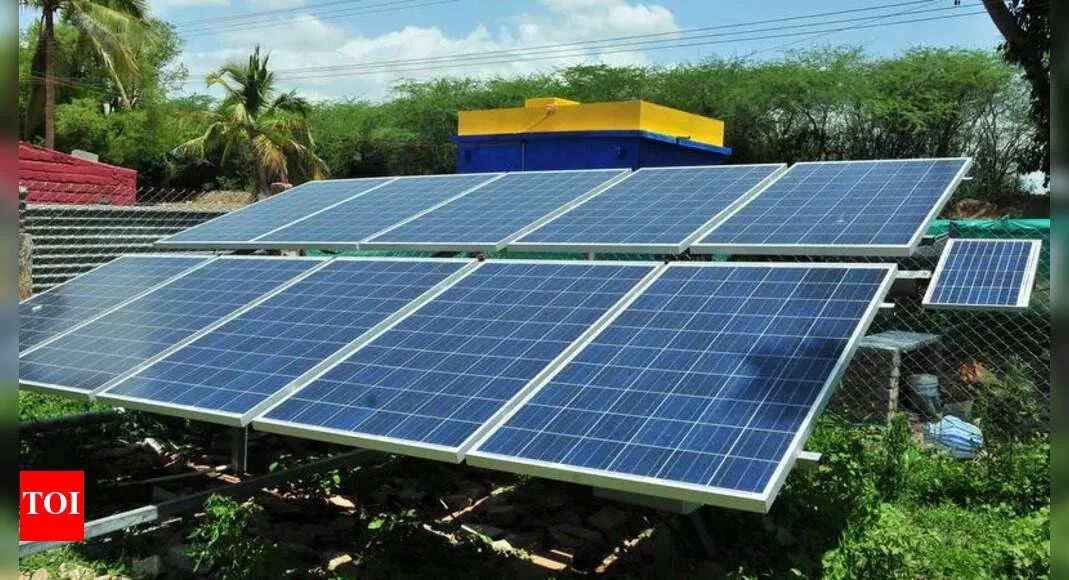
The state of Tamil Nadu holds substantial promise for renewable energy, particularly solar power. Recent data indicates a significant installed solar capacity, placing it among the top states in India. However, despite this potential and government schemes aimed at promoting solar energy, widespread adoption, especially for rooftop installations, appears to be encountering obstacles. This report examines the progress and challenges of solar energy integration in Tamil Nadu, focusing on a successful community-led initiative.
Read More: How Santos Job Cuts and Asset Sales Affect Australian Energy Workers
Renewable Energy Landscape in Tamil Nadu
Tamil Nadu is recognized for its contributions to renewable energy generation.
Wind Energy: The state leads in wind energy production within the southern region, generating 4,114.02 MUs.
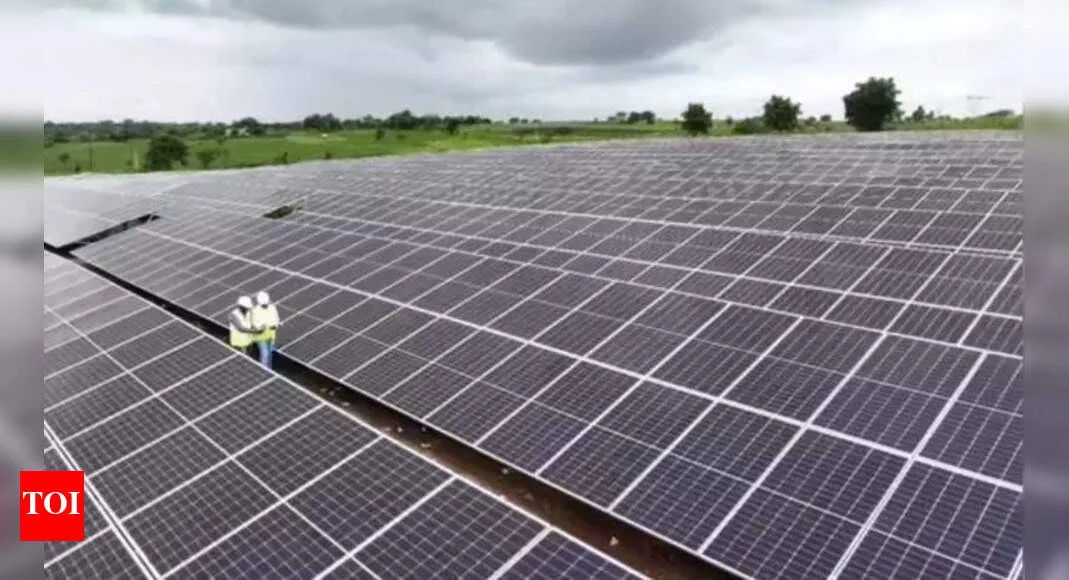
Solar Capacity: Tamil Nadu ranks fourth nationally with an installed solar power capacity of 10,159.61 MW. This capacity has seen new highs, with peak solar generation reaching 7,276 megawatts (MW) on a single day. Solar power has accounted for about one-sixth of the state's total power consumption on certain days.
Hydro Power: The state's hydro wing manages 47 power stations with a total installed capacity of 2,321.90 MW.
"The new renewable energy hybrid policy will enhance wind and solar generation, helping Tamil Nadu lead among the southern states." - Official source
Solar Potential: Experts estimate Tamil Nadu's solar power potential to be as high as 1.2 lakh MW. Realizing this full potential, however, is seen as unfeasible without advanced battery storage systems.
Future Plans: Tamil Nadu plans to add 18,400 MW of solar capacity over the next decade and is preparing detailed project reports for pumped storage power houses. The state aims to accelerate the PM's rooftop solar scheme, targeting 25 lakh households within a year.
Bollineni Hillside's Solar Initiative
The Bollineni Hillside Residential Township Owners Association (BHRTOA) has implemented a significant solar power project, demonstrating community-driven renewable energy solutions.
Read More: How Jammu and Kashmir Reached Their First Cricket Final After 67 Years by Beating Bengal

Project Scope: BHRTOA has divided its solar initiative into two units, each generating 97 kW of power.
Cost Savings: The community's estimated monthly electricity bill is around ₹10 lakh. The adoption of solar power is expected to reduce this substantial cost.
Vendor Selection: Identifying and settling on a vendor was identified as the most challenging aspect of the project. The chosen vendor was found through the Federation of OMR Residents Association (FOMRRA).
Community Skills: The project has effectively utilized the diverse skill sets within the community, including the IT expertise of BHRTOA president, Sajeev Kumar.
"The exercise synergies the various skillsets (BHRTOA president Sajeev is an IT professional) found within the community." - Thirugnanam, Secretary, BHRTOA
Challenges in Rooftop Solar Adoption
Despite the state's renewable energy goals and the presence of schemes like the PM Surya Ghar Scheme, widespread rooftop solar adoption faces noticeable headwinds.
Read More: Venezuela's Natural Gas Could Help Neighbors, But Needs Big Changes
Low Application Numbers: In the six months following the PM Surya Ghar Scheme's introduction, only 70,122 consumers registered, with just 18,032 applications submitted. This indicates a sluggish uptake compared to the scheme's objectives.
Comparison with Other States: Gujarat has installed 2.5 lakh rooftop connections in a single year, and Kerala has achieved 55,000 installations, significantly outperforming Tamil Nadu's numbers.
Perceived Reasons for Hesitancy:
Lower Electricity Tariffs: Officials suggest that lower electricity tariffs in Tamil Nadu compared to other states may be a reason why consumers are not in a hurry to install solar systems.
Consumer Awareness: There is a suggestion that more awareness is needed among the public regarding the benefits and processes of such schemes.
Hesitation to Adopt: Despite vendor availability, a general hesitancy among consumers to adopt solar energy persists.
"However, Tangedco officials said the lower electricity tariffs in Tamil Nadu compared to other states was a reason why people here were in no hurry to install rooftop solar power systems." - Source analysis
Read More: How Rajya Sabha Elections on March 16 Affect 37 Seats in 10 States
Cost-Benefit for Consumers: For households with a bi-monthly consumption of approximately 700 units, rooftop solar plants are seen as beneficial, given an average per-unit cost of 5.46. Banks are involved to offer loans, allowing consumers to save on electricity bills while paying off the capital expenditure through Equated Monthly Installments (EMIs).
Grid Absorption and Technical Considerations
The ability of the state's grid to absorb generated solar power is a critical factor in its renewable energy strategy.
Peak Absorption: The state has previously recorded a daily absorption of 49.3 MU of solar power.
Grid Capacity Needs: Achieving the full solar potential of 1.2 lakh MW is deemed infeasible without battery storage systems.
Future Generation Potential: If the entire solar potential is harnessed, Tamil Nadu could generate 203.67 trillion units of power annually, exceeding projected demand.
"A Tamil Nadu Green Energy Corporation official said tapping the entire solar power potential is not feasible without battery storage systems." - Source analysis
Expert Perspectives on Energy Transition
Industry observers and officials offer insights into the state's energy future and the technologies involved.
Read More: Brooklyn Bagel Shop Uses Batteries to Save Money and Help the Environment
Technology Readiness: The state is exploring various technologies for its clean energy transition, with a focus on those that have high Technology Readiness Levels (TRLs).
Bioenergy and Solar PV: Bioenergy technologies with established supply chains are available but require regulatory support. The market potential for solar Photovoltaics (PVs) is high, considering planned capacity additions of 20 GW.
Hybrid Policies: New hybrid energy policies are expected to bolster both wind and solar generation.
"TN is rich in renewable energy, with a large capacity of both existing installations and projects in the pipeline." - WRI Report
Conclusion and Way Forward
Tamil Nadu demonstrates a dual narrative in its solar energy journey: significant state-level potential and a growing capacity for large-scale wind and solar generation, juxtaposed with slower-than-anticipated adoption of rooftop solar solutions by individual households. The success of community-led initiatives like BHRTOA offers a promising model for decentralized energy generation.
Read More: How the March 16 Rajya Sabha Election Affects 37 Seats in 10 States
Key Findings:
Tamil Nadu possesses substantial renewable energy resources, particularly in wind and solar.
Community-level projects can overcome adoption barriers by leveraging collective resources and expertise.
Wider adoption of rooftop solar is hampered by factors including lower electricity tariffs and potentially insufficient awareness campaigns.
Grid integration and storage solutions are crucial for maximizing the utilization of the state's vast solar potential.
Implications: To fully realize its renewable energy goals, Tamil Nadu must address the impediments to rooftop solar adoption. This may involve:
Enhanced public awareness campaigns about the benefits and financial viability of solar installations.
Reviewing tariff structures or introducing additional incentives to make solar more attractive.
Streamlining subsidy processing and vendor registration to simplify the adoption process.
Investing in grid modernization and energy storage solutions to support intermittent renewable sources.
Next Steps: Continued monitoring of the PM Surya Ghar Scheme's progress and the impact of community-led initiatives will be essential. Further analysis into the specific barriers faced by different consumer segments could inform targeted policy adjustments.
Sources:
The Hindu: https://www.thehindu.com/news/cities/chennai/chennairwashines-in-tnssolar-race/article70633195.ece
EQ Mag Pro: https://www.eqmagpro.com/tamil-nadu-stands-second-in-renewable-energy-generation-in-south-again-eq/
The Times of India (December 25, 2025): https://timesofindia.indiatimes.com/city/chennai/tamil-nadu-achieves-new-milestone-in-solar-power-generation-and-grid-absorption/articleshow/126173921.cms
The Times of India (January 30, 2025): https://timesofindia.indiatimes.com/city/chennai/tn-fails-to-make-power-while-the-sun-shines/articleshow/117704605.cms
WRI: https://www.wri.org/research/exploring-technologies-clean-energy-transition-tamil-nadu
The Times of India (July 19, 2025): https://timesofindia.indiatimes.com/city/chennai/tn-has-1-2-l-mw-solar-power-potential-taps-less-than-1/articleshow/122771206.cms
Shakthipower: https://solar.shakthipower.com/2019/06/solar-power-for-homes-in-tambaram.html
The New Indian Express: https://www.newindianexpress.com/states/tamil-nadu/2024/Oct/23/solar-scheme-fails-to-shine-in-tamil-nadu-only-18k-applicants-in-six-months
Suntastic Solar Systems: http://www.suntasticsolarsystems.com/

)