Venezuela, a nation endowed with vast hydrocarbon resources, stands at a critical juncture. While its oil sector has historically dominated global attention, the country's significant natural gas reserves are emerging as a potentially more accessible and immediate prize. This natural gas could play a vital role in bolstering regional energy security and stabilizing Venezuela's own power sector. However, realizing this potential is hampered by a lack of essential infrastructure and requires substantial investment and policy adjustments. The current geopolitical landscape, marked by U.S. involvement and sanctions, further complicates the path forward, with implications for both domestic stability and international energy markets.
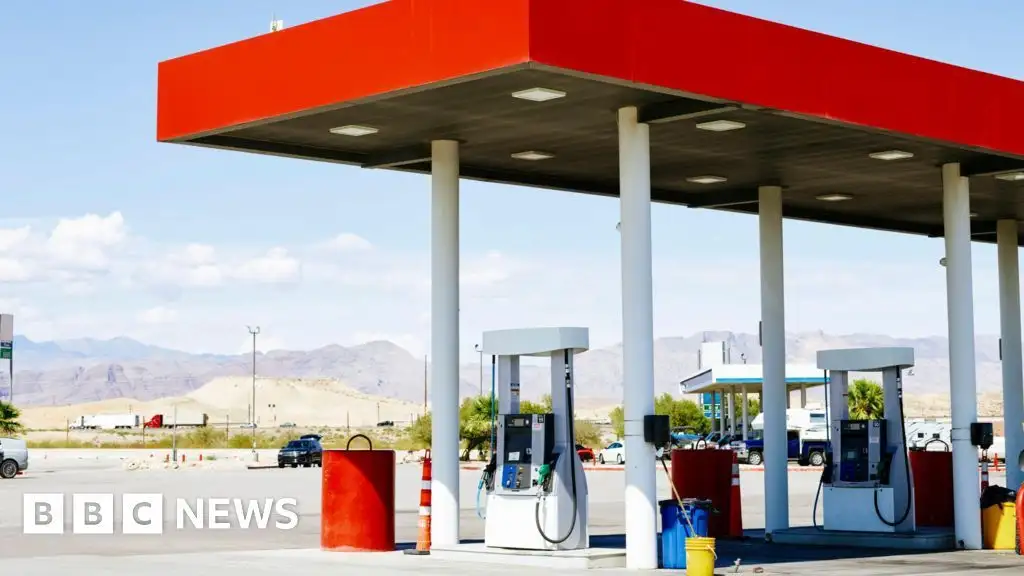
Venezuela possesses substantial oil and gas reserves, ranking among the world's largest.
Despite these reserves, the country faces challenges in effectively utilizing its natural gas.
Developing natural gas exports and domestic use requires significant infrastructure investment.
U.S. actions and sanctions create a complex environment for energy sector development.
The nation's oil industry is in need of substantial operational and financial support.
Deep Dive: Natural Gas as an Emerging Opportunity
Venezuela holds a notable position among nations with significant natural gas reserves, ranking within the top ten globally. Yet, a stark disconnect exists between this potential and its actual utilization. The nation's current natural gas balance indicates an undercapitalization, with a substantial portion potentially being flared or vented due to a lack of appropriate infrastructure.
Read More: Solaris Energy SEI Stock Price Forecast Reaches $91.98 by July 2027
Infrastructure Deficits: The country lacks critical infrastructure for reinjecting gas into oil fields, essential for maintaining oil production, as well as facilities for gas storage, distribution, and residential supply.
Regional Interdependence: Neighboring countries, like Trinidad and Tobago, are keen to access Venezuelan offshore gas to supplement their own dwindling production and optimize LNG export capacity. A finalized deal has been pending for a decade.
Domestic Electricity Sector: More efficient use of natural gas could significantly strengthen Venezuela's domestic electricity sector, improving energy reliability within the country.
Gas Infrastructure Requirements:
| Need | Current Status | Impact of Development |
|---|---|---|
| Infrastructure for reinjection into oil fields | Insufficient | Enhances oil recovery, reduces waste gas |
| Natural gas storage facilities | Lacking | Improves supply reliability and management |
| Distribution networks for residential use | Limited | Boosts domestic energy security, improves quality of life |
| LNG export terminals | Absent | Enables international market access, generates revenue |
| Pipelines for regional export | Under discussion/limited | Facilitates cross-border energy trade, regional stability |
The Complexities of Venezuela's Oil Sector
While the focus shifts towards natural gas, Venezuela's oil industry remains a central, albeit troubled, aspect of its economy and international relations. The sector is characterized by vast potential but crippled by decades of underinvestment, mismanagement, and the impact of international sanctions.

Untapped Potential: Venezuela possesses some of the world's largest proven oil reserves, particularly heavy, sour crude, which requires specialized equipment and expertise to extract and process.
Need for Investment: The upstream oil industry is in dire need of significant operational and financial support to revive production levels. International oil companies (IOCs) are seen as crucial for providing this much-needed capital and technical know-how.
Sanctions' Impact: U.S. sanctions have severely restricted Venezuela's access to financing, technology, and partnerships, fundamentally impeding the sector's ability to function and grow.
Production Recovery Timeline: Estimates suggest that any substantial increase in Venezuelan oil production would require years, not months, and would necessitate considerable foreign investment and a stable operational environment.
Geopolitical Influence: The U.S. government's actions, including sanctions and asset seizures, have had a noticeable impact on investor sentiment, with defense stocks and certain U.S. energy companies seeing fluctuations in their market value.
"Venezuela’s upstream oil industry desperately needs more operational and financial support." - Wood Mackenzie analysts
International Sanctions and Their Effects:
Restricted Access: Sanctions limit access to money, credit, partnerships, and technology crucial for the oil and gas industry.
Market Uncertainty: The geopolitical climate, influenced by U.S. foreign policy decisions, creates volatility in global oil markets.
Limited Impact on Global Prices (Short-Term): While the potential exists for Venezuela to influence global prices, its current production capacity is too low to make a significant immediate impact. Experts suggest it will take years for production to rebound.
Regulatory Landscape and Governance
The regulatory environment for Venezuela's oil and gas sector is complex and under the purview of various governmental bodies. Evidence suggests a lack of market-based principles and performance requirements in current regulations, which may hinder efficiency and environmental stewardship.

Ministry of Energy and Mines (MINEC): Responsible for regulating emissions from oil and gas operations, including authorizing flaring and venting activities, which require submitting an Environmental Impact Assessment (EIA).
National Gas Entity: Reports to the Ministry of Petroleum and is tasked with coordinating gas development activities.
Market-Based Principles: Current information indicates no clear evidence of market-based principles being employed to reduce gas flaring, venting, or associated emissions.
Performance Requirements: Similarly, evidence regarding the implementation of performance requirements for emissions reduction is not readily available.
Expert Perspectives on Revitalization
Reviving Venezuela's oil and gas industry, including its nascent natural gas sector, is viewed by experts as a long-term endeavor contingent on significant policy shifts and international engagement.
"Venezuela’s ongoing descent into economic and political chaos is a cautionary tale of the dangerous influence that resource wealth can have on developing countries." - Council on Foreign Relations
Attracting Investment: International oil companies (IOCs) require regulatory and financial certainty to make substantial investments. The current sanctions regime and the domestic political/economic situation create significant risk.
Return on Investment: For IOCs to consider investing, a reasonable timeframe for a return on investment is a prerequisite.
Geopolitical Risk: Increased geopolitical tensions, including potential U.S. intervention, are seen as having the capacity to disrupt production, tighten specific crude markets (like diesel), and ultimately lead to higher global oil prices in the long term.
Governance Reform: Dramatic changes to Venezuela's investment regime and governance structures are considered essential for the country to effectively capitalize on its vast natural resources, whether oil or gas.
Conclusion: A Bifurcated Path Forward
Venezuela's energy future appears to be on a bifurcated path, with natural gas presenting a more immediate and regionally relevant opportunity compared to the long, arduous recovery required for its oil sector. The nation's substantial natural gas reserves offer a clear pathway to enhancing its own electricity infrastructure and contributing to regional energy security, particularly for neighbors reliant on gas imports. However, the realization of this potential is inextricably linked to overcoming significant infrastructural deficits and attracting investment, which are currently obstructed by both internal challenges and external pressures, notably U.S. sanctions.
Read More: Venezuela Man Shows Cars After Asking for Money
The oil sector, while holding immense resource potential, faces a much steeper and longer climb. Significant operational and financial resuscitation is needed, requiring a return of international oil company confidence, which in turn hinges on a stable political and regulatory environment. Any major geopolitical shifts or interventions could have immediate, albeit potentially short-lived, impacts on global markets, but the fundamental issue remains Venezuela's capacity to produce and export at scale. The nation's governance and regulatory framework also require substantial reform to foster the confidence necessary for large-scale, long-term investment in either its oil or gas industries.
Natural gas offers a more immediate regional energy prize due to lower infrastructure barriers compared to oil revitalization.
Investment in gas infrastructure is critical for both domestic stability and export potential.
The oil sector's recovery is projected to take years and requires substantial foreign capital and technical expertise.
U.S. sanctions and geopolitical actions significantly complicate the investment landscape for both oil and gas.
Fundamental changes in governance and regulatory certainty are prerequisites for attracting the necessary investment for any significant energy sector rebound.
Sources Used
Center on Global Energy Policy at Columbia University SIPA: Provides analysis on the potential for Venezuela's natural gas exports and their impact on regional energy security and Venezuela's electricity sector.🔗 Link: https://www.energypolicy.columbia.edu/more-efficient-use-of-venezuelas-natural-gas-could-strengthen-the-regions-energy-security-and-the-countrys-electricity-sector/
U.S. Energy Information Administration (EIA): Offers comprehensive international energy information, including country-specific data and analyses for Venezuela.🔗 Link: https://www.eia.gov/international/analysis/country/VEN
UConn Today: Features an economist's perspective on the potential impact of Venezuelan oil on global gas prices and the mechanisms of U.S. sanctions.🔗 Link: https://today.uconn.edu/2026/01/can-venezuelas-oil-bring-down-gas-prices-a-uconn-economist-explains/
Wood Mackenzie: Analyzes what changes in Venezuela could mean for oil production, highlighting the need for operational and financial support in the upstream sector.🔗 Link: https://www.woodmac.com/blogs/energy-pulse/what-could-change-in-venezuela-mean-for-oil-production
RBAC Inc.: Discusses Venezuela's potential as a natural gas powerhouse, detailing the lack of infrastructure for gas utilization and export.🔗 Link: https://rbac.com/beyond-oil-could-venezuela-be-a-natural-gas-powerhouse/
World Bank (ieexi): Provides information on Venezuela's regulatory framework for emissions from oil and gas operations, including flaring and venting.🔗 Link: https://flaringventingregulations.worldbank.org/venezuela-republica-bolivariana-de
Council on Foreign Relations: Explores Venezuela's history as a petrostate and the economic and political implications of resource wealth.🔗 Link: https://www.cfr.org/backgrounders/venezuela-crisis
Atlantic Council: Examines the requirements for reviving Venezuela's oil and gas industry, emphasizing the need for renewed international investment and policy certainty, as well as the potential impact of U.S. intervention.🔗 Link: https://www.atlanticcouncil.org/dispatches/what-it-takes-to-revive-venezuelas-oil-and-gas-industry/
Americas Quarterly: Provides an outlook on Venezuela's oil, gas, and mining sectors post-Maduro, emphasizing the need for investment regime changes and the potential for regional energy security contributions.🔗 Link: https://www.americasquarterly.org/article/venezuela-the-post-maduro-oil-gas-and-mining-outlook/
CNN Business: Reports on statements regarding U.S. control of Venezuelan oil reserves and the implications for investment and production.🔗 Link: https://www.cnn.com/2026/01/03/business/oil-gas-venezuela-maduro