The Election Commission of India has formally announced the schedule for biennial elections to the Rajya Sabha, the upper house of Parliament. On March 16, 2026, 37 seats spanning 10 different states will be contested. This administrative move follows the upcoming expiration of terms for several sitting members in April 2026. Because the Rajya Sabha is a permanent body that never dissolves, these periodic elections serve as the primary mechanism for updating its membership based on the current strength of state legislatures. The outcome of these contests is a vital factor in determining the legislative path for the national government, as the upper house holds the power to review and vote on federal laws.
Timeline of the Election Process
The Election Commission (EC) has established a specific window for the selection of new members. According to official notifications, the process follows a strict legal sequence:
Read More: London Labour Councillors Join Green Party Due to Starmer's Policies Before May Elections
February 26, 2026: Formal issuance of the election notification.
March 16, 2026: Polling takes place from morning until afternoon.
March 16, 2026: Counting of votes begins immediately after polling concludes.
April 2026: Terms of 37 sitting members expire, making room for the newly elected officials.
"The election process will begin with the issue of notifications on 26 February 2026, and counting of votes will take place on the same day as polling." — Election Commission of India / PTI
Breakdown of Vacant Seats by State
The 37 seats are distributed across 10 states, with some regions holding more influence due to a higher number of vacancies. The following table illustrates the distribution of these seats:
| State | Number of Vacant Seats |
|---|---|
| Maharashtra | 7 |
| Tamil Nadu | 6 |
| Bihar | 6 |
| West Bengal | 5 |
| Odisha | 4 |
| Assam | 3 |
| Telangana | 2 |
| Chhattisgarh | 2 |
| Haryana | 2 |
| Himachal Pradesh | 1 |
| Total | 37 |
The Election Commission has already requested state Chief Electoral Officers to propose Returning Officers to oversee the transparency of these polls.
Read More: How Jammu and Kashmir Reached Their First Cricket Final After 67 Years by Beating Bengal
Probing the Balance of Power
The Shift in Seat Share
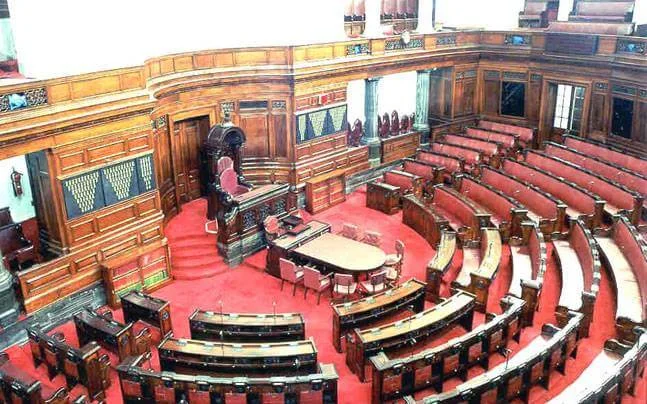
The Rajya Sabha currently sees a divide between the National Democratic Alliance (NDA) and the Opposition. As of late 2025, records show the NDA holding 129 seats, while the opposition controls 78. With 37 seats up for election in March 2026, observers are looking at whether the ruling alliance can maintain its majority or if the opposition will gain ground. Because members are elected by state MLAs (Members of the Legislative Assembly), the results of recent state elections in places like Bihar and Maharashtra will directly dictate which parties win these seats.
Election Methodology
Unlike the Lok Sabha, where citizens vote directly, Rajya Sabha members are chosen through a Proportional Representation system. This involves a complex math formula where a candidate needs a specific number of votes from state lawmakers to win.
Read More: Why Hillary Clinton Says Trump Administration Hid Epstein Files

One viewpoint suggests this system ensures that even smaller parties in states can have a voice in the national parliament if they have enough MLAs.
Another viewpoint focuses on the fact that major parties often move their strongest leaders to the Rajya Sabha when they cannot win a direct public vote, leading to debates about the "representative" nature of the house.
State-Level Influence
The 2026 elections are heavily influenced by state-level politics. For example:
In Maharashtra, the split within various factions of regional parties makes the 7-seat contest difficult to predict.
In Bihar, the recent 2025 assembly elections have changed the number of MLAs each party has, which will now be tested during the March 16 vote.
In Odisha, the terms of members like Munna Khan and Mamata Mohanty are ending, requiring the state assembly to choose successors in a new political environment.
Expert Analysis
Experts in Indian constitutional law and electoral politics point to the Rajya Sabha as a "house of continuity." Because one-third of the members retire every two years, the house avoids the sudden shifts in power seen in the Lok Sabha.
Read More: How Rajya Sabha Elections on March 16 Affect 37 Seats in 10 States

Clear IAS Analysis:
"Procedures for Rajya Sabha elections are more complex when compared to Lok Sabha elections… To win a Rajya Sabha seat, a candidate should get the required number of votes [based on the strength of the assembly]."
Political Narrative (Jagran Josh):
"State legislative assemblies elect members to the Rajya Sabha… A strong performance in state elections can build momentum and enhance public perception before the General Elections."
Findings and Implications
The announcement of the March 16 election confirms that the federal government is moving to fill vital legislative roles before the 2026 mid-year mark.
Legislative Stability: By filling these 37 seats, the Parliament ensures that committees and voting blocks are at full strength for the 2026-2027 sessions.
Party Strategy: Political parties are now tasked with selecting candidates who can win the support of their state assemblies. This often involves internal negotiations within coalitions.
National Impact: While these are state-based votes, the collective result will determine if the central government can easily pass bills in the upper house or if they will face significant blocks from the opposition.
Read More: Peru Congress Removes President Jerí After Secret Meeting Scandal
The next step in this process is the issuance of the official notification on February 26, which will mark the start of candidate nominations.
Primary Sources and Context
Indian Express: Elections to 37 Rajya Sabha seats across 10 states on March 16 - Official announcement and date confirmation.
Pragativadi: Rajya Sabha Election 2026 Process Begins - Breakdown of seats per state and names of retiring members.
India Today: Will 2026 Rajya Sabha battle reshape India’s politics? - Analysis of the 129 vs 78 seat balance between NDA and Opposition.
Clear IAS: Election to Rajya Sabha: Know the procedure - Technical explanation of the proportional representation voting system.
Jagran Josh: Upcoming Elections in India 2025, 2026 till 2029 - Timeline of state assembly terms and their impact on RS elections.

)