
Cambridge, UK - A sweeping masterplan for the Cambridge Science Park has been formally submitted, charting a course for a threefold increase in its economic output, projected to surpass £3 billion annually. The ambitious 30-year redevelopment proposal, spearheaded by Trinity College, outlines a significant expansion of research-focused space and the creation of a new public "Park of Science."
The plan targets an increase in space for companies in life sciences, technology, and clean energy from 260,000 square meters to approximately 743,000 square meters. This expansion is anticipated to generate up to 20,000 new high-skilled jobs, adding to the park's current workforce of over 7,000. The privately funded initiative is positioned as a critical catalyst for both regional and national economic advancement, aiming to secure the development of future breakthroughs within the UK.
Public Realm and Collaboration at Core
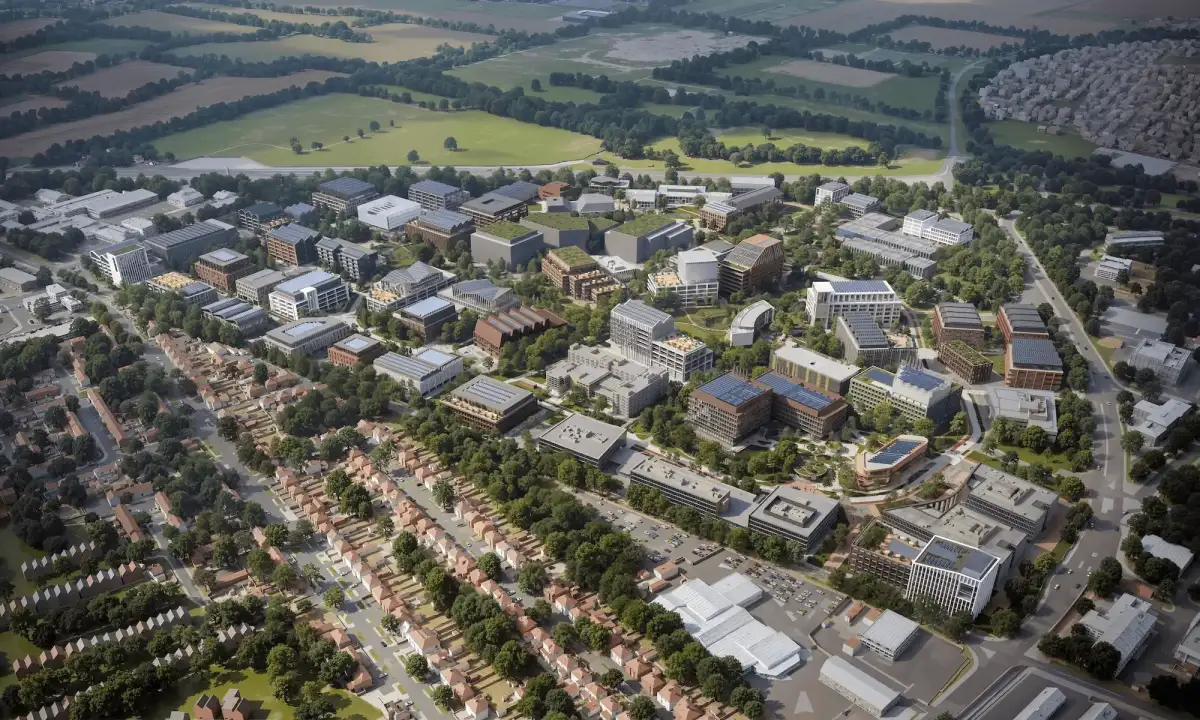
Central to the expansion is the vision for a new "Park of Science," conceived as a publicly accessible space designed to foster collaboration and community engagement. This area is set to feature- include green routes, lakes, biodiverse spaces, an outdoor museum of science, and various meeting and eating locales. This initiative aims to make STEM fields more accessible and engaging, particularly for young people and families in Cambridge and surrounding areas, with potential links to the Cambridge Science Centre.
Read More: FIFA World Cup 2026 Revenue Reaches $15 Billion With New Ticket Prices
Redevelopment Strategy and Partnerships
The masterplan details a phased approach to redeveloping the existing 152-acre site. Plans involve repurposing current low-density buildings to create over 8 million square feet of research-focused space. Throughout this transformation, approximately half of the park is slated to remain as open landscape and lakes.
Trinity College, the park's founder in 1970, is collaborating with long-leaseholders including Morgan Stanley, Brockton Everlast, IQHQ, Oxford Properties, and Stanhope to bring this extensive project to fruition. The phased investment strategy by Trinity College will span over five decades, focusing initially on refreshing existing infrastructure, followed by the creation of the Park of Science, and finally, the construction of net-zero workspaces.
Economic Impact and Future Focus
The expansion is designed to support emerging companies in life sciences, technology, and clean energy. Officials state the project will serve as a "cornerstone of the Cambridge Phenomenon" for another half-century, attracting and nurturing the next generation of innovators. The masterplan represents what is described as a "once-in-a-generation opportunity" to reimagine the park and enhance its contribution to local employment and economic growth.
Read More: Pressure Washer Mistakes Cost UK Owners More Money
Background:
The Cambridge Science Park, established in 1970 by Trinity College, is recognized as the UK's oldest and largest hub for science and technology innovation. It has been a significant contributor to the region's reputation as a global centre for research and development, often referred to as the "Cambridge Phenomenon." Recent news cycles have also touched upon related local developments, such as potential railway station openings and other institutional matters within Cambridge.