The Golden State's electoral landscape is undergoing a significant revision, with new congressional district boundaries, approved late last year, poised to influence the outcomes of Tuesday's primaries. This redrawing, a response to redistricting efforts in other states, particularly Texas, is projected to create an environment heavily favoring Democratic representation. The new configuration effectively reduces the number of competitive congressional districts to a mere four, with an equally small number, also four, considered safely Republican. The overwhelming majority of California's 52 congressional seats are now anticipated to fall into Democratic hands.
This seismic shift in district lines follows the state's 2010 establishment of a nonpartisan redistricting commission, an initiative lauded by good government advocates but eyed with apprehension by incumbent politicians. The recent primary races, including contests involving figures like Kevin Kiley, Young Kim, and Ken Calvert, are playing out against this backdrop of newly configured districts. Incumbent Republican representatives, such as David Valadao, Young Kim, and Ken Calvert, face particular challenges navigating these altered political territories.
Read More: Taiwan Holds Nantou County Drills to Prepare for State Collapse
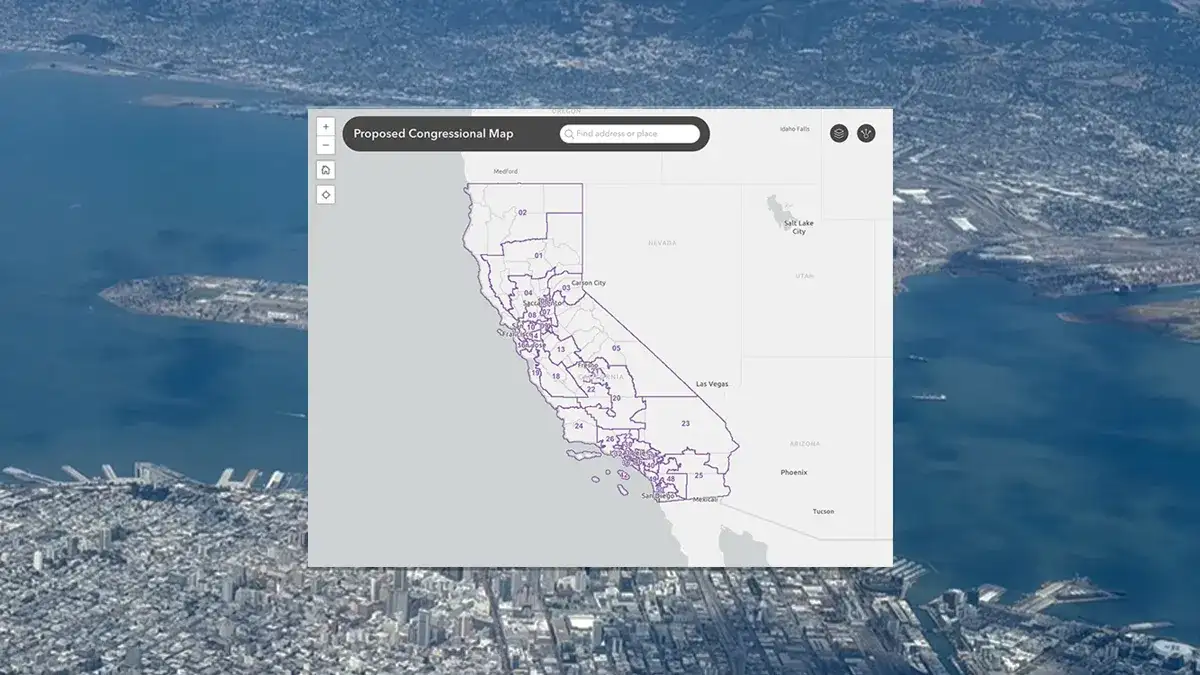
The implications of this redistricting extend beyond state borders. California's new map is designed, in part, to counteract potential Republican gains nationwide stemming from mid-decade redistricting in GOP-led states. This strategic adjustment could see the net gain of Republican seats nationally reduced. The approval of Proposition 50 last November cemented this new map, granting Democrats a potential avenue to secure up to five additional House seats. This move arrives at a critical juncture, with the party in the White House typically facing headwinds in midterm elections, and aligns with efforts to counter the Republican party's narrow House majority.
Read More: University of La Verne 2026 admissions and rankings update
Further illustrating the localized impact, certain districts have seen substantial alterations. For instance, the proposed boundary for District 41 now encompasses portions of the former District 38, and includes areas like Palm Springs, transforming it into a majority-minority district. Similarly, Kevin Kiley's district, now dipping into traditionally blue Sacramento, represents a flip from red to blue. These granular changes are not going unnoticed by aspiring politicians, with some, including Republican Kevin Lincoln, reportedly considering district swaps in anticipation of the new maps' adoption.

The process leading to these new boundaries involved legislative action, including Assembly Bill 604, which proposed the congressional maps, and Assembly Constitutional Amendment 8, addressing redistricting itself. These were further supported by Senate Bill 280, focusing on election administration. The availability of downloadable GIS shapefiles, block equivalency files, and printed atlases allows for detailed examination of these altered political geographies.
Read More: FBI Analysts Review Georgia 2020 Election Data in Fulton County
The shift in district composition is stark when compared to the previous map. Under the current configuration, 37 districts lean Democratic by more than 5 percentage points, while eight lean Republican by a similar margin, and seven are considered closely divided. The proposed map, however, is anticipated to significantly bolster the Democratic advantage across the state.