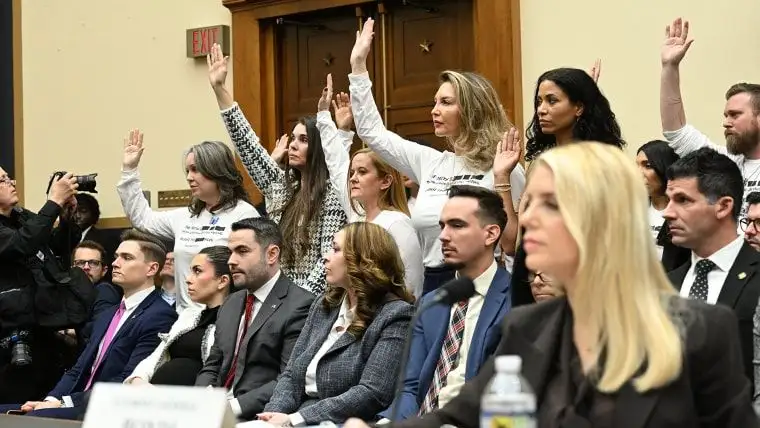
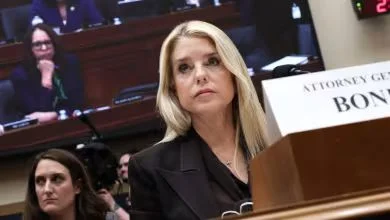
WASHINGTON D.C. – Attorney General Pam Bondi engaged in a contentious hearing before the House Judiciary Committee, fielding sharp questions from Democratic lawmakers primarily concerning the Justice Department's handling of files related to Jeffrey Epstein. The hearing, which extended for several hours, was marked by frequent clashes and a notable refusal by Bondi to provide direct answers on numerous points. Republicans on the committee largely defended Bondi's tenure and the department's actions.
Tension and Testimonial Exchanges
The core of the day's proceedings revolved around the Justice Department's actions and decisions regarding the Epstein case and related files. Democrats on the committee expressed frustration over what they characterized as a lack of transparency and accountability from Bondi.
Key areas of contention:
The Justice Department's approach to prosecuting individuals connected to Epstein.
The release and handling of documents pertaining to the case.
Allegations that the department has been used for political purposes.
Specific actions related to Ghislaine Maxwell's case, including prison transfers.
Record of Proceedings
The hearing saw a significant exchange of words between Attorney General Bondi and several Democratic representatives, including Pramila Jayapal, Jamie Raskin, Jerry Nadler, Joe Neguse, and Becca Balint.
Read More: US 250th Anniversary on July 7, 2026, sees 20% not celebrating
Demands for Answers: Lawmakers pressed Bondi on why charges had not been brought against more individuals linked to Epstein. They also inquired about the department's engagement with Epstein survivors.
Bondi's Defense: Bondi, in turn, defended the Justice Department's actions, citing the release of millions of documents. She also suggested that some lawmakers were "obsessed" with Donald Trump and accused them of targeting political opponents.
Refusal to Elaborate: Reports indicate that Bondi declined to answer a series of specific questions, including details about who within the DOJ authorized Ghislaine Maxwell's prison transfer and whether the department would consider recommending a pardon for her. She also reportedly refused to state how many of Epstein's co-conspirators her department had indicted.
Conflicting Perspectives on DOJ Operations
The hearing highlighted a significant divide between Democratic and Republican members of the committee regarding the Justice Department's focus and operations.
Democratic Concerns
Democrats alleged that the Justice Department was being used to advance Donald Trump's political agenda.
Epstein Files Scrutiny: A central focus was the department's stewardship of Epstein-related files. Questions were raised about whether the department was actively covering up information or failing to pursue justice adequately for victims.
Accusations of Political Motivation: Lawmakers like Jamie Raskin asserted that the Justice Department had become an "instrument of revenge" for Trump, rather than a body focused on serving the American people and promoting justice for all.
Survivor Engagement: The lack of meetings between Bondi and Epstein survivors was noted as a point of concern.
Republican Stance
Republicans on the committee largely aligned with Bondi, focusing on broader issues of public safety and crime reduction.
Defense of Administration: Several Republican members reportedly defended Bondi and avoided pressing her on the Epstein case. Thomas Massie was noted as one of the few Republicans who did question Bondi regarding Epstein.
Focus on Broader Issues: The Republican approach appeared to pivot towards topics such as national security and crime rates, diverting from the specific lines of questioning pursued by Democrats.
Moments of Intense Exchange
The hearing was punctuated by several moments of heightened tension and personal remarks.
Direct Confrontations: Reports describe "shouting matches" and "insults" exchanged during the session.
Departures and Retorts: Representative Becca Balint reportedly left the hearing after a heated exchange. Bondi herself was quoted as making sharp remarks towards lawmakers, including suggesting one was "not even a lawyer."
Summary of Key Takeaways
The hearing provided an exhaustive examination of Attorney General Bondi's role and the Justice Department's handling of sensitive cases.

Bondi largely deflected direct answers on the Epstein files and related prosecutions, citing pending litigation and a general refusal to discuss ongoing matters.
Democrats voiced strong accusations of political weaponization within the DOJ and a lack of justice for Epstein survivors.
Republicans provided a defense of Bondi's actions and the department, emphasizing other aspects of public safety.
The hearing underscored a deep partisan divide in how the Justice Department's operations and transparency are perceived.
Expert Commentary
Legal analysts observed the hearing as a typical display of partisan conflict within congressional oversight.
"These hearings often become arenas for political theater, where lawmakers use their questions to make points to their constituents rather than elicit substantive answers," noted one observer familiar with congressional proceedings. "The refusal to answer questions, especially on matters of significant public interest like the Epstein case, is a tactic often employed when there's a desire to control the narrative or when the answers might be politically damaging."
Conclusion and Implications
The House Judiciary Committee hearing with Attorney General Pam Bondi concluded with significant unresolved questions regarding the Justice Department's handling of the Jeffrey Epstein files and its broader operations. While Bondi defended the department's actions and deflected many specific inquiries, the persistent questioning from Democrats highlighted ongoing concerns about transparency, accountability, and the potential for political influence.
Read More: Supreme Court May Order Ayodhya Temple Fund Audit Due to Theft Claims
Unanswered Questions: A substantial list of questions remains unaddressed by Attorney General Bondi, particularly concerning the Epstein investigation and potential pardons for individuals like Ghislaine Maxwell.
Partisan Divide: The stark contrast in the approaches of Democratic and Republican committee members suggests that this issue will likely remain a point of contention.
Future Oversight: The hearing serves as a preface for continued oversight and potential future investigations into the Justice Department's practices under the current administration. The public's demand for clarity on the Epstein case and the DOJ's commitment to justice will likely fuel further scrutiny.
Sources Used:
CBS News: https://www.cbsnews.com/live-updates/pam-bondi-hearing-epstein-files-justice-department-congress/ - Provides live updates and summaries of the hearing's progression.
NBC News: https://www.nbcnews.com/politics/justice-department/pam-bondi-hearing-jeffrey-epstein-trump-rcna258522 - Details the clashes and specific points of contention during the hearing.
NBC News Live Blog: https://www.nbcnews.com/politics/trump-administration/live-blog/trump-bondi-epstein-congress-netanyahu-iran-dhs-ice-poll-live-updates-rcna257992 - Offers a running account of events, including Bondi's responses and exchanges.
NPR: https://www.npr.org/2026/02/11/nx-s1-5707280/pam-bondi-oversight-hearing-department-of-justice - Reports on the clashes and Bondi's defense of the DOJ's handling of files.
BBC News: https://www.bbc.com/news/live/c05vgzn2391t - Highlights the fiery nature of the hearing, including personal exchanges and specific moments of conflict.
The Guardian: https://www.theguardian.com/us-news/2026/feb/11/pam-bondi-democrats-epstein-hearing - Focuses on Bondi's verbal attacks on Democrats and her defense of the DOJ.
House Judiciary Democrats Press Release: https://democrats-judiciary.house.gov/media-center/press-releases/15-questions-pam-bondi-refused-to-answer-before-congress - Lists specific questions Bondi refused to answer, providing a factual record of her evasiveness.
The Globe and Mail: https://www.theglobeandmail.com/world/us-politics/article-epstein-files-pam-bondi-house-testimony/ - Describes Bondi's defense of Trump and her vocal confrontations with Democrats.
Democracy Docket: https://www.democracydocket.com/news-alerts/attorney-general-pam-bondi-house-judiciary-committee-hearing/ - Details Bondi's "stonewalling" and personal attacks during the hearing.
PBS NewsHour: https://www.pbs.org/newshour/politics/epstein-files-took-center-stage-at-bondis-oversight-hearing-here-are-3-big-moments - Highlights significant moments from the hearing, focusing on Bondi's reluctance to discuss the Epstein case.
House Judiciary Democrats Statement: https://democrats-judiciary.house.gov/media-center/press-releases/ranking-member-raskin-s-opening-statement-at-hearing-slamming-attorney-general-bondi-s-epstein-cover-up-betrayal-of-the-principle-of-justice-for-all - Contains opening remarks that frame the hearing's objectives and criticisms of Bondi.
AP News: https://apnews.com/article/pam-bondi-house-judiciary-committee-justice-department-6d7502b80e42e9e9454264e242507bbd - Reports on Bondi's defense of Trump and her combative posture during the hearing.
CNN Politics: https://edition.cnn.com/politics/live-news/pam-bondi-house-hearing-02-11-26 - Provides live updates and details of the exchanges between Bondi and lawmakers.