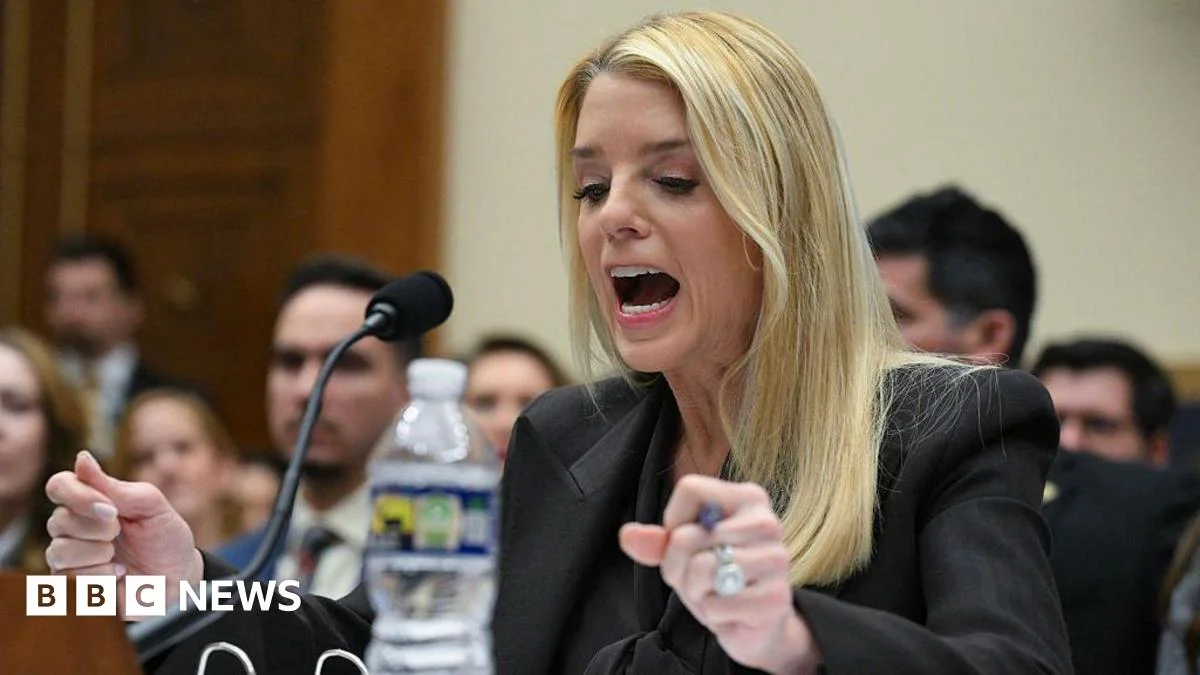
A recent House Judiciary Committee hearing saw Attorney General Pam Bondi face sharp questioning from lawmakers regarding the Justice Department's handling of the Jeffrey Epstein files and broader accusations of political bias within the department. The hearing, which extended for several hours, was marked by contentious exchanges and accusations from both sides, as Bondi sought to defend departmental actions while Democrats pressed for accountability. The central focus remained the department's decision-making process concerning the release of sensitive documents related to the Epstein case and allegations that the department has been used to target political adversaries.
Background of the Inquiry
The scrutiny of Pam Bondi and the Justice Department stems from several converging issues. Key among these are:

The Jeffrey Epstein Files: A legislative push compelled the Justice Department to release documents pertaining to the Jeffrey Epstein case. Critics have raised concerns about the redactions made and the timing of the release, with some lawmakers arguing that information was deliberately obscured to protect powerful individuals.
Allegations of Politicization: Bondi's tenure has been met with accusations that the Justice Department has engaged in partisan activities, such as investigating or prosecuting political opponents of the President while showing leniency towards allies.
Presidential Directives: Reports suggest that President Trump has openly directed Bondi to pursue actions against political adversaries, raising questions about the independence of the department's operations.
Read More: MDMK Wants More Seats to Get Official Recognition
The hearing provided a platform for lawmakers to probe these issues directly with Bondi, seeking clarity on the department's practices and her leadership.
Evidence Presented and Debated
Testimony and public statements during and around the hearing offered several key points of contention:

Epstein File Details:
Bondi asserted she was referring to the Epstein files "in total" and not a specific "client list," when questioned by lawmakers.
She denied the existence of a secret "client list" related to the Epstein case.
Deputy Attorney General Todd Blanche announced the release of the final batch of files related to the Epstein case.
Lawmaker Accusations and Concerns:
Representative Ted Lieu accused Bondi of potentially lying under oath.
Representative Thomas Massie criticized Bondi for the release of victims' personal information within the Epstein files, calling it harmful to survivors.
Representative Becca Balint reportedly stormed out of the hearing after a confrontation with Bondi.
Representative Jamie Raskin accused Bondi of refusing to answer his questions directly.
Other Democrats, including Representatives Jayapal and Neguse, pressed Bondi on the treatment of Epstein survivors and the department's interactions with various Trump administration officials regarding their ties to Epstein.
Representative Raskin also questioned Bondi regarding legal actions President Trump is pursuing against the U.S. government.
Bondi's Defense and Counterarguments:
Bondi vehemently defended President Trump and the Justice Department's actions, at times shouting at Democrats and accusing them of "theatrics."
She characterized some lawmakers' focus on the Epstein files as being driven by political animosity towards President Trump, labeling Representative Massie a "hypocrite" with "Trump-derangement syndrome."
Bondi confirmed receiving a criminal referral alleging perjury by former CIA Director John Brennan.
She also praised President Trump's handling of illegal immigration during the hearing.
Deep Dive: Handling of Epstein Files
The Justice Department's management of the Jeffrey Epstein files emerged as a primary point of friction.
Read More: Supreme Court Asks Filmmaker About Film Title 'Ghooskhor Pandat'
Transparency vs. Protection: Democrats argued that the department's redactions and handling of the files suggested an intent to shield powerful individuals mentioned within them. Representative Massie highlighted the distress caused to victims by the release of personal information.
Absence of a "Client List": Bondi's repeated statements that no specific "client list" existed were a core part of her defense, contrasting with implied concerns from critics about potential hidden directories of Epstein's associates.
Legislative Mandate: The department's release of documents followed a legislative mandate, indicating that its actions were not entirely voluntary, but rather a response to congressional pressure.
Deep Dive: Allegations of Politicization
Concerns about the Justice Department's impartiality under Bondi's leadership were a significant theme.
Targeting Political Foes: Critics allege that Bondi has overseen actions, including the dismissal of career prosecutors and investigations into opponents of President Trump, while simultaneously dropping cases against his allies.
Presidential Influence: The reported instances of President Trump directly instructing Bondi on specific investigations and prosecutions have fueled claims that the department's independence has been compromised.
Defense Against Claims: Officials within the department, as noted in the source material, deny politicizing their work and point to prosecutions of Democratic figures and President Biden's son as evidence of impartiality.
Expert Analysis
"When the Attorney General appears before a committee and appears to be deflecting or refusing to answer direct questions, it raises significant concerns about transparency and accountability within the department she oversees." - An unnamed senior congressional aide, quoted in the context of the hearing.
"The challenge for any Attorney General is to maintain public trust. When allegations of political bias surface, especially in high-profile cases, the department must be exceptionally diligent in demonstrating its commitment to equal application of the law." - A former federal prosecutor, speaking generally about DOJ oversight.
Conclusion
The hearing underscored significant divisions and a lack of trust between Pam Bondi, representing the Justice Department, and a number of House Democrats. Key findings from the proceedings include:
Read More: Gen Z's Big Test: Can Young Voters Change Bangladesh?
Bondi consistently defended the Justice Department's actions regarding the Epstein files, denying the existence of a client list and attributing criticism to political motives.
Lawmakers, particularly Democrats, expressed frustration with Bondi's responses, accusing her of evading questions and of a broader pattern of politicization within the department.
Specific accusations included lying under oath, the mishandle of sensitive Epstein-related information, and using law enforcement powers for political retribution.
The hearing highlighted ongoing tensions regarding the independence of the Justice Department and its role in addressing sensitive legal and political matters.
The immediate implications suggest continued oversight and potential further investigations into the matters raised. The testimony provided a public forum for airing these critical allegations and defenses, contributing to the ongoing national discussion about the integrity of governmental institutions.
Sources
PBS NewsHour: https://www.pbs.org/newshour/politics/watch-live-pam-bondi-appears-at-house-judiciary-committee-hearing-on-justice-department-oversightSummary: Focuses on Bondi's defense of President Trump and her combative exchanges with Democrats over the Epstein files, including her denial of a specific client list.
Fox News: https://www.foxnews.com/politics/top-5-moments-bondi-clashes-democrats-fiery-house-hearingSummary: Details contentious moments, including accusations of perjury and Bondi's defense against claims of "weaponization" within the department, and her confirmation of a criminal referral for alleged perjury.
BBC News: https://www.bbc.com/news/live/c05vgzn2391tSummary: Reports on the general atmosphere of the hearing, highlighting frequent insults and shouting matches, including a notable confrontation that led to a Democrat storming out.
CBS News: https://www.cbsnews.com/live-updates/pam-bondi-hearing-epstein-files-justice-department-congress/Summary: Covers the clash between Massie and Bondi over the Epstein files and questions posed by other Democrats regarding survivors and Trump's legal actions.
NBC Chicago: https://www.nbcchicago.com/news/national-international/attorney-general-bondi-face-questions-lawmakers-fallout-epstein-files/3891084/Summary: Describes Bondi's broad defense of President Trump and her heated exchanges with Democrats, noting Representative Raskin's accusations of evasiveness and Bondi's insult.
KUOW: https://www.kuow.org/stories/pam-bondi-to-face-questions-from-house-lawmakers-about-her-doj-leadershipSummary: Sets the stage for the hearing, outlining expected questions on targeting political foes and handling Epstein files, and references past presidential directives.
U.S. News: https://www.usnews.com/news/us/articles/2026-02-11/the-latest-bondi-will-face-questions-before-congress-over-epstein-filesSummary: Notes Bondi's deflection of questions, her praise for President Trump on immigration, and specific lines of questioning from both Republican and Democratic representatives.
Read More: Portland Judge Stops Federal Tear Gas Use at ICE Protests