JERUSALEM – Freshly minted videos of Israeli Prime Minister Benjamin Netanyahu engaging in mundane activities are being met with a peculiar skepticism, not due to the content itself, but due to the perceived flaws that suggest artificial manipulation. The latest wave of online chatter points to alleged anomalies in recent video appearances, fueling a persistent undercurrent of speculation that the Prime Minister may not be as present as his digital footprint suggests. This, amid an ongoing regional conflict, creates a confusing tableau where reality and simulated representation blur.

Netanyahu has released multiple videos in an apparent effort to debunk rumors of his demise, but these same clips have become fodder for claims of AI generation. Details such as a seemingly regenerating sleeve, unnatural pixel shifts, and notably, the repeated appearance of an extra finger on his hand in some footage, have become focal points for those questioning the authenticity of the recordings.
Read More: Trump Considering Leaving Iran War by December 2024

Whispers of AI and a Disappearing Digit
The controversy ignited following footage of Netanyahu's address on the war in Iran. Social media users quickly latched onto perceived errors, most prominently a suggestion that the Prime Minister was depicted with six fingers. Screenshots of his hand circulated widely, becoming a visual shorthand for the AI-generated conspiracy. In response, Netanyahu has posted additional videos – including one of him obtaining coffee alongside U.S. Ambassador to Israel Mike Huckabee, and another from within a war room. However, these too have failed to quell the digital unease, with critics pointing to further irregularities.
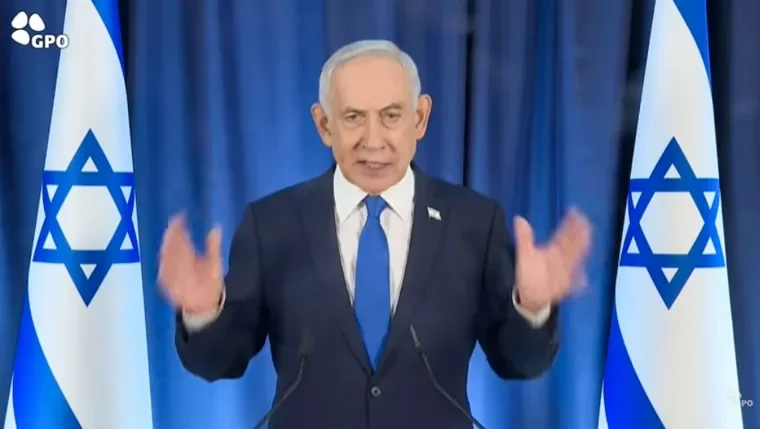
"The currency here is not accuracy but virality," noted one observation, highlighting how outlandish claims gain traction irrespective of factual backing.
The purported digital artifacts include:
An unnatural regeneration of fabric on Netanyahu's sleeve.
Peculiar pixel distortions accompanying hand movements.
The persistent, albeit disputed, claim of a sixth finger in certain frames.
A coffee cup allegedly showing an impossible equilibrium despite being held awkwardly.
A ring that intermittently vanishes in different frames.
The Specter of Disinformation
This episode underscores a broader concern regarding the impact of artificial intelligence on public perception. The ability to generate convincing, yet fabricated, audiovisual content presents a significant challenge to discerning truth. The very tools intended to verify Netanyahu's well-being are now being cited as evidence of deception, creating a feedback loop of distrust.
Read More: New meshoptimizer library cuts 3D model sizes for faster game graphics
"Verifying everything is incredibly exhausting, and not everyone can afford doing it," stated a researcher, underscoring the cognitive load placed upon individuals trying to navigate a landscape saturated with potentially false information.
Context of Conflict and Unverified Narratives
The emergence of these rumors coincides with escalating geopolitical tensions involving Israel, the United States, and Iran. Iran's Islamic Revolutionary Guard Corps had previously claimed to have targeted Netanyahu's office, an event that further catalyzed the spread of unverified claims, including those suggesting he had fled the country. This environment provides fertile ground for disinformation campaigns, whether state-sponsored or organically generated.
The use of AI in disinformation is not a novel concept in this context. Researchers have previously documented instances of AI-generated videos being employed in campaigns aimed at influencing political outcomes. The current situation, however, places a prominent world leader under a digital microscope, where even his attempts to prove his existence are subject to accusations of artificiality. The result is not just the dissemination of false narratives but a creeping erosion of faith in the authenticity of visual evidence itself.
Read More: CDC Director Search Stalls Due to Politics, Leaving Agency Without Permanent Leader