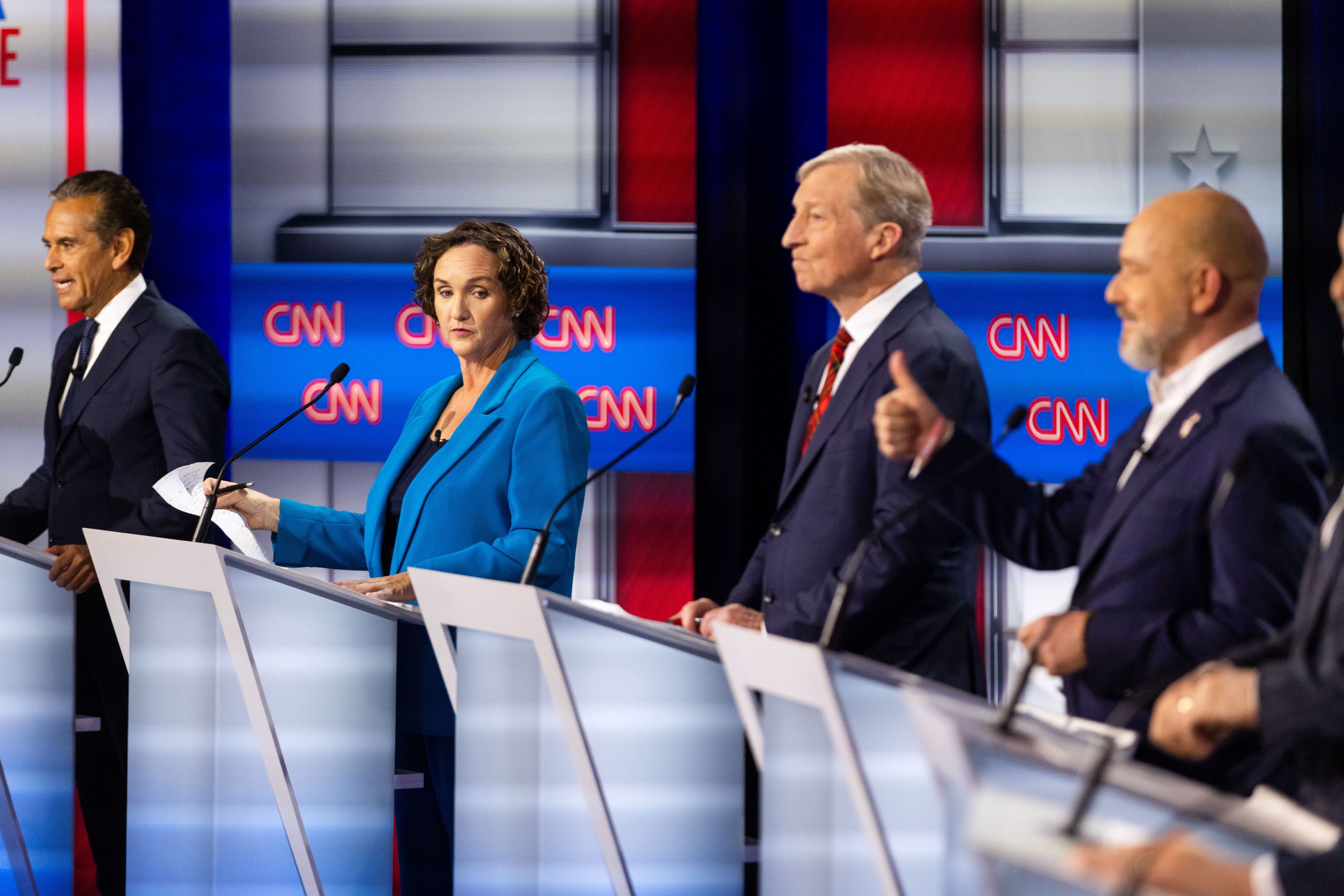
Oakland, CA – As California’s gubernatorial primary unfolded, a significant portion of Bay Area voters demonstrated a pragmatic approach to ballot casting, with some opting for strategic considerations over deep-seated ideological alignments. The economy emerged as a paramount concern, guiding choices in a closely contested Democratic field where candidates resisted calls to withdraw. This sentiment was echoed by voters like Jim Posey, a San Jose sales professional, who voiced a reluctant vote for Tom Steyer, noting a lack of compelling options. Similarly, Javier Gonzalez, an educator in San Jose, explicitly cast his ballot for Xavier Becerra based on his economic priorities.
Election officials anticipate a significant late surge in ballot returns, potentially delaying the finalization of key races. Many voters have held onto their ballots, waiting to observe the race's trajectory, particularly within the crowded Democratic slate. This delay, officials suggest, could be exacerbated by the late submission of mail-in ballots or in-person voting on Election Day, urging voters to utilize drop boxes or vote in person to ensure their ballots are counted promptly.
Read More: Taiwan Holds Nantou County Drills to Prepare for State Collapse
Beyond the gubernatorial contest, Bay Area voters also faced decisions on a range of local matters. These included tax increases for school funding in Alameda County and parcel tax proposals in Oakland. Down-ballot races for state and local offices also featured prominently on the ballot. Reports indicate that in some Alameda County districts, voters appeared to reject proposed school funding measures, though one tax hike in Piedmont seems to have been approved. In Oakland, a proposed parcel tax increase reportedly fell short of the necessary majority.
The gubernatorial race itself featured a large field of contenders, with a notable number of Democrats vying for position. Key figures in the Democratic primary included former State Attorney General and Health Secretary Xavier Becerra and environmental investor Tom Steyer. The presence of multiple prominent Democrats, alongside a smaller number of notable Republicans, characterized the competitive landscape.
Read More: University of La Verne 2026 admissions and rankings update
The California primary system, with its "top-two" format, adds a layer of strategic calculation for voters. This system allows candidates from any party to advance to the general election, leading to dynamics where party leaders may urge candidates to withdraw to consolidate support, a call that some in the current cycle have resisted. Voters, meanwhile, have shown a tendency to delay their decisions, watching how the field solidifies.
Recent polling has suggested that the scenario of two Republicans advancing to the general election, a concern for some Democrats, remains unlikely. Nonetheless, the strategy of waiting to vote, while potentially influencing outcomes, is also seen as a factor that could contribute to a slower pace in the tabulation of results. This practice of delaying ballot submission, whether by mail or in person, is expected to impact the speed at which final results are known.
Read More: FBI Analysts Review Georgia 2020 Election Data in Fulton County