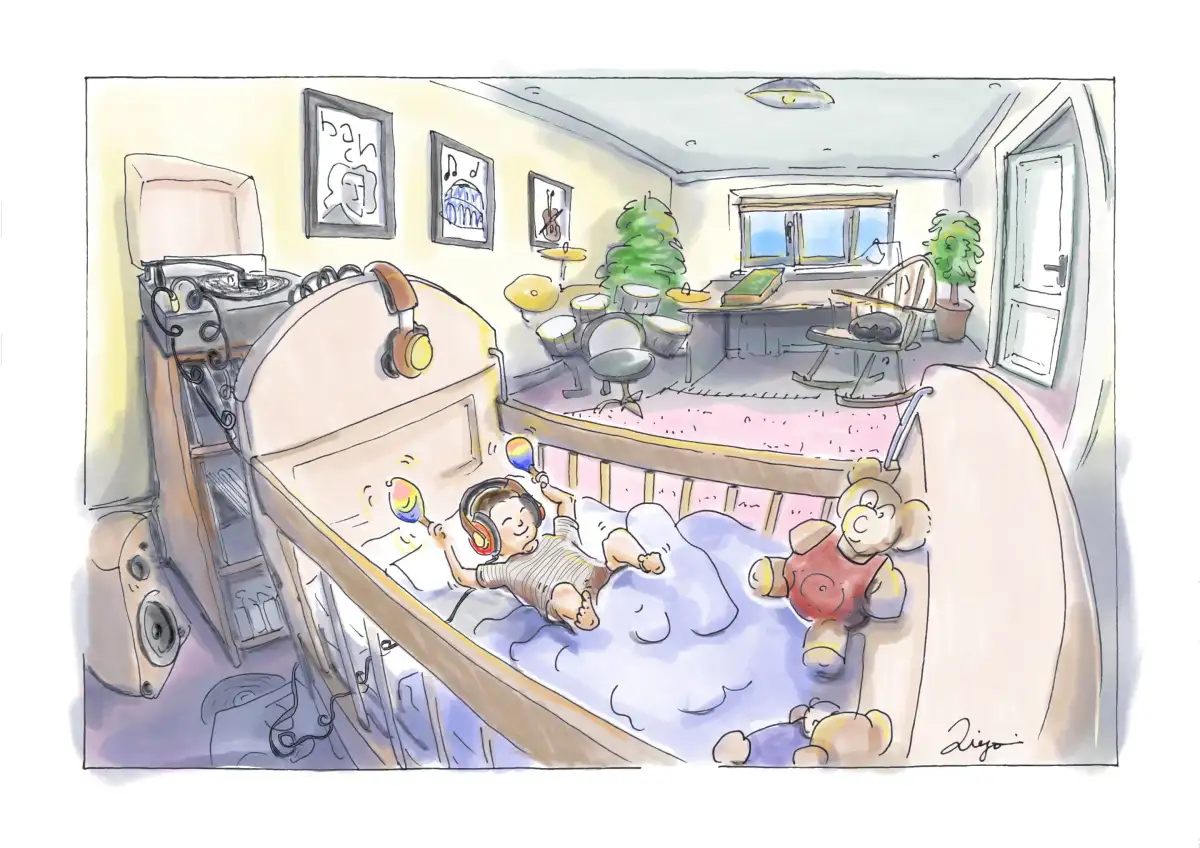
The cacophony of a newborn's cry is often seen as the rawest form of human expression, a primal signal before the complexities of language and culture set in. Yet, a wave of recent scientific findings suggests that beneath that initial unformed sound lies a remarkably sophisticated internal clock, a built-in sense of rhythm that tunes us into the world from the very first moments of life. This isn't just about enjoying a catchy tune; it's a fundamental biological trait, challenging long-held beliefs about infant perception and the very nature of our innate abilities.
FROM THE WOMB TO THE WORLD: A RHYTHMIC REVELATION
For generations, the prevailing view, famously articulated by psychologist William James, painted the infant experience as a "blooming, buzzing confusion" – a chaotic sensory overload with little discernible order. This new research, however, paints a starkly different picture. Studies published across multiple scientific outlets, including PLOS Biology, Cognition, and The Guardian, are converging to show that newborn babies, mere days old, can predict musical patterns and distinguish a steady beat. This isn't just a passive reception; their brains are actively processing and anticipating rhythmic structures, suggesting a foundational capacity for musicality that's hardwired from birth.
Read More: Indigenous Data Rights Now Key in Conservation Genomics
The core revelation is that babies are not passive recipients of sound but actively engage with and predict rhythmic patterns in music, challenging the idea of an infant mind as a chaotic void.
The implications are profound. If babies are born with such a developed sense of rhythm, what does this tell us about our evolutionary heritage? Are we inherently predisposed to music, and if so, why? This challenges the notion that musicality is purely a learned skill, a cultural veneer applied to a biologically neutral canvas.
Read More: Theology explains anxiety as lack of trust in God
THE SCIENCE OF THE GROOVE: HOW DO WE KNOW?
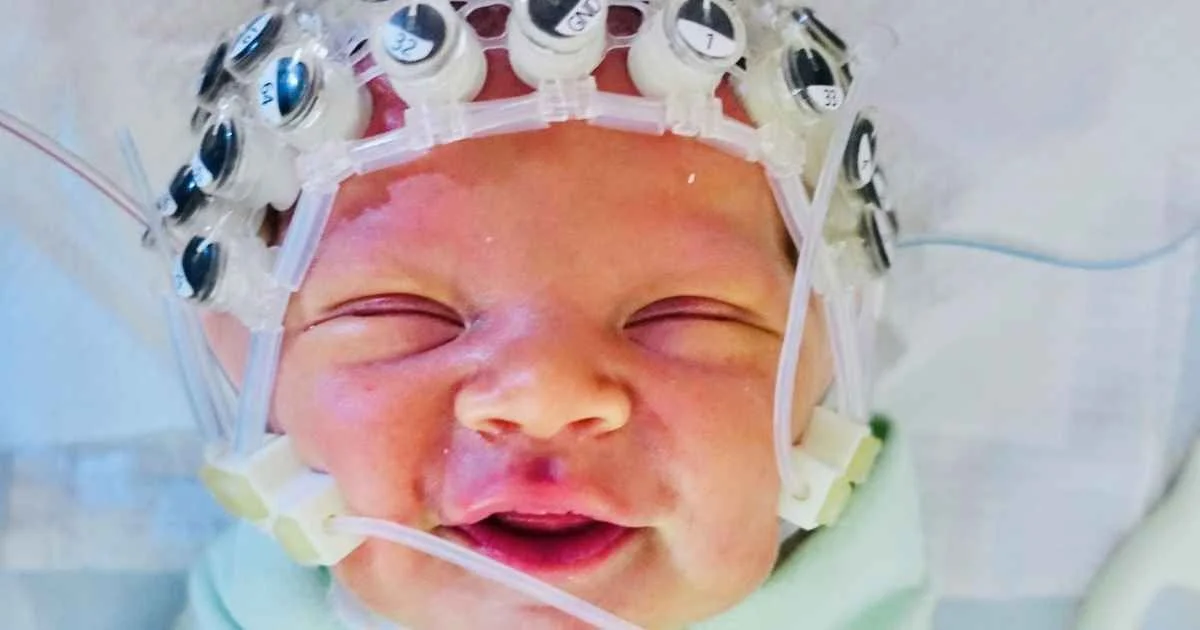
Researchers have employed increasingly sophisticated methods to peer into the developing infant brain. One of the most compelling approaches involves electroencephalography (EEG), where electrodes are placed on a baby's head to measure brainwave activity.
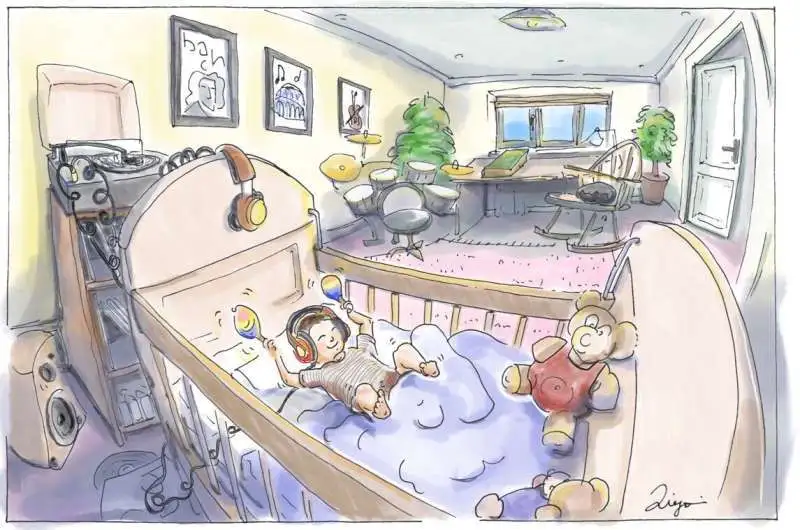
The Experiment: In a study detailed by Phys.org, researchers played compositions by J.S. Bach to 49 sleeping newborns.
The Measurement: EEG monitored their brain responses.
The Findings: The babies' brain activity showed distinct patterns when musical sequences followed predictable rhythms compared to when the melodies or pitches were scrambled. This indicates they weren't just hearing notes, but were processing the timing – the beat.
"Newborns come into the world already tuned in to rhythm." - Multiple sources
Another key piece of evidence comes from experiments that deliberately manipulate timing. As reported by The Daily Science and the University of Amsterdam (UvA), researchers presented drum rhythms with consistent, isochronous timing versus rhythms with irregular intervals.
Isochronous Rhythms: When the timing between drumbeats was regular, babies' brains responded as if they heard a distinct pulse.
Irregular Rhythms: When the timing was inconsistent, this clear beat perception was absent in their brain activity.
This distinction is crucial. It allows scientists to differentiate between simple statistical learning (recognizing a sequence of sounds) and true beat perception (identifying an underlying pulse). The findings strongly suggest the latter is an innate ability.
| Study Feature | Method | Stimulus Example | Key Finding |
|---|---|---|---|
| Phys.org / PLOS Biology | EEG on sleeping newborns | J.S. Bach piano compositions | Brains predict rhythmic patterns, react to surprises. |
| The Daily Science / UvA | Presented manipulated drum rhythms (headphones) | Isochronous vs. irregular timing | Babies detect a steady beat in isochronous rhythms, not irregular. |
| Newsweek / PLOS Biology | Measured brain activity (unspecified) | Musical patterns | Newborns form predictions based on rhythm, not melody. |
The consistent pattern across studies using different methodologies points to a fundamental biological mechanism for rhythm perception present from birth.
BEYOND THE BEAT: WHAT ABOUT MELODY?
While the evidence for innate rhythm detection is compelling, the research also sheds light on the relative importance of rhythm versus melody in early infant perception. Intriguingly, it appears that rhythm takes precedence.
Read More: New Room Temperature Photon Source for Quantum Tech in Korea
The Surprise Factor: Studies, as noted by The Guardian, found that newborns' brains showed signs of "surprise" when the rhythm of music changed unexpectedly.
Melody's Role: However, when melodies were altered within a predictable rhythm, their brain activity didn't reflect the same level of predictive engagement or surprise.
"Human newborns form musical predictions based on rhythmic but not melodic structure." - Newsweek
This suggests that while melody might eventually capture attention, the fundamental building block that babies' brains latch onto and predict is the underlying beat. This finding has significant implications for how we approach early music education and communication, perhaps emphasizing temporal aspects over harmonic complexity in the earliest stages.

The infant brain prioritizes rhythmic structure over melodic content, indicating rhythm as a more fundamental element of early auditory processing.
THE EVOLUTIONARY PUZZLE: WHY ARE WE BORN TO GROOVE?
The existence of an innate sense of rhythm begs a critical question: why? What evolutionary advantage does this provide? Scientific American highlights that this capacity might be more than just a precursor to enjoying music; it could be deeply intertwined with other essential human faculties.
Auditory System Development: Understanding how infants process rhythm can provide crucial insights into the development of our entire auditory system. How does our brain learn to parse complex soundscapes?
Speech and Language: There's a strong link between rhythmic processing and language acquisition. The temporal structure of speech, the rhythm of syllables and phrases, is critical for comprehension. Could our innate rhythmic sense be a foundational element that underpins our ability to learn and process language?
Motor Coordination: While not explicitly detailed in these reports, a sense of rhythm is inherently linked to movement and coordination. From a developmental perspective, it's not a huge leap to consider how this might translate into the development of motor skills and even dancing.
"Why would music perception be any different? This adds weight to the argument for a biological foundation of beat perception itself." - Scientific American
The argument that this beat perception is a distinct, fundamental mechanism, separate from mere statistical learning, strengthens the case for a biological imperative. But what specific pressures favored the development of this trait? Was it for social cohesion, communication efficiency, or something else entirely?
Read More: Why waiting for the right time stops personal growth on April 7 2026
The innate capacity for rhythm perception is likely not solely for musical appreciation but serves a broader evolutionary purpose, potentially aiding in auditory system development, language acquisition, and even motor coordination.
CHALLENGING THE "CONFUSION" NARRATIVE: A NEW DAWN FOR INFANT STUDIES
For over a century, the image of the infant mind as a disorganized mess has dominated scientific discourse. This new research is a powerful counter-narrative, suggesting a level of innate sophistication that is truly remarkable. Science News points out that this challenges the old view by showing babies are born with a "surprisingly sophisticated neurological toolkit."
This toolkit isn't just about sound; recent studies even suggest infants can categorize visual information and, as mentioned, sense interruptions in rhythms. The ability to perform functional MRI scans on awake infants, a notoriously difficult task, is opening new avenues for understanding their cognitive processes.
Read More: New AI Drug Discovery Method Fights Resistant Bacteria as of April 2026
Past Beliefs: Infant experience was a "blooming, buzzing confusion" (William James).
Current Findings: Infants possess sophisticated neurological tools for organizing sensory input, including rhythm prediction.
Methodological Advances: Techniques like fMRI are now allowing deeper insights into infant cognition.
"But new research suggests babies are born with a surprisingly sophisticated neurological toolkit that can organize the visual world into categories and pick out the beat in a song." - Science News
The sheer consistency of findings across multiple, independent studies published in recent months is particularly noteworthy. It suggests a paradigm shift is underway, moving away from viewing babies as blank slates and towards understanding them as active, pre-programmed learners with inherent capacities.
This new wave of research fundamentally redefines our understanding of infant cognition, moving from a passive "confusion" model to one of active, innate processing and prediction.
THE RHYTHM OF OUR FUTURE: WHAT COMES NEXT?
The implications of these findings ripple far beyond academic curiosity. They suggest that our affinity for music is not merely cultural conditioning but a deeply ingrained aspect of our biology. This raises further questions:
Nature vs. Nurture Revisited: If rhythm is innate, how does early exposure to music and rhythmic environments (like parental singing or rhythmic play) shape and enhance this natural predisposition? Does a musically rich environment accelerate development or unlock different facets of this innate ability?
Therapeutic Potential: Could understanding this innate rhythm detection lead to new therapeutic interventions for developmental disorders, particularly those affecting communication and sensory processing?
Educational Reform: Should educational approaches for infants and young children place a greater emphasis on rhythmic and musical activities, recognizing them as foundational to cognitive development, not just enrichment?
The Universal Language: Does this innate rhythm provide a basis for the universality of music across human cultures? Are we all predisposed to appreciate certain rhythmic structures, forming a common ground that transcends language barriers?
Defining "Music": If rhythm is so fundamental, how do we define music itself? Is it merely organized sound, or does it require a specific type of rhythmic and melodic structure that resonates with these innate capacities?
The studies published recently, including those in PLOS Biology, Cognition, and reports from The Guardian, Phys.org, Newsweek, Daily Mail, Scientific American, The Daily Science, and Science News, collectively provide compelling evidence that the human capacity for rhythm is present from birth. It’s a biological inheritance that shapes our perception, influences our development, and perhaps, connects us in ways we are only just beginning to understand. The "blooming, buzzing confusion" is being replaced by the clear, predictable pulse of an innate biological rhythm, suggesting that perhaps, we were indeed "born to dance."
Read More: Friendships Quietly Ending: Why People Stop Investing Time
Sources:
"Born to dance! Babies have a sense of rhythm from birth, study claims" - Daily Mail: https://www.dailymail.co.uk/sciencetech/article-15531039/Born-dance-Babies-sense-rhythm-birth.html
"Two-day-old babies show brain signs of rhythm prediction, study finds" - Phys.org: https://phys.org/news/2026-02-day-babies-brain-rhythm.html
"‘Part of our biological toolkit’: newborn babies can anticipate rhythm in music, researchers find" - The Guardian: https://www.theguardian.com/science/2026/feb/05/newborn-babies-can-anticipate-rhythm-in-music-researchers-find
"New research finds babies are born with a remarkable ability" - Newsweek: https://www.newsweek.com/new-research-finds-babies-are-born-with-a-remarkable-ability-11452782
"Babies brains' can follow a beat as soon as they're born" - Science News: https://www.sciencenews.org/article/babies-beat-neuroscience-sense-rhythm
"It Turns Out We Were Born To Groove" - Scientific American: https://www.scientificamerican.com/article/it-turns-out-we-were-born-to-groove/
"Newborns have an innate sense of rhythm, study finds" - The Daily Science: https://www.thedailyscience.org/newborns-have-an-innate-sense-of-rhythm-study-finds.html
"Newborn babies have natural affinity for ‘the beat’" - UvA: https://www.uva.nl/shared-content/uva/en/news/press-releases/2023/11/newborn-babies-have-natural-affinity-for-the-beat.html
"Babies are born with a sense of rhythm, study suggests" - EurekAlert!: https://www.eurekalert.org/news-releases/1114241
"Study Reveals Babies' Innate Rhythm Prediction Ability" - Life Technology: https://www.lifetechnology.com/blogs/life-technology-science-news/study-reveals-babies-innate-rhythm-prediction-ability