Reports circulating online suggest that the 20th-century mystic Baba Vanga foresaw significant advancements and potential dangers related to artificial intelligence (AI) by the year 2026. These claims, often linked to predictions of AI dominating humanity or displacing human workers, lack concrete evidence and are primarily based on interpretations that appear after her death. The analysis of these claims involves examining their origins and comparing them with contemporary expert opinions on AI development.
Baba Vanga, a blind Bulgarian prophet who died in 1996, gained a reputation for her alleged foresight. Her purported predictions, often vague and open to broad interpretation, resurface annually, particularly when global events create a sense of uncertainty. For 2026, the notion that AI will "take human jobs" has become a prominent theme. However, investigations into verified records of her pronouncements fail to substantiate this specific claim. Instead, it appears to be an interpretation that has gained traction through media reports and online discussions, rather than a direct statement from Vanga herself.
Read More: Iran Restricts 'Enemy' Ships in Hormuz Strait After US Threats
Examining the AI Job Displacement Narrative
The idea that Baba Vanga predicted AI taking human jobs in 2026 is widespread across various media outlets. However, a closer look reveals a lack of verifiable sources to support this assertion.
IBT reports that "most of those claims fall apart on closer inspection" and explicitly states, "There is no verified record of Baba Vanga predicting that artificial intelligence would wipe out human jobs." The article emphasizes the absence of any verified source for this particular prediction.
The Daily Jagran acknowledges that Vanga's prophecies are "based on interpretations rather than confirmed facts." While it mentions "AI dominance" as a potential prediction, it also highlights that "AI decision-making may raise more ethical questions," indicating a focus on broader AI impacts rather than a direct job-takeover prophecy.
The core of the AI job displacement claim regarding Baba Vanga's 2026 predictions is unsubstantiated by direct, verified evidence from her lifetime or documented records.

Vanga's Other 2026 Predictions and General Interpretations
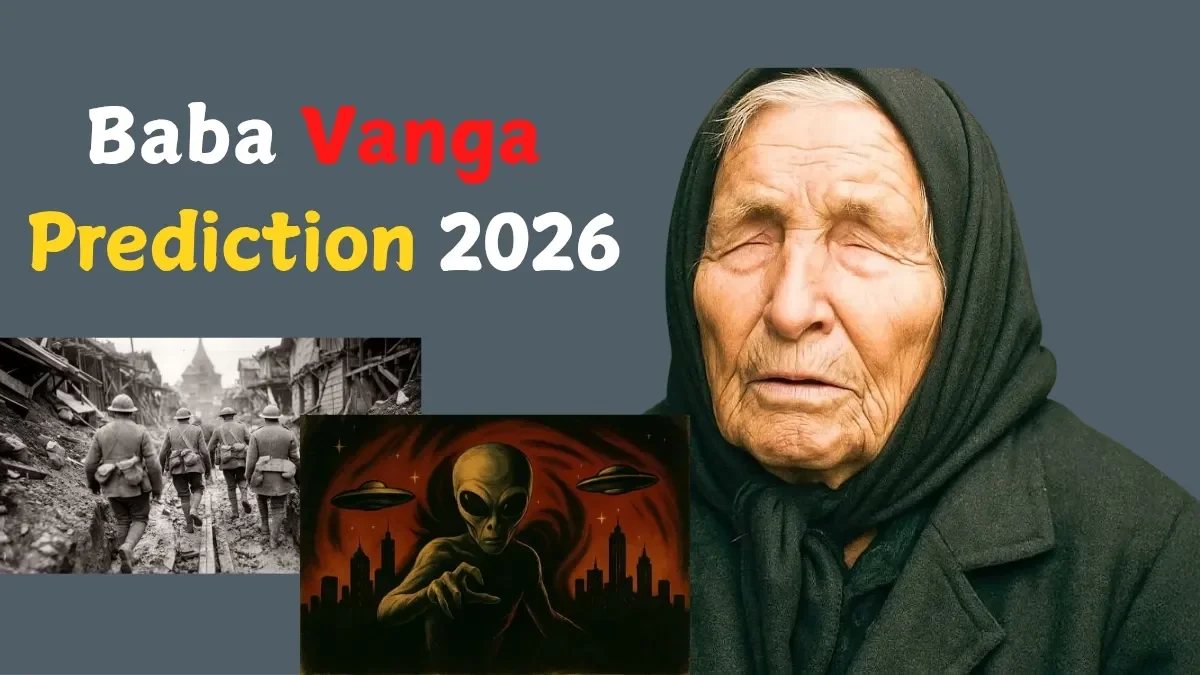
Beyond the AI job concerns, Baba Vanga's alleged predictions for 2026 encompass a range of significant global events. These include potential world wars, natural disasters, and even contact with extraterrestrial life.
History.co.uk notes that Baba Vanga "tends to resurface whenever a new year feels precarious" and that her name has been "attached to a grab-bag of headline events" over the years, alongside other historical figures like Nostradamus.
Tyla references a "rather unnerving prediction on the human race's propensity to trigger World War Three," suggesting that AI might play a part in this, leading to a "huge step down" in human morality, rather than a direct job takeover.
Hindustan Times also mentions AI "dominating humanity" as a sensational prediction, alongside World War 3 and contacting aliens.
These broader predictions suggest a theme of significant, potentially disruptive global events, with AI playing a role, but the specific scenario of widespread job loss due to AI is not consistently or directly attributed to Vanga.
Expert Perspectives on AI in 2026
While speculation surrounds Baba Vanga's prophecies, AI experts offer grounded perspectives on the trajectory of artificial intelligence. Their outlook for 2026 focuses on increased realism, evaluation, and potential ethical challenges, rather than apocalyptic job displacement.
Read More: Apple iOS 26.4 Adds 163 New Emoji Including Pickle and Orca
Stanford HAI experts anticipate an "era of AI evaluation" succeeding the "era of AI evangelism." They predict a greater focus on the realistic capabilities and limitations of AI.
The Stanford report also suggests that "AI, in some cases, can misdirect, deskill, and harm people," pointing to potential negative impacts but framed within an evaluative context.
Furthermore, Stanford faculty predict "AI sovereignty will gain huge steam," indicating a focus on national independence and the geopolitical landscape of AI development.
Stanford AI experts foresee a shift towards a more critical and realistic assessment of AI in 2026, acknowledging potential harms while emphasizing evaluation and national AI strategies, a contrast to the sensationalized prophecies.

Analysis of Vanga's Predictive Legacy
The enduring popularity of Baba Vanga's predictions, particularly for events like those supposedly slated for 2026, stems from a confluence of factors. Her prophecies often align with existing global anxieties, making them resonate with a public seeking answers or explanations for an uncertain future.
The vague nature of many predictions allows for retrospective interpretation, where events can be fitted to loosely match the pronouncements.
The mystique surrounding a prophet figure, especially one whose predictions are said to have been accurate in the past, contributes to sustained public interest.
Media reporting, driven by the desire for engaging content, frequently amplifies these interpretations, creating a self-perpetuating cycle of prophecy and belief.
The consistent resurfacing and reinterpretation of Baba Vanga's predictions, especially concerning AI and global crises for 2026, highlight a human inclination towards seeking foresight amidst uncertainty, often mediated by media amplification rather than concrete substantiation.
Conclusion and Implications
The claims that Baba Vanga predicted AI taking human jobs by 2026 are not supported by verifiable evidence. While the mystic is reported to have made predictions involving AI's impact and significant global events for that year, the specific narrative of AI causing mass unemployment appears to be a later interpretation or fabrication.
Read More: Middle East Conflict Pushes Oil Prices Over $100, Raising Recession Fears
The lack of direct quotes or authenticated documents linking Baba Vanga to the AI job displacement prediction makes it an unsubstantiated claim.
Contemporary expert analysis from institutions like Stanford HAI provides a more grounded perspective on AI development in 2026, focusing on evaluation, ethical considerations, and national strategies.
The enduring appeal of Baba Vanga's predictions underscores a societal tendency to seek answers about the future, particularly during times of perceived instability.
The implications of this discrepancy lie in understanding the distinction between sensationalized prophecy and evidence-based forecasting. It is crucial for the public and media to critically evaluate the origins and verification of such claims. Future discussions on AI's societal impact should rely on expert analysis and demonstrable trends rather than unverified prophecies.
Key Sources and Context
IBT (International Business Times): Published "5 minutes ago" (relative to input data). Focuses on debunking the specific AI job-taking claim by highlighting the lack of verified sources. https://www.ibtimes.co.uk/baba-vanga-2026-prediction-will-ai-take-human-jobs-1778721
The Daily Jagran: Published "Jan 4, 2026" (hypothetical future publication date based on article title). Discusses why Vanga's predictions remain relevant and notes that they are based on interpretations, mentioning AI decision-making and ethical questions. https://www.thedailyjagran.com/trending/list-of-baba-vangas-predictions-for-year-2026-world-war-natural-disasters-ai-dominance-and-more-10290401
History.co.uk (seen on AOL): Focuses on Baba Vanga resurfacing during precarious times and being attached to various headline events. https://www.history.co.uk/articles/baba-vanga-predictions-2026
Hindustan Times (seen on AOL): Mentions AI potentially "dominating humanity" and other sensational predictions like WW3 and alien contact. https://www.hindustantimes.com/trending/us/baba-vangas-chilling-predictions-for-2026-from-world-war-3-to-ai-takeover-101758222344910.html
Tyla: Published "Jan 28, 2026" (hypothetical future publication date). Discusses Vanga's prediction of WW3 and suggests AI might play a part, potentially causing a decline in human morality. https://www.tyla.com/news/baba-vanga-world-war-3-prediction-2026-063322-20260128
Stanford HAI: Published "Dec 15, 2025". Offers expert predictions for 2026, highlighting an "era of AI evaluation," increased realism about AI capabilities, and potential harms, alongside geopolitical AI sovereignty. https://hai.stanford.edu/news/stanford-ai-experts-predict-what-will-happen-in-2026