Amazon Web Services has ushered in the general availability of its Model Context Protocol (MCP) Server. This development allows artificial intelligence coding agents to interface with AWS services, documentation, and operational routines via a standardized conduit. The MCP Server, now a component of the larger 'Agent Toolkit for AWS', promises a more controlled and auditable route for AI interactions with the cloud infrastructure.
The core functionality centers on providing AI agents with guarded access to AWS, moving away from broad credential provisioning towards a more granular, IAM-integrated permission structure.
The MCP Server's introduction addresses a long-standing tension between enabling AI agents' utility and ensuring their safe operation. Reports indicate a deliberate approach to this, emphasizing a safer, more traceable method of connecting AI entities to AWS resources. This is achieved without granting extensive, potentially risky, access keys.
Read More: AWS DLAMI DLC Now Use SOCI Snapshotter For Faster Starts
Granular Control and Existing Frameworks
Currently, the MCP Server exclusively supports OAuth 2.1. For environments still relying on local AWS credentials rather than SSO or permission boundaries, a workaround exists. The open-source MCP Proxy for AWS, running locally, translates IAM-based authentication into OAuth-compatible requests. The underlying premise appears to be that this is less a novel product to evaluate and more a configuration decision, bringing agent-to-AWS interactions within established IAM and CloudTrail perimeters.

The pricing model is said to be contingent on the specific actions undertaken by the agent. This suggests a usage-based structure rather than a flat fee for the service itself.
Operationalizing Access and Security
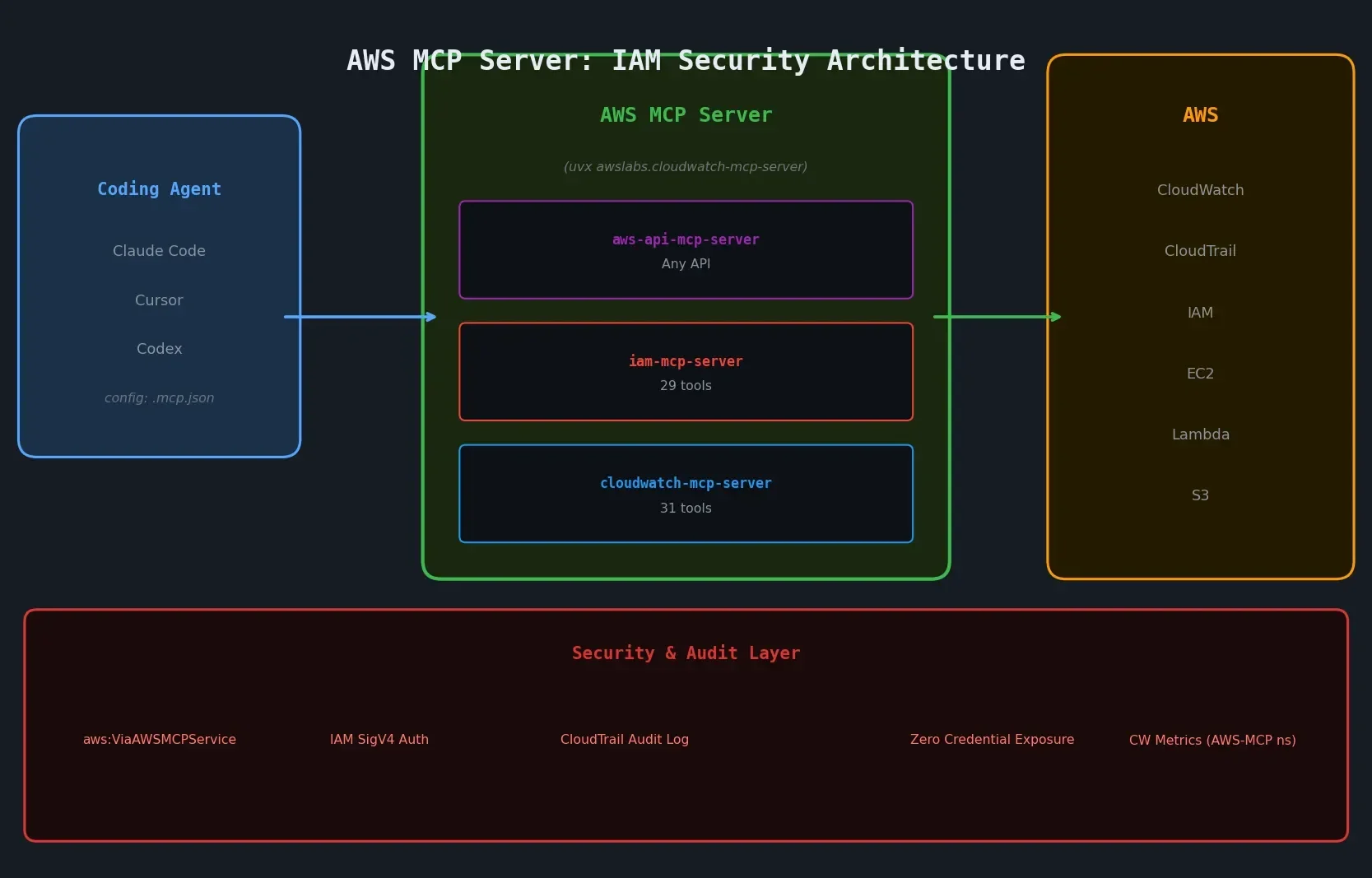
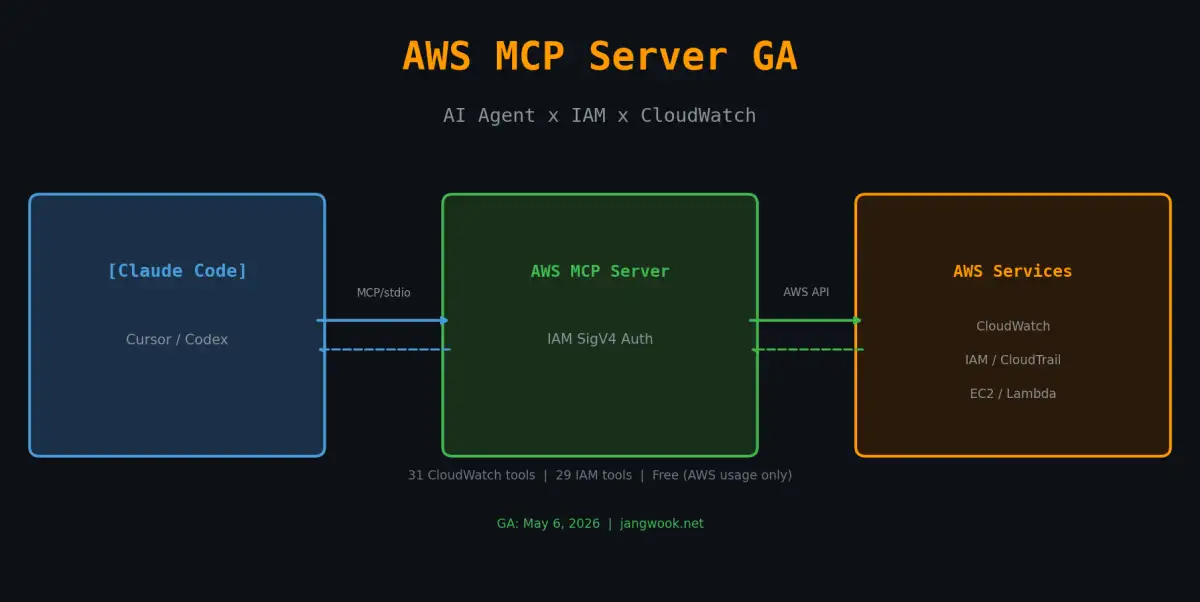
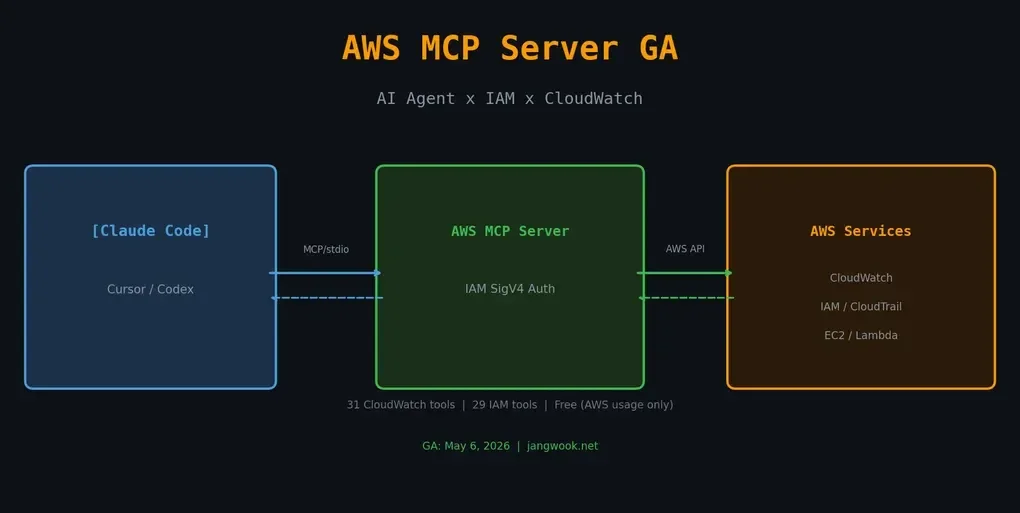
The availability of the MCP Server coincides with the broader Agent Toolkit for AWS. This toolkit encompasses various tools, plugins, and workflows designed to facilitate AI agent operations within the AWS ecosystem. Specific MCP server instances are noted for functions like managing CloudWatch logs, metrics, and alarms, as well as handling IAM configurations and diagnosing network issues within VPCs. The aws-api-mcp-server is highlighted for its layered architecture: coding agent to AWS MCP Server via stdio, and then to AWS APIs using SigV4 authentication.
Read More: New AI Method Maps API Logic for Safety by April 7, 2026
Crucially, every API call routed through the MCP Server is automatically appended with aws:ViaAWSMCPService and aws:CalledViaAWSMCP condition keys. This provides a clear audit trail for actions initiated via the MCP. For example, explicit IAM policies can be crafted to deny destructive actions, such as s3:DeleteBucket, when invoked through the MCP service, as demonstrated by a sample policy snippet.
Implementation Details and Future Scope
The MCP Server’s integration with existing AWS tooling is also evident. Installation can be initiated via commands like claude mcp add aws-mcp-server, suggesting compatibility with tools like Claude Code. The service has expanded beyond its preview phase, with enhancements that practitioners are expected to notice. While specific details on what constitutes "GA beyond preview" are not elaborated, the context points to a maturing offering. The MCP Server, positioned as part of the Agent Toolkit, alongside elements like AWS Serverless Application Model (SAM) and AWS CDK patterns, indicates a push towards integrating AI agent capabilities into existing cloud development and management practices.
Read More: AWS SageMaker Adds OpenAI API Support for Easier AI Model Use
The MCP Server's immediate deployment points to regions us-east-1 and eu-central-1. The service's reach extends to over 15,000 AWS APIs, implying a significant breadth of potential AI-driven automation.