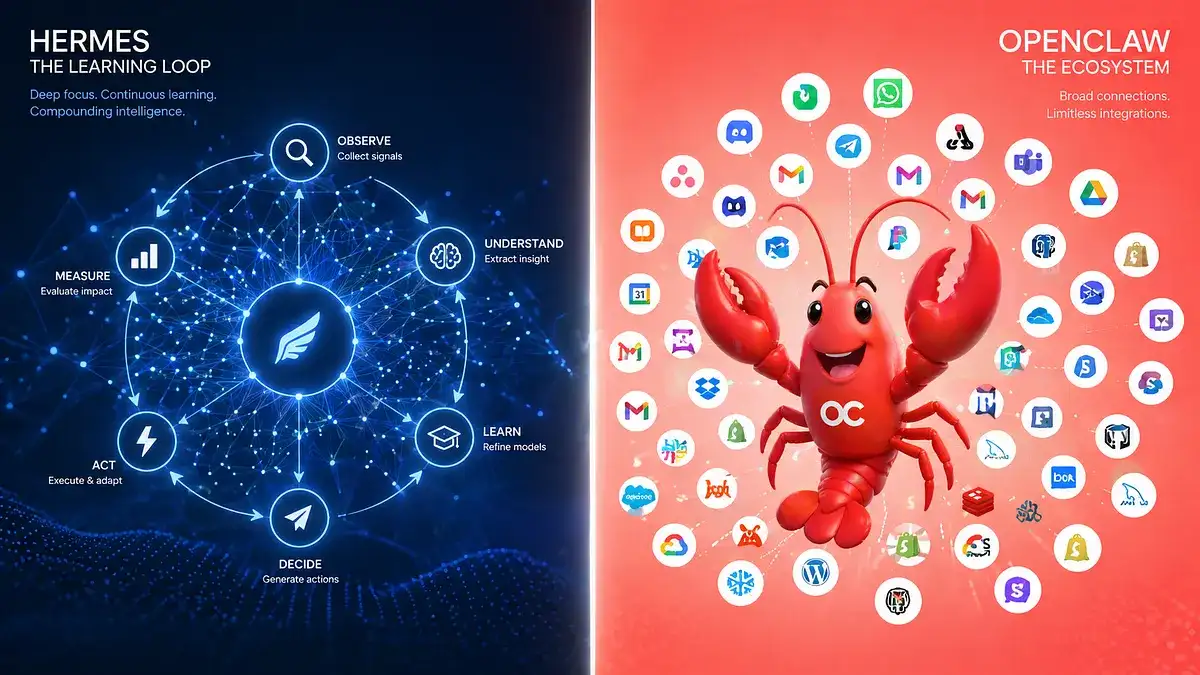
The emergent field of AI agent frameworks is seeing significant contention, with Hermes Agent emerging as a prominent, developer-centric player directly challenging the established ecosystem of OpenClaw. A core point of contention revolves around their differing philosophies: Hermes Agent prioritizes deep, self-improving capabilities and persistent memory, while OpenClaw emphasizes broad integration across numerous platforms and a vast marketplace of community-contributed skills.
This divergence has fueled intense discussion, particularly on platforms like Reddit, where users analyze the trade-offs between depth and breadth in AI agent functionality. Hermes Agent, an open-source framework, is designed for adaptability, allowing users to switch between various large language models (LLMs) without code modifications. Its architecture is built around three interconnected subsystems, aiming for a self-improving system through an integrated evaluation approach.
Clashing Philosophies and User Adoption
OpenClaw, in contrast, has cultivated a wide reach through its extensive integrations, supporting over 24 messaging platforms and hosting more than 13,000 community skills. However, this breadth comes with a reliance on human-written, curated skills distributed via its ClawHub marketplace. This has led some users to perceive OpenClaw as a "marketplace you have to curate."
Read More: Chrome mimeHandler API lets extensions handle file types
Hermes Agent, launched in February 2026, includes a direct migration command, hermes claw migrate, signaling an expectation of user transitions from OpenClaw. This feature suggests a deliberate strategy to capture users dissatisfied with OpenClaw's integration model or seeking Hermes's distinct capabilities. One user's experience over three weeks highlighted this tension, noting the extensive configuration required for OpenClaw prior to encountering the simpler migration path offered by Hermes.
Technical Framework and Accessibility
The Hermes Agent framework is readily accessible. It can be installed via a script for Linux, macOS, and Windows (including native Windows support without WSL). The project is hosted on GitHub, with documentation available at hermes-agent.nousresearch.com. Users can interact with Hermes through an interactive CLI, configure LLM providers and tools, and manage a messaging gateway for platforms like Telegram, Discord, and Slack.
Read More: New AI Method Maps API Logic for Safety by April 7, 2026
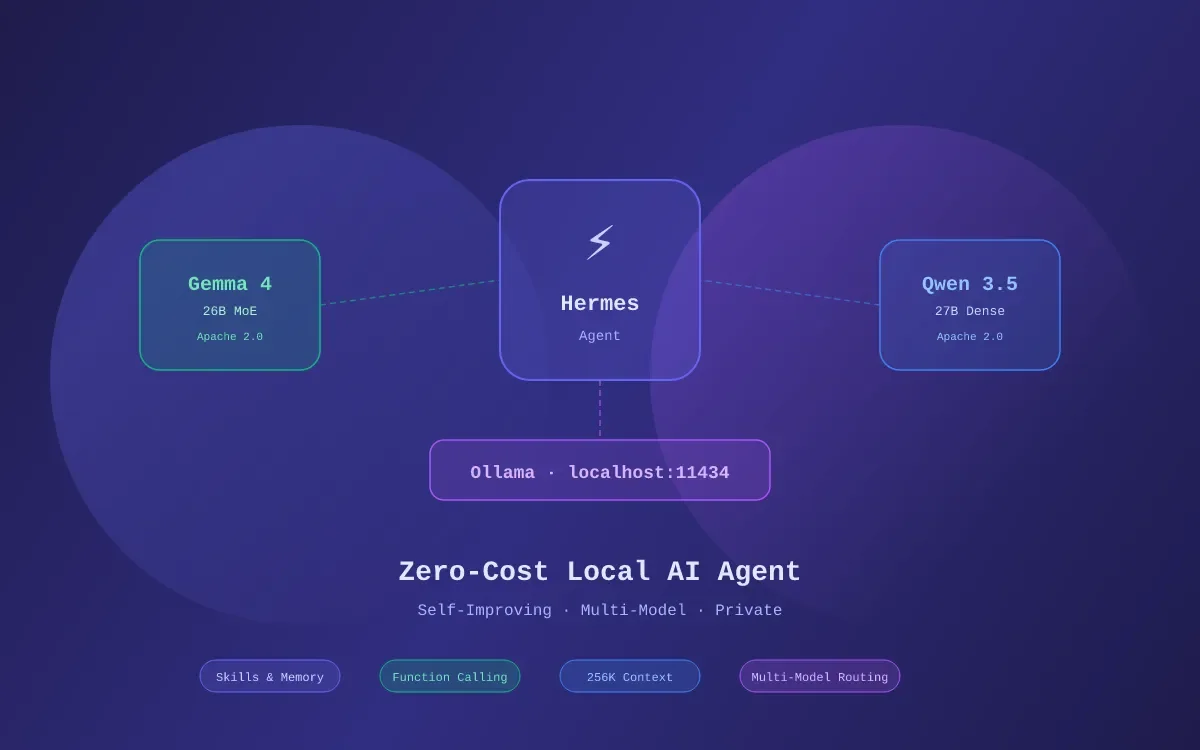
Hermes Agent is also positioned as a cost-effective solution, being MIT-licensed and free to use. It supports connections to various LLMs, including local models through OpenAI-compatible endpoints like Ollama, offering flexibility for users managing their own AI infrastructure. The framework aims to simplify setup with commands like hermes setup --portal, which can configure model access and common tools like web search and image generation with a single OAuth process.
Evaluating the Landscape
The "Hermes Agent Benchmark" is described not as a standalone dataset like GAIA or SWE-bench, but as an integrated evaluation system within the Hermes Agent framework itself. This internal benchmarking approach is part of its self-improving architecture. The competition and discourse surrounding Hermes Agent and OpenClaw reflect a broader trend in the rapid development and evaluation of AI agent technologies, pushing the boundaries of what these systems can achieve individually and how they integrate into existing workflows.
Read More: BEREC Asks for Mobile Network API Ideas from Developers