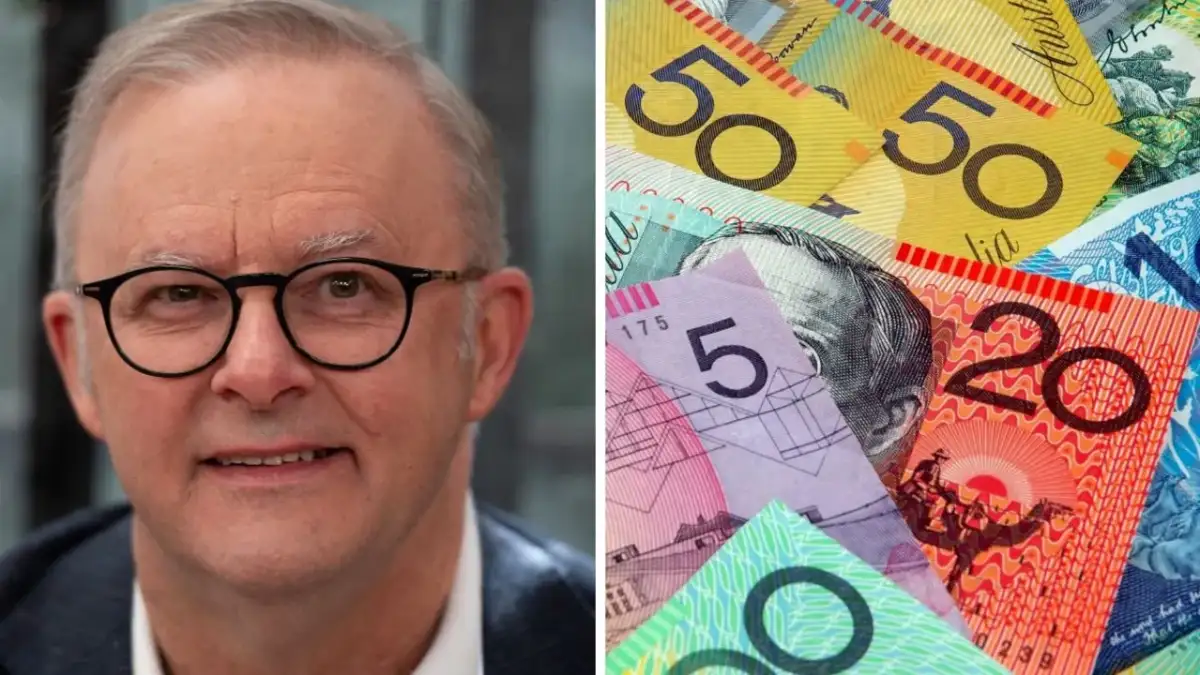
The Albanese Government has formally backed a push for a wage increase for millions of Australians, urging the Fair Work Commission to grant a "real wage rise" to minimum wage and award-reliant workers. The submission, lodged on March 26, 2026, argues that wages should outpace inflation to assist households struggling with escalating costs of living, exacerbated by global events impacting fuel prices.
The government's stance signals a clear intent to bolster the purchasing power of low-paid workers, a move presented as a direct response to current economic strains. The recommended increase, while not specifying an exact figure, is framed as "economically sustainable" and aims to ensure workers "earn more and keep more of what they earn." This intervention comes as nearly 3 million workers, representing 23 per cent of the Australian workforce, are directly impacted by minimum wage and award rates.
Read More: Goldman Sachs predicts 15 million US jobs lost to AI by 2036
Fair Work Commission's Independent Role
Despite the government's strong advocacy, the ultimate decision rests with the Fair Work Commission, an independent body tasked with its annual wage review. The government's submission recognizes this independence, refraining from dictating a specific percentage. However, the public alignment of ministers like Amanda Rishworth with the ACTU's concerns highlights a coordinated effort to influence the outcome.
Economic Arguments and Counterarguments
Proponents, including ACTU secretary Sally McManus, point to rising rents and power bills as immediate pressures on household budgets, amplified by recent spikes in petrol prices due to conflict in the Middle East. The government's argument, as articulated by Treasurer Jim Chalmers and Minister Rishworth, is that while some economists express caution about inflationary impacts, an increase is ultimately seen as supportive of falling inflation. This perspective suggests a belief that increased wages for low-income earners will translate into demand that can be met without necessarily fueling further price rises, or that the benefit to household finances outweighs the risk.
Read More: Hunter Region Gets $12 Billion Train Factory
Historical Context and Political Landscape
This advocacy for an above-inflation wage rise is a continuation of Labor's policy direction. Following their election win in May 2025, Prime Minister Anthony Albanese had previously indicated support for such increases. The previous minimum wage, set at $24.10 per hour or $915.90 per week, has seen a weekly increase of $143 since the Albanese Government took office in 2022. While the former Opposition Leader, Peter Dutton, had previously expressed support for higher wages for low-paid workers, he reportedly stopped short of endorsing an above-inflation hike. The Consumer Price Index, a measure of inflation, was noted at 2.4 per cent earlier in the year, a benchmark against which the proposed rise is measured.