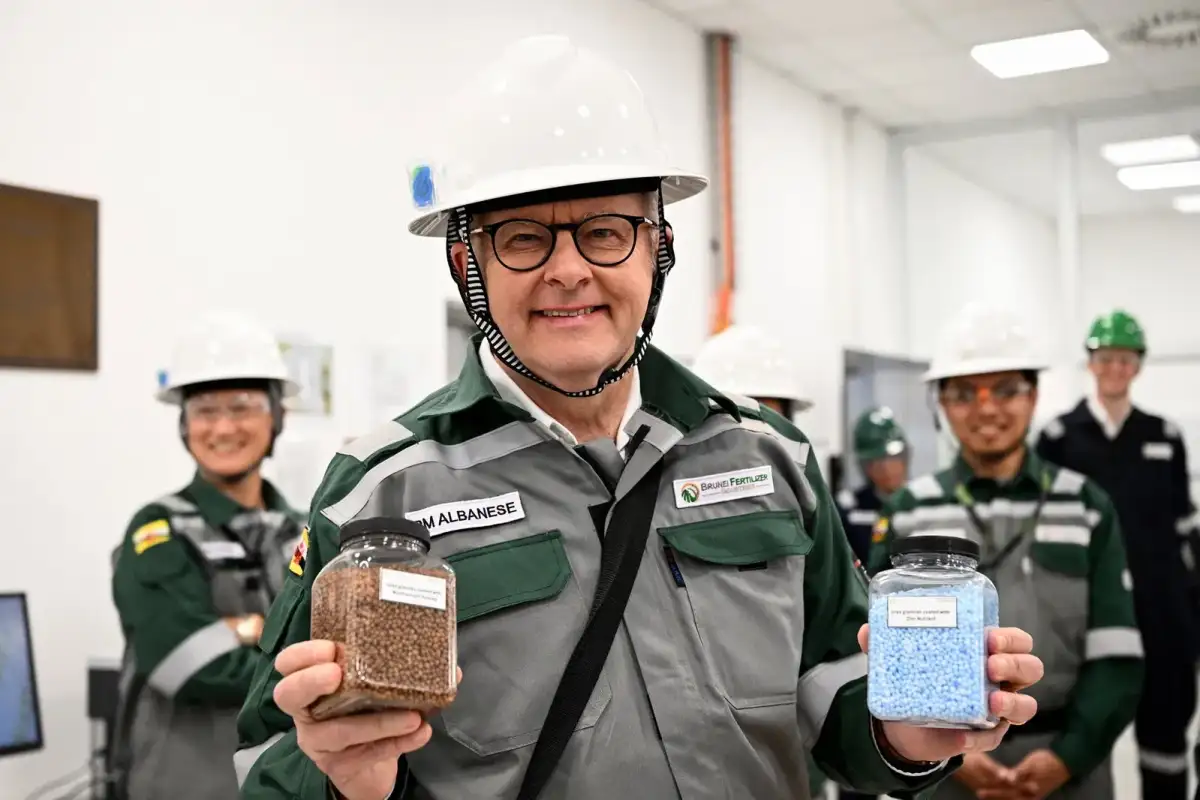
ALBANESE SECURES BRUNEI PACT ON FUEL AND FOOD
Prime Minister Anthony Albanese has cemented a cooperative understanding with the Sultan of Brunei, Haji Hassanal Bolkiah, focusing on energy and food security. The joint statement, signed following formal talks at Brunei's Royal Palace, signals a commitment to regional stability and prosperity. This agreement arrives as Australia seeks to bolster its supply chains, particularly for diesel, crude oil, and fertiliser-grade urea, of which Brunei is a significant, albeit smaller, regional supplier.
The prime minister's visit underscores Australia's proactive approach to diversifying critical imports, seeking to leverage its food exports in exchange for more reliable fuel supplies from the resource-rich sultanate.
Further underscoring the government's push for energy stability, Mr. Albanese is slated to continue discussions on fuel security and other essential goods with his Malaysian counterpart, Prime Minister Anwar Ibrahim, in Kuala Lumpur. Malaysia stands as Australia’s third-largest source of refined fuel.
Read More: Solaris Energy SEI Stock Price Forecast Reaches $91.98 by July 2027
NO NAVAL BLOCKADE INVOLVEMENT
Concurrently, Defence Industry Minister Pat Conroy clarified that the Australian government is not considering joining the United States' planned blockade of the Strait of Hormuz. This stance comes amidst broader international tensions and uncertainties surrounding maritime security in the region.
VICTORIAN MINISTERIAL CHANGES
In domestic political news, three Victorian government ministers have announced they will not seek re-election at the upcoming November state election. The Victorian health minister, Mary-Anne Thomas, finance minister, Danny Pearson, and minister for skills, Tafe and water, Gayle Tierney, have all indicated their departure from parliamentary seats.
UBER'S SURCHARGE APPLIED
Meanwhile, a new fuel surcharge has been implemented by Uber for rides taken in non-electric vehicles. This adjustment is expected to impact the cost of services for consumers relying on traditional fuel-powered transport options.
Read More: US May Add Tariffs on Australian Goods Due to Forced Labour
BACKGROUND ANALYSIS
The dual focus on international energy security and domestic economic adjustments highlights a government navigating complex global dynamics. The Brunei visit, described as a "high-stakes" engagement, positions Australia to solidify existing import relationships and explore avenues for securing vital resources. Brunei's substantial petroleum wealth, largely underpinning the Sultan's considerable personal fortune, forms the bedrock of this bilateral engagement. The timing of these discussions, particularly concerning fuel security, gains salience against the backdrop of regional geopolitical sensitivities, though explicit governmental statements have downplayed immediate concerns regarding direct military involvement in escalating conflicts. The Uber surcharge, a more localized development, reflects the ongoing economic pressures associated with fuel price fluctuations, impacting consumer choices and the operational costs for ride-sharing services. The broader economic landscape, as suggested by commentary from economist Chris Richardson, may present unforeseen budget benefits amidst the current crisis, although the precise implications remain subjects of ongoing fiscal assessment.
Read More: Summer AC Settings: Save Money by Raising Thermostat