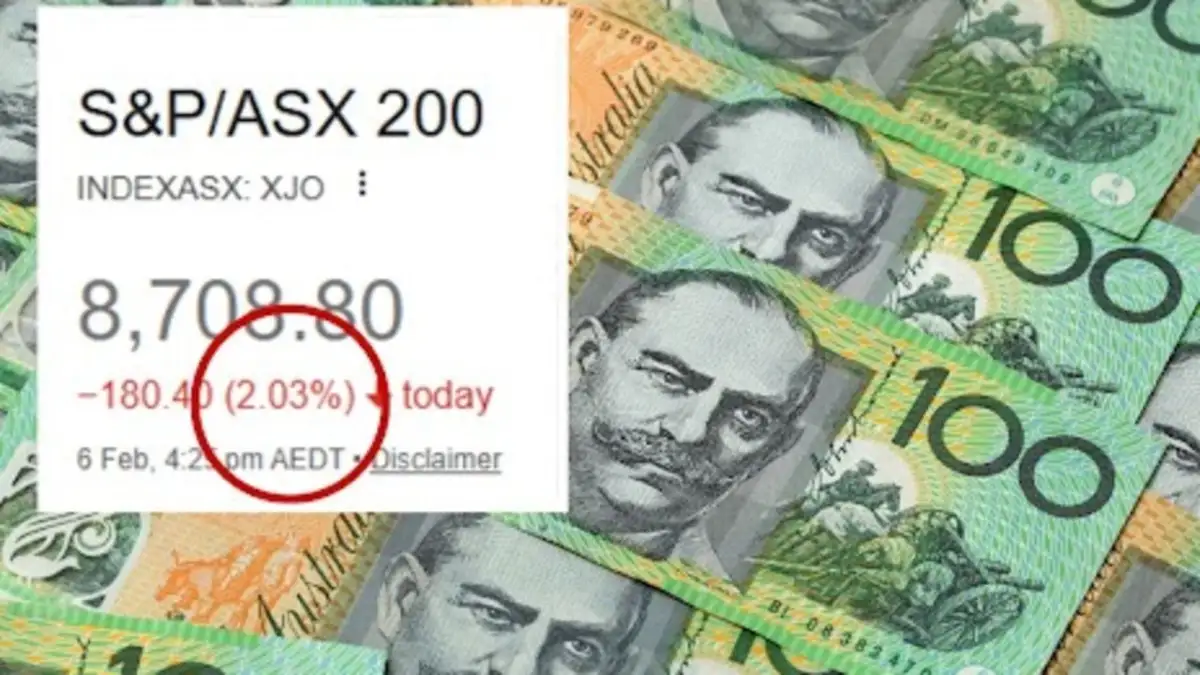
Australian equities are bracing for further declines, mirroring a global trend of market downturns driven by rising bond yields and renewed anxieties around interest rate trajectories. The benchmark ASX 200 index is poised to open lower, following Wall Street's extended losing streak. This follows a significant sell-off last week that saw nearly $40 billion wiped out, pushing the market to a six-month low.

The current market downturn appears multifaceted, fueled by a confluence of factors including persistent inflation concerns, uncertainty in global interest rate expectations, and recent shifts in the technology sector, particularly around artificial intelligence (AI).

Sectoral Weakness and Specific Stock Movements
The slump has been broad-based, with most sectors trading in the red. Miners and financial institutions have been particularly affected. Major mining companies such as Rio Tinto and Fortescue have seen notable drops, as have gold producers like Northern Star, Evolution Mining, and Newmont.
Read More: Returnal Director Starts New Game Studio Cosmic Division

Financials are also under pressure, with significant retreats seen in Westpac, ANZ Bank, and National Australia Bank. Property trusts and data centre operators, including Goodman Group, Vicinity Centres, and Stockland, have also experienced declines.

In contrast, some individual companies have shown resilience or experienced specific boosts. Webjet saw its shares rise following an improved takeover bid from BGH Capital. Meanwhile, WiseTech has performed strongly, defying the broader tech sector weakness.
Broader Market Context and Historical Trends
This recent downturn marks the ASX's fourth consecutive weekly loss, a significant period of sustained decline. The intensity of the sell-off has been likened to major market shocks, with all 11 sectors trading lower during the recent broad market drop. Technology stocks and commodity prices have been identified as key drags, alongside ongoing concerns about the AI sector.
Read More: Melbourne Symphony Orchestra faces lawsuit over cancelled pianist Jayson Gillham's concerts
The Australian dollar has seen some volatility, recently bouncing up against the US dollar. However, the overall market sentiment reflects a global unease, with Australian markets mirroring international sell-offs.
"The Australian sharemarket has suffered its biggest plunge since the Liberation Day tariffs sell-off in a broad market drop."
Underlying Economic Pressures
The market's current state is amplified by macroeconomic signals. A stronger-than-expected US jobs report has cast a shadow over expectations for interest rate cuts, a sentiment echoed in other global markets. The 'hot' inflation figures reported in September 2025 further complicate the picture for central banks and investors alike. The increasing pressure from bond markets, indicated by surging yields, suggests investors are demanding higher returns for holding debt, which can divert capital away from equities.
Company-Specific News and Corporate Actions
Several companies have been involved in capital raisings or funding facilities, including Australian Unity, FirstWave Cloud Technology, Harvest Technology Group, and QMines. Win Metals has concluded its acquisition of the Radio Gold Mine. These activities highlight ongoing corporate maneuvering amidst market fluctuations.
Read More: Intel limits old chips, pushing PC makers to new 18A process