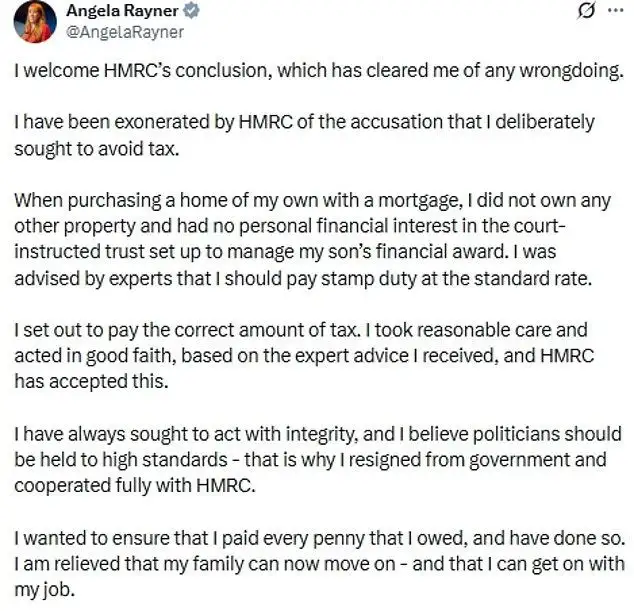
Angela Rayner, the former Deputy Prime Minister, has resolved a tax matter with HM Revenue and Customs (HMRC), paying an additional sum of £40,000 in Stamp Duty Land Tax (SDLT). The investigation, which focused on a property purchase in Hove, concluded that while the higher rate of SDLT was indeed payable, Rayner will not face a penalty charge. HMRC's assessment determined that she had not acted carelessly and had not engaged in deliberate tax avoidance.
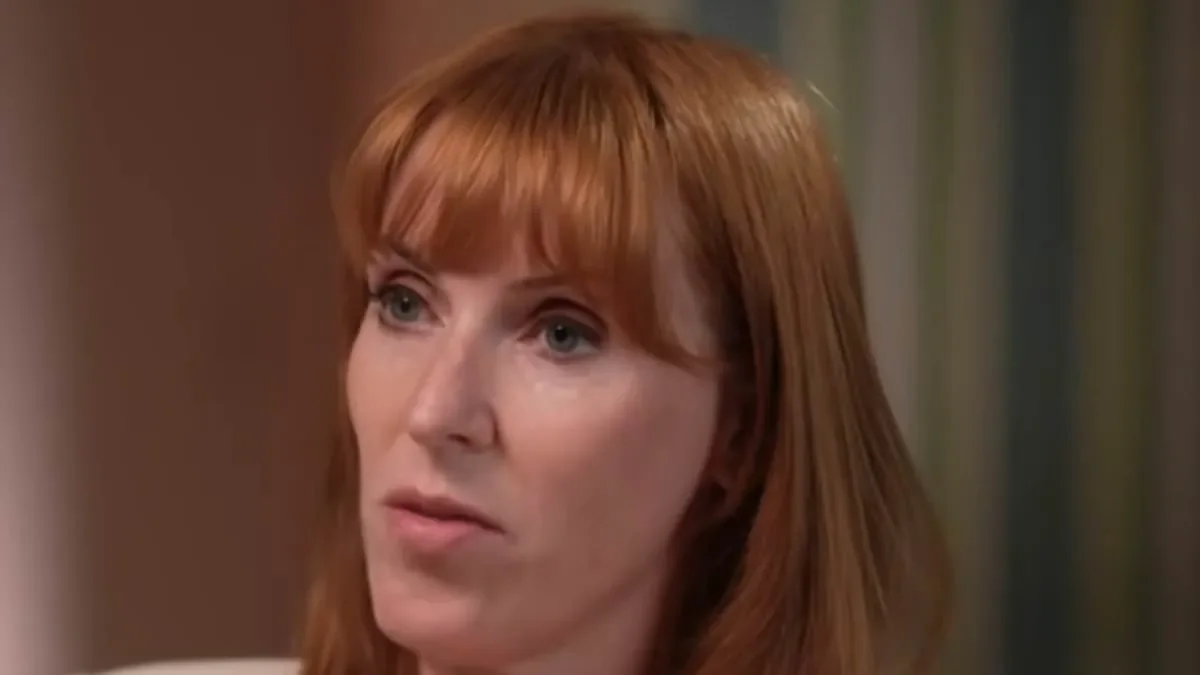
HMRC's inquiry found Rayner liable for a higher rate of stamp duty due to complex arrangements involving a trust for her disabled son, which meant the East Sussex property should have been treated as a second home. Despite legal advice obtained during the property purchase, Rayner conceded she did not seek further specialist tax advice as recommended, instead relying on her conveyancer. HMRC's conclusion means Rayner is cleared of wrongdoing and carelessness, allowing her to pay only the outstanding tax without penalty.
Read More: Andrew sublet Royal Lodge cottages for years, NAO report says

Political Ripples Amidst Leadership Speculation
The resolution of the HMRC investigation comes at a critical juncture for the Labour Party, following a series of poor election results. Rayner's name has been frequently mentioned as a potential challenger to current leader Sir Keir Starmer, whose position appears increasingly precarious. Health Secretary Wes Streeting has recently resigned from his cabinet post, explicitly urging Starmer to quit and signaling his own ambition for the leadership. Other figures, such as Andy Burnham, are also reportedly being considered.

Rayner herself has indicated she would not initiate a leadership contest but has also stated that electoral outcomes necessitate change. She described the HMRC investigation as having taken a significant personal toll, hindering her political effectiveness for approximately eight months. Rayner maintained that she always sought to act with integrity and accepted the findings of the tax authority.
Read More: HMRC Warns Landlords About Fake Tax Saving Schemes
Background of the Stamp Duty Dispute
The controversy centred on Stamp Duty Land Tax (SDLT) and complex property arrangements. Under UK tax law, owning an interest in another property, even through certain trust structures, typically requires paying a higher surcharge on a new property purchase. Rayner had initially argued that she only owed the standard rate, based on legal advice suggesting her share in a first home was transferred to her son's trust.
Rayner's lawyers contend that she would have had a reasonable chance of success had she contested HMRC's decision in court. However, she chose to accept HMRC's assessment and paid the additional tax, emphasizing her commitment to transparency and accountability within politics. This resolution clears a significant hurdle that was previously seen as an obstacle to any potential leadership aspirations she might hold.