Workstation Chips Now Feature Gaming-Centric Cache Technology
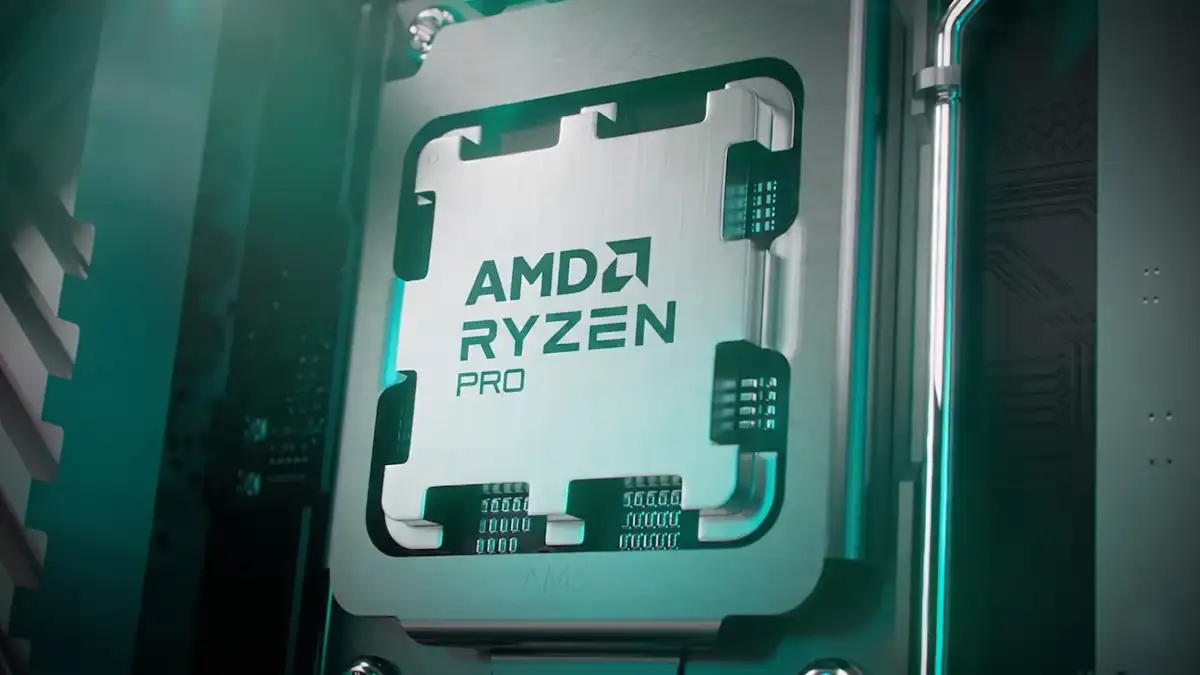
AMD is integrating its 3D V-Cache technology, previously exclusive to gaming-focused CPUs, into its new Ryzen PRO 9000 series workstation processors. This move signals an expansion of the technology's application beyond gaming into demanding commercial and enterprise workloads.

The incorporation of 3D V-Cache into select Ryzen PRO 9000 models, specifically the Ryzen 9 PRO 9965X3D and Ryzen 7 PRO 9755X3D, aims to boost performance in data-intensive tasks. These include complex simulations, rendering, real-time visualization, software compilation, scientific analysis, and local AI inference.

Key Processor Details Emerge
The Ryzen 9 PRO 9965X3D features 16 Zen 5 cores and 32 threads, with boost clocks up to 5.5 GHz. It boasts 128MB of L3 cache enabled by 3D V-Cache and carries a 170W TDP. This configuration is comparable to AMD's consumer Ryzen 9 9950X3D, adapted for professional use.
The Ryzen 7 PRO 9755X3D offers 8 Zen 5 cores and 16 threads, with boost clocks up to 5.2 GHz. It includes 96MB of L3 cache via 3D V-Cache and has a 120W TDP.
These processors are built on AMD's Zen 5 architecture and utilize the AM5 socket. They support up to 256GB of ECC DDR5 memory and PCIe 5.0.
Broader Ryzen PRO 9000 Lineup
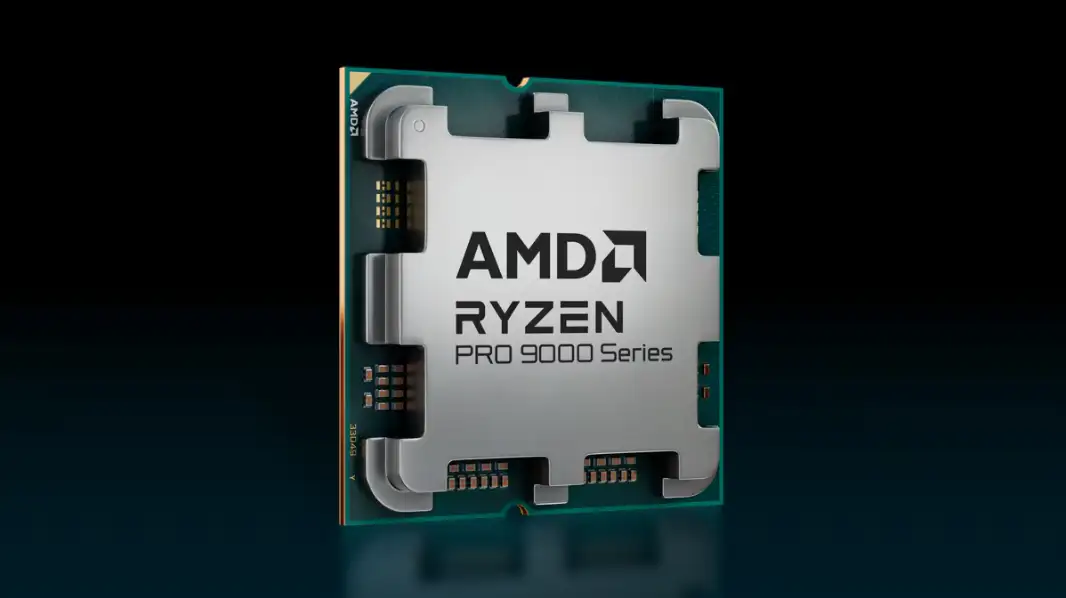
Alongside the X3D variants, AMD has also released other Ryzen PRO 9000 series processors without the stacked cache. The full lineup spans configurations from 6 to 16 cores and includes power envelopes ranging from 65W to 170W, accommodating various system designs from compact desktops to full tower workstations.
Read More: Chrome mimeHandler API lets extensions handle file types

"AMD Ryzen PRO processors integrate the AMD PRO platform to deliver enterprise-grade security, manageability and platform stability…" - AMD Official Blog
The rollout of these new processors is slated to begin in the second half of 2026, with systems like the Lenovo ThinkStation P4 expected to launch in Q3 2026.
Background: Shifting Perceptions of 3D V-Cache
Historically, AMD's 3D V-Cache technology has been primarily marketed and utilized for enhancing gaming performance by reducing memory latency. However, recent years have seen its effectiveness extend to creative tasks. The inclusion of this technology in the PRO line suggests a broader strategic aim to leverage stacked cache as a general performance enhancement for a wider array of demanding computational activities, not solely confined to gaming scenarios.
"Bringing it to PRO-branded hardware signals a broader ambition: stacked cache as a general-purpose latency fix rather than a gaming-only trick." - gagadget.com
This expansion also means that some Ryzen PRO CPUs will exceed the previously common 65W power limit for the PRO lineup, with models reaching up to 170W TDP. This increase in power envelopes allows for more robust performance under sustained heavy loads.
Read More: Nvidia RTX Spark New AI PC Processors Coming Autumn 2026