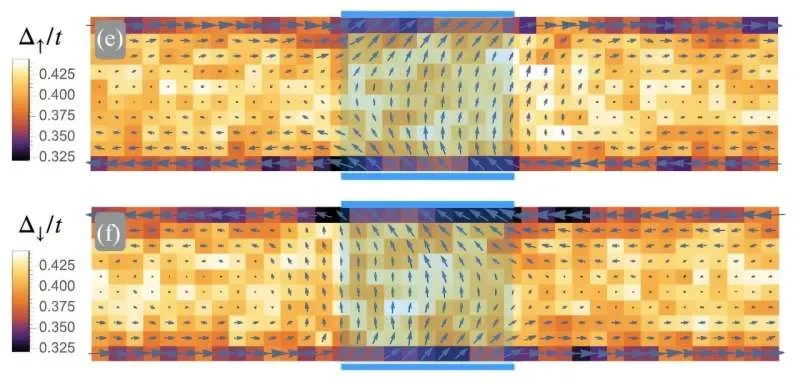
Researchers are charting a course for a novel way to transport electron spins, potentially bypassing the common pitfalls of energy loss and decay that plague current methods. This exploration hinges on a class of materials known as 'altermagnets,' a phenomenon first observed in 2024. The core proposition is that when these altermagnets enter a superconducting state, they can facilitate the flow of spin currents without any accompanying charge movement, and crucially, without dissipating energy.
This potential breakthrough, detailed in theoretical studies, suggests a paradigm shift for 'spintronics,' a field aiming to encode information using electron spin instead of electric charge. The mechanism proposed involves the formation of two independent electron condensates within the altermagnet – one for spin-up electrons and another for spin-down electrons. When these two currents move in opposing directions, their charge contributions are meant to cancel out, leaving only a reinforced spin current. This pure spin supercurrent is theorized to carry angular momentum over arbitrary distances without decay, a stark contrast to conventional spin currents in normal metals which typically vanish within nanometers due to 'spin relaxation'.
Read More: Artemis II astronauts share first Earth photos from moon journey
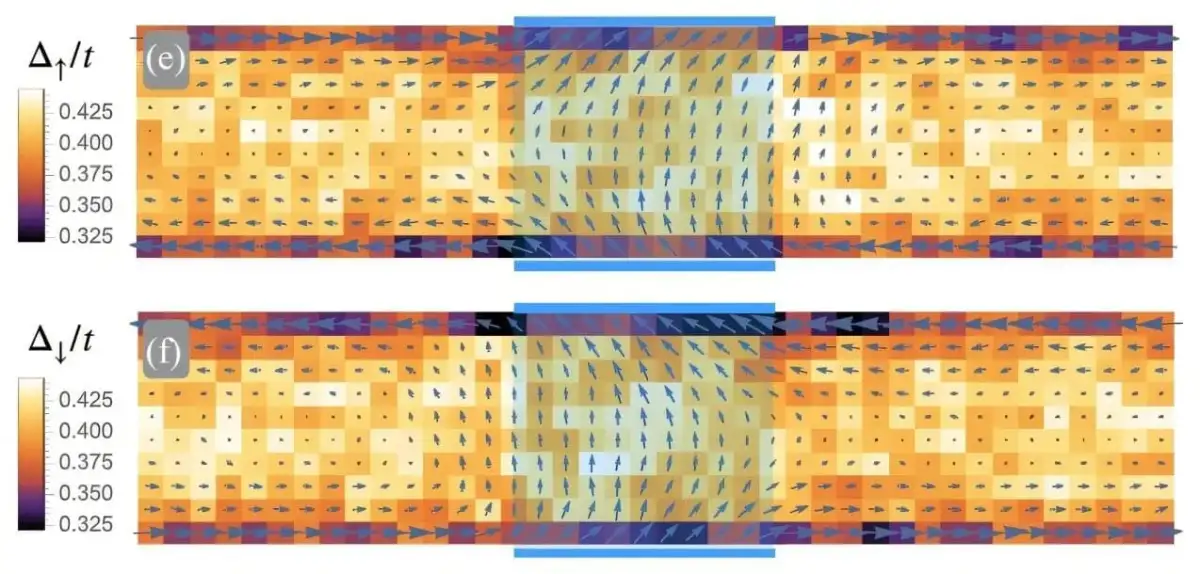
The robustness of these predicted spin currents is a key point of interest. Studies indicate that even when factors like 'spin-orbit coupling' and magnetic disorder – elements that usually disrupt and extinguish spin transport – are present, the spin current in superconducting altermagnets remains non-dissipative. Instead of decaying, it might exhibit spatial oscillations but continues to flow without losing energy. This resilience is attributed to the intrinsic properties of altermagnets, specifically their 'spin-split band structure', which naturally creates this 'triplet state' without needing unusual interactions.
Avoiding Magnetic Fields
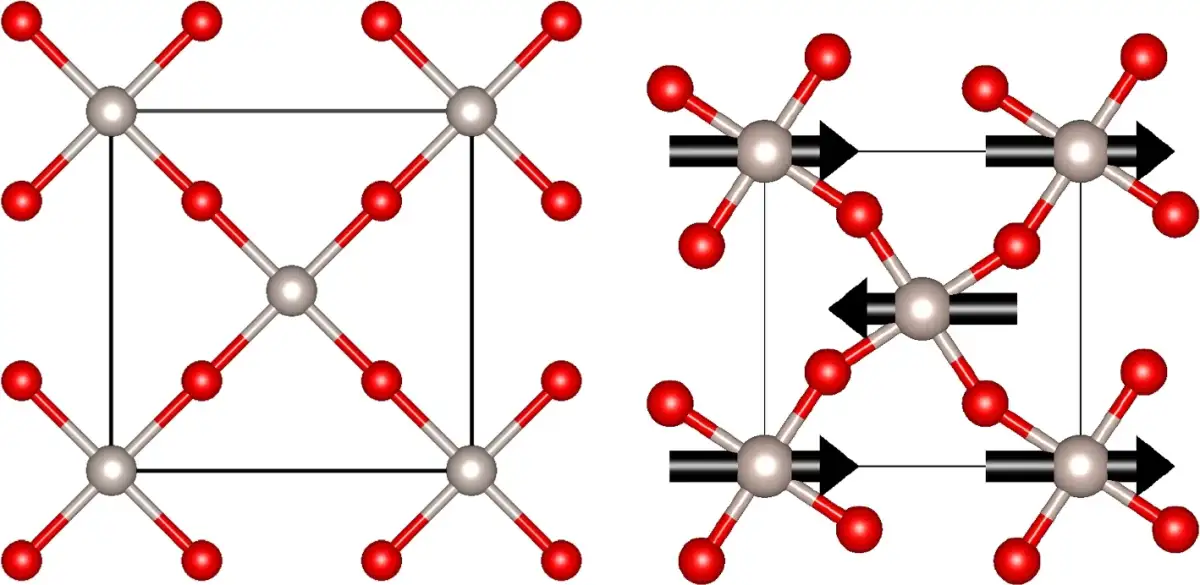
A notable feature of altermagnets, drawing a parallel with antiferromagnets, is their lack of net magnetization. This characteristic means they do not generate unwanted magnetic fields, a practical advantage that could simplify their integration into future electronic devices. The theoretical calculations underpinning these findings have been published in outlets like 'Physical Review X'.
Read More: Microsoft Invests $10 Billion in Japan for AI and Data Security by 2029
Theoretical Underpinnings
The concept builds upon the unique electronic structure of altermagnets. Unlike conventional superconductors where electrons pair up with opposite spins, altermagnets appear to favor same-spin pairing. This leads to distinct condensates for spin-up and spin-down electrons. While probing the 'average order parameter' in such a system might yield a mixed state, the underlying behavior is theorized to support these independent, dissipationless spin currents. The theoretical framework, as outlined in research discussions, describes how the order parameter in these materials can manifest distinct properties for different electron spins, paving the way for these exotic current behaviors.
Future Prospects
If these theoretical predictions are experimentally validated, altermagnets could offer a potent new platform for advancing spintronics, potentially enabling the development of more efficient and novel electronic components. The ability to transport spin without energy loss represents a significant stride towards next-generation technologies.
Read More: Why is the Moon's far side colder and different from the near side?