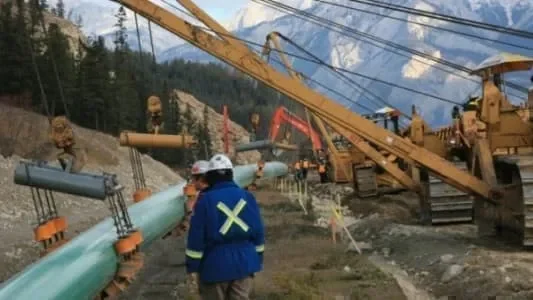
The federal government and the government of Alberta have formalized an agreement to pursue a new bitumen pipeline connecting the province to the British Columbia coast, transitioning from a memorandum of understanding to a structured public-private partnership. Prime Minister Mark Carney and Premier Danielle Smith confirmed that the project will leverage the expertise of the Pembina Pipeline Corporation to manage construction and operational discipline.

Core terms include a shift in federal regulatory approach, specifically the suspension of the federal oil and gas emissions cap and Alberta’s requirements under the Clean Electricity Regulations (CER), in exchange for a committed escalation of industrial carbon pricing within the province.

| Feature | Status / Commitment |
|---|---|
| Pipeline Status | Public-private partnership with Pembina Pipeline Corp |
| Federal Emissions Cap | Suspended for Alberta |
| Clean Electricity Regs | Alberta exempt |
| Carbon Pricing | Industrial levy increased; Pathways project supported |
| Target Timeline | Construction commencement slated for late 2027 |
Infrastructure and Market Dynamics
The objective, as framed by the federal office, is to diversify market access toward Asian outlets while mitigating reliance on the United States. Despite the political alignment, the project faces structural questions. Critics, including British Columbia Premier David Eby, note the persistence of a ban on oil tanker traffic along the northern coast, which limits potential transit routes. Furthermore, while Pembina Pipeline Corporation is engaged, the financial viability of such massive energy projects remains subject to shifting global crude markets and internal regulatory compliance costs.
Read More: Solaris Energy SEI Stock Price Forecast Reaches $91.98 by July 2027

The Carbon Trade-Off
The agreement links fossil fuel expansion to the Pathways Alliance carbon capture and storage initiatives. Alberta has committed to supporting the Alberta Carbon Capture Incentive Program, ensuring that industrial players remain tied to emissions-reduction technology. However, the exact mechanism for the "effective" carbon price—the actual market cost of TIER (Technology Innovation and Emissions Reduction) credits versus the headline government-mandated price—remains a point of contention among environmental stakeholders and industry analysts.

Historical Context
This arrangement marks a departure from the adversarial relations that defined federal-provincial energy policy during the preceding decade. The original Memorandum of Understanding signed in November 2025 provided the skeletal framework for this pivot. While both governments emphasize their obligations to consult with Indigenous groups, diametric opposition remains from various communities whose traditional territories the pipeline would intersect. The project’s success now rests on the intersection of private sector capital interest, court-tested Indigenous rights, and the stability of the promised carbon-pricing floor.
Read More: Calgary Rain Causes River Levels to Rise Across Alberta