An active-duty Air Force Major, Jason Watson, was detained by Capitol Police on Wednesday after publicly demanding the impeachment and removal of President Donald Trump and Vice President JD Vance. The incident, which occurred on the steps of the U.S. Capitol building, has triggered an investigation by the U.S. Air Force into the officer's conduct, highlighting the tension between military service obligations and political expression.

Watson, who has served 17 years in the Air Force with postings abroad, explicitly stated his reasons for calling for impeachment during a news conference. These included the administration's handling of the Iran War, alleged war crimes, and actions surrounding the Epstein files, alongside broader concerns about corruption, self-enrichment, and abuse of power. This public dissent has quickly garnered national attention and led to the establishment of a defense fund exceeding $139,000 within days of his arrest.
Read More: Pentagon Unites Drone Programs Under New Office
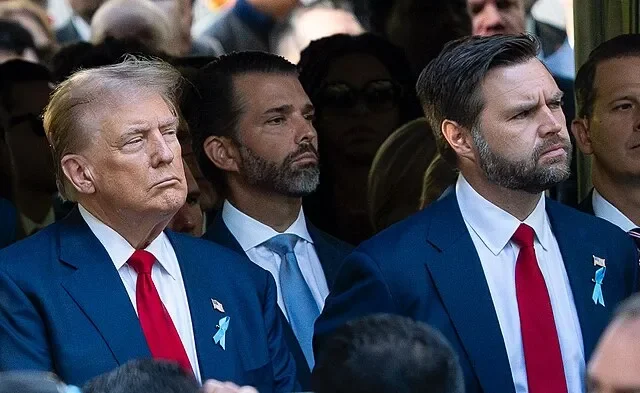
The Air Force has initiated a probe, acknowledging the potential repercussions for Watson under military law. Article 88 of the Uniform Code of Military Justice prohibits commissioned officers from uttering contemptuous words against political leaders, a rule Watson's public statements appear to contravene. Watson himself acknowledged the personal risks associated with his actions, reportedly stating that his identity was secondary to the message and that he was prepared for the consequences.
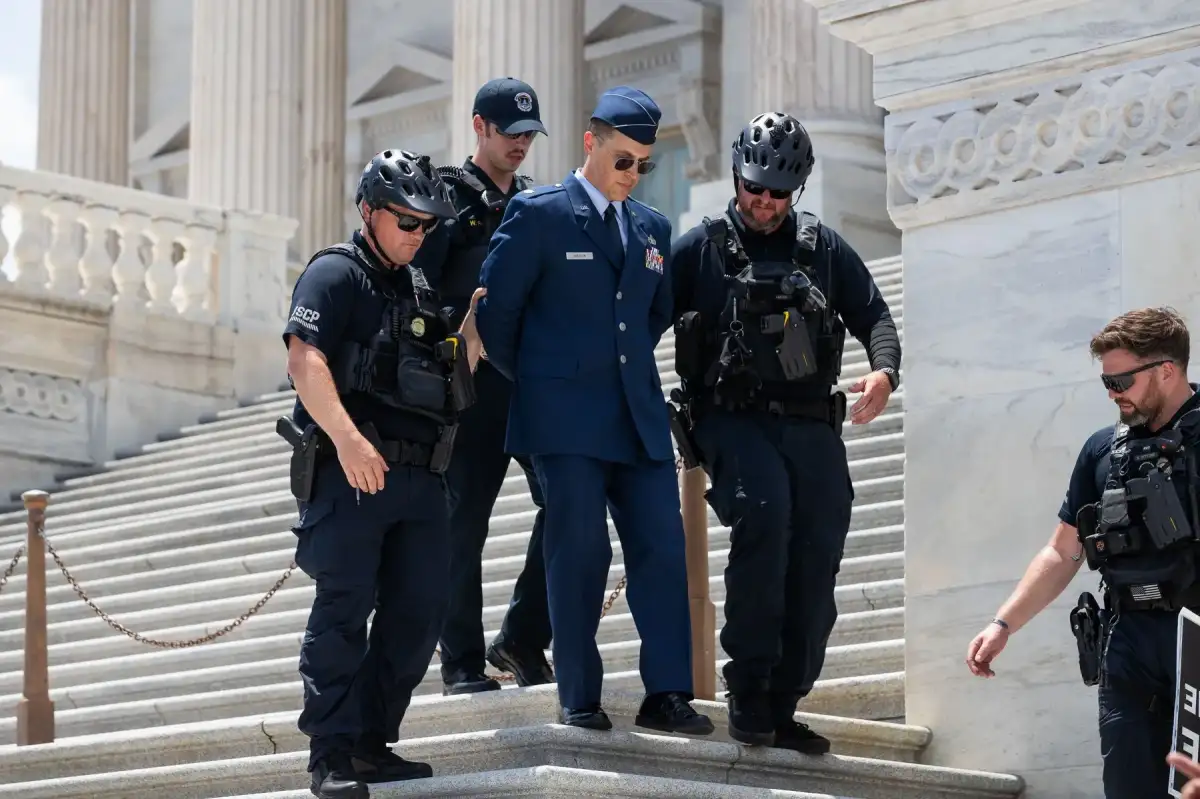
The arrest occurred on Wednesday afternoon, with video footage capturing Watson's brief detention by U.S. Capitol Police. Watson was reportedly in uniform at the time of the protest.
Recent polling data from mid-June indicated a divided public sentiment regarding Trump's impeachment. A Strength in Numbers/Verasight survey found that 53 percent of respondents believed there were ample reasons for impeachment, while 39 percent disagreed. Specific reasons cited by those favoring impeachment included corruption and self-enrichment (30 percent), abuse of power and defiance of court orders (30 percent), the Iran War and war crimes (20 percent), and the administration's handling of the Epstein files (16 percent).
Read More: Taiwan Holds Nantou County Drills to Prepare for State Collapse
Military regulations impose stricter limitations on political activities for service members compared to civilians, particularly concerning staged protests and public criticism of government officials. Watson's case will proceed through the military justice system, with the timeline and eventual outcome remaining uncertain.