The Challenge of Disconnected Intelligence
The rapid advance of Artificial Intelligence (AI) promises great leaps in what machines can achieve. However, a significant hurdle to realizing this full potential is the inability of different AI systems to communicate and work together. Without this connection, these powerful tools often operate in isolation, limiting their collective impact and efficiency. This disconnect creates what can be described as "silos of intelligence," where each AI system, no matter how advanced, functions as an island, unable to share its capabilities or leverage the strengths of others. The question arises: how can we ensure these diverse AI systems can effectively exchange information and collaborate to solve complex problems?

Foundations of AI Communication
At its core, AI interoperability is about enabling different AI systems to "talk" to each other and function cohesively. This technical capability relies on the development and adoption of common protocols and frameworks.
Read More: MIT Boron-Oxygen Molecule Acts as Builder in Chemical Reactions
Open Standards: Organizations like OASIS Open are actively working to create open standards. These standards aim to ensure that different AI systems can interact and operate seamlessly, regardless of their underlying design or origin.
Protocols for Collaboration: For systems involving multiple AI agents, specific protocols are crucial. These allow individual agents to coordinate their actions and work towards a shared objective, fostering a more integrated operational environment.
Data Exchange: A fundamental aspect is data interoperability, which refers to the ability of systems to share and exchange data effectively. This is a critical component in the development and deployment of AI and machine learning (ML) models, as it allows algorithms to build a shared understanding and increases the flexibility of models across different vendors.
Impact on the Future of Work and Business
The integration of interoperable AI solutions is actively reshaping how businesses operate and the very nature of work. When AI systems can communicate, they unlock new levels of productivity and efficiency.
Enhanced Knowledge Management: Interoperable AI can significantly improve how organizations manage and access their knowledge. By connecting disparate information sources and AI tools, businesses can gain deeper insights and make more informed decisions.
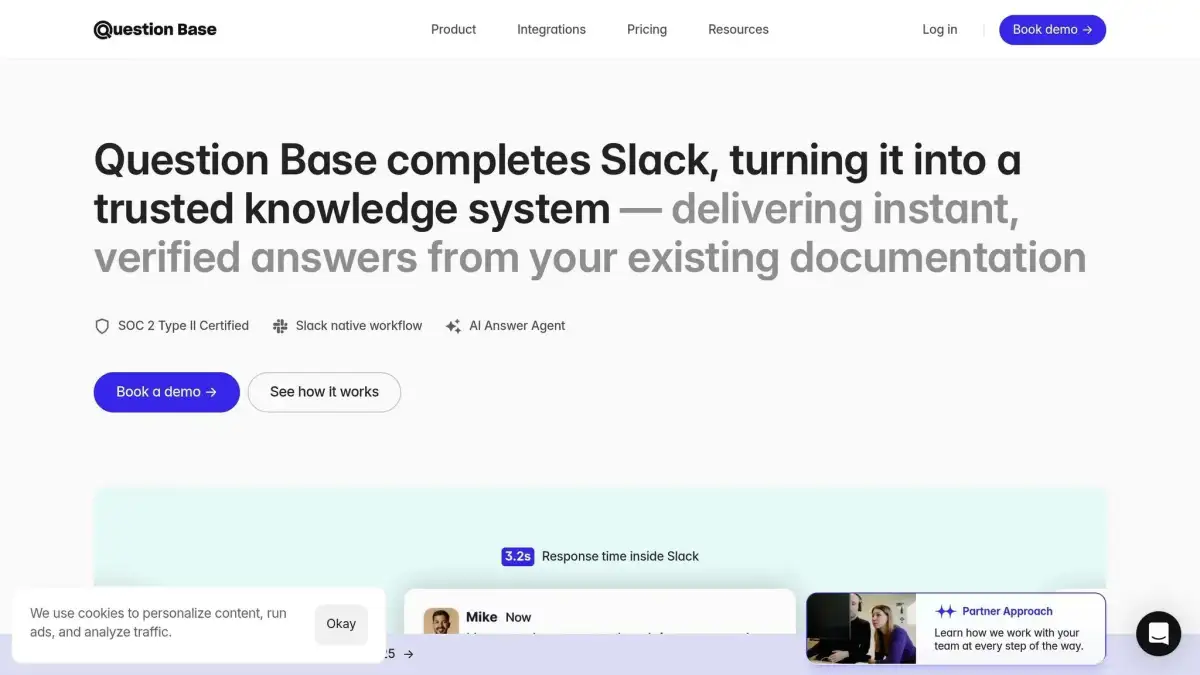
Streamlined Operations: Tools like Slack AI, while often focused on specific platforms, highlight the trend towards AI enhancing productivity within existing workflows. Broader AI interoperability promises to extend these benefits across an entire organization, integrating various AI functionalities.
Flexibility and Adaptability: In an era of rapidly evolving Large Language Models (LLMs), interoperability provides the crucial freedom to adapt. It allows users to switch between or combine different models without needing to rewrite entire applications. This abstraction layer is key to future-proofing AI architectures.
AI as a Solution for Interoperability
Interestingly, Artificial Intelligence itself is increasingly being viewed as a powerful tool to achieve interoperability. AI applications can be developed to bridge gaps and facilitate communication between systems that were not originally designed to work together.

Semantic Interoperability: The SEMIC initiative, part of the European Union's efforts, invests in projects where AI is used to solve challenges in semantic interoperability. This involves ensuring that systems can not only exchange data but also understand the meaning of that data.
Generative AI Studies: SEMIC has conducted studies on Generative AI, emphasizing the need for alertness when deploying such applications. This points to a nuanced approach where AI assists in creating interoperable systems while also requiring careful governance.
Training for Public Services: The EU Academy offers training like "Introduction to AI for Public Service Interoperability," demonstrating a commitment to leveraging AI for better communication and data sharing within public administration.
The Role of Infrastructure and Standards
As AI evolves from single, monolithic models to complex ecosystems, robust infrastructure becomes paramount. AI interoperability is not an afterthought but a fundamental aspect of this evolving infrastructure.
Ecosystem of Tools: Modern AI infrastructure is no longer a single entity but an interconnected network of models, agents, tools, and data storage systems. AI interoperability is the principle that turns these isolated capabilities into a cohesive and functional system.
AI Gateways: AI Gateways are emerging as solutions to manage this multi-model challenge. They act as intermediaries, facilitating communication and integration between different AI components, thereby ensuring interoperability.
Value-Sensitive Standardization: In the realm of AI regulation, maintaining interoperability is a key concern. Approaches that consider different regulatory values are being explored. The goal is to develop AI standards that can facilitate communication and cooperation between AI systems operating under diverse legal and ethical frameworks, ensuring that value-sensitive design is incorporated into standardization efforts.
Addressing Challenges and Charting the Path Forward
While the benefits of AI interoperability are clear, achieving it presents notable challenges. Projects and research are underway to develop roadmaps and identify best practices.
Regulatory Interoperability: Developing an implementation roadmap for AI regulatory interoperability is a complex objective. This requires input from governments, industry, and civil society to ensure a balanced and effective approach to global AI governance.
Learning from Experience: Lessons learned from efforts to establish interoperability in other sectors can inform current and future AI initiatives. This includes understanding past successes and failures to guide the development of AI interoperability frameworks.
Bridging Gaps: Identifying and closing the existing gaps in AI interoperability is an ongoing process. This requires a proactive approach to ensure that the potential of interconnected AI systems is fully realized.
Expert Insights on Interoperability
"AI interoperability is what makes it possible [for systems like prompt management, guardrails, logging, and analytics] to work regardless of which model you're using." - Portkey.ai
"Without interoperability, AI systems become disconnected silos. Every AI model is an island." - Novus Asia
"AI interoperability turns isolated capabilities into a cohesive system." - True Foundry
"Interoperability is the ability of systems to work together. Interoperability between and across different platforms also helps intelligent algorithms formulate a shared understanding and helps make other AI and ML models across vendors more flexible." - Clickworker
Conclusion and Implications
The evidence strongly suggests that AI interoperability is not merely a technical convenience but a fundamental requirement for the continued advancement and widespread adoption of Artificial Intelligence. It underpins the ability of diverse AI systems to communicate, collaborate, and integrate, thereby unlocking greater efficiency, adaptability, and problem-solving capabilities across industries.
Read More: Anthropic Refuses China Access to Latest AI Models
Systemic Transformation: The drive towards interoperability signifies a shift from isolated AI functionalities to integrated AI ecosystems. This transformation is critical for realizing the full promise of AI in areas ranging from business operations to public services and clinical applications.
Future-Proofing: As AI technologies continue to evolve at a rapid pace, interoperability provides a crucial mechanism for future-proofing AI architectures and strategies, allowing organizations to adapt to new models and tools without extensive re-engineering.
Strategic Imperative: Achieving AI interoperability, both technically and regulatorily, is becoming a strategic imperative. This requires deliberate design, the development of open standards, and collaborative efforts among stakeholders to ensure that AI systems can function cohesively and safely within a global context. Future efforts should focus on creating comprehensive roadmaps and actively addressing the identified challenges to bridge the remaining gaps.
Sources Used
When AI Systems Talk: The Power of Interoperability
Seen on: Brave
Link:
https://www.sandgarden.com/learn/interoperabilityWhat AI Interoperability Means for the Future of Work ∙ Question Base
Seen on: Brave
Link:
https://www.questionbase.com/resources/blog/interoperability-future-ai-workAI for Interoperability
Seen on: Brave
Link:
https://interoperable-europe.ec.europa.eu/collection/semic-support-centre/ai-interoperabilityMachine Learning and Interoperability
Published: November 30, 2022
Link:
https://www.clickworker.com/customer-blog/interoperability-and-the-future-of-machine-learning/What is AI interoperability, and why does it matter in the age of LLMs
Published: May 12, 2025
Link:
https://portkey.ai/blog/what-is-ai-interoperability/Enterprise AI Interoperability with AI Gateways
Published: November 6, 2025
Link:
https://www.truefoundry.com/blog/ai-interoperabilityAI Interoperability: Why It’s the Backbone of the Next AI Wave I Novus
Seen on: Brave
Link:
https://www.novusasi.com/blog/ai-interoperability-why-its-the-backbone-of-the-next-ai-waveAI Agent Interoperability for Cost and Efficiency Gains
Published: November 5, 2025
Link:
https://appinventiv.com/blog/ai-agent-interoperability/AI regulation: maintaining interoperability through value-sensitive standardisation - Ethics and Information Technology
Published: May 19, 2025
Link:
https://link.springer.com/article/10.1007/s10676-025-09832-7The Architect’s Guide to Interoperability in the AI Data Stack
Published: November 8, 2024
Link:
https://blog.min.io/interoperability-in-the-ai-data-stack/How Interoperability Can Enable Artificial Intelligence in Clinical Applications - PubMed
Published: August 22, 2024
Link:
https://pubmed.ncbi.nlm.nih.gov/39176813/Interoperable software platforms for introducing artificial intelligence components in manufacturing: A meta-framework for security and privacy
Published: February 19, 2024
Link:
https://www.sciencedirect.com/science/article/pii/S2405844024024770Aiming for AI Interoperability: Challenges and Opportunities - Ceimia
Published: November 26, 2025
Link:
https://ceimia.org/en/projet/aiming-for-ai-interoperability/