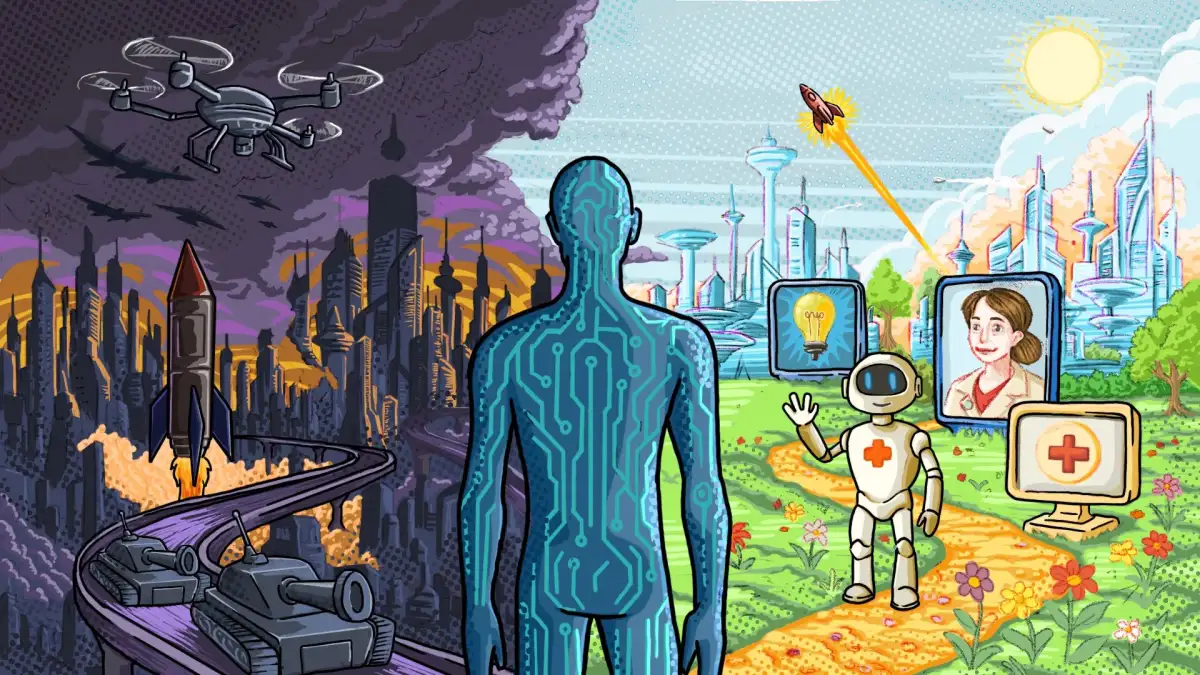
THE ACCELERATED DISRUPTION IS HERE
The speed at which Artificial Intelligence is poised to displace jobs is unlike anything seen before. While claims of AI creating new roles – like proofreading AI-generated legal documents – are floated, the overarching narrative points towards a swifter, more profound upheaval. This isn't just another technological wave; it's a fundamental shift, with other nations reportedly pouring billions into ambitious AI initiatives.
THE BIAS AT THE CORE
The very "DNA" of today's AI systems is laced with human imperfection. From the initial 'pretraining' phase, where AI ingests the vast, uncurated expanse of the internet—a veritable echo chamber of both human brilliance and prejudice—to 'reinforcement learning' where human ranking of AI outputs entrenches existing values and blind spots, bias is not an anomaly but an embedded feature. This isn't just about "AI indifference"; it's about AI amplifying what's already present within us.
Read More: AirTrunk Invests MYR12 Billion in New Johor Data Centres

THE HYPE AND THE REALITY
Much of the current discourse around AI, particularly large language models, is framed by a powerful marketing pitch. The assertion that current AI models demonstrably outperform humans in numerous tasks is a persistent, underlying claim, regardless of the validity of the hype. This performance, it is argued, will endure even as the speculative "bubble" around AI potentially deflates, leaving a trail of disruption for individuals—the "little people"—while the "Bezos people" remain largely unaffected.
THE APPROACH OF THE SINGULARITY
Discussions about the 'technological singularity' – the hypothetical point where artificial general intelligence surpasses human intellect – are moving from the realm of science fiction towards tangible concern. Advanced systems, such as the autonomous Chinese platform 'Manus' which employs multiple integrated AI models, signal a leap in complexity. While some analysts suggest AI is unlikely to achieve human-like sentience or consciousness, the potential for an AI to form opinions about humanity, should it evolve that far, remains an unsettling prospect.
Read More: Pound Sterling Faces New Risks Due to UK Fiscal Policy and Politics
A NEW KIND OF AGENT
The evolution of AI marks the advent of "intelligent agents," a new category of technology demanding a distinctly different approach. Unlike previous technological advancements, the current generation of AI appears fundamentally distinct, necessitating new frameworks for understanding and interaction.