The Ubiquitous Presence of AI in Classrooms
Artificial intelligence, particularly tools like ChatGPT, has swiftly moved from concept to classroom reality. This shift presents a significant challenge to traditional educational assessment methods, compelling educators to rethink how student learning is evaluated. The core issue revolves around maintaining academic integrity while harnessing AI's potential to enhance, rather than replace, human learning. A central question emerges: how can educators adapt their practices to acknowledge and integrate AI's presence, ensuring it serves as a tool for learning and critical thinking rather than a means to circumvent it?

Evolving Educational Landscapes with AI
The integration of ChatGPT into educational settings is not a new phenomenon, with a notable portion of teachers already employing it. The Association of Texas Professional Educators (ATPE) highlights AI's growing role, suggesting its utility in generating teaching materials and supplementing curricula. This move toward AI adoption signals a broader transformation in educational strategies.
Read More: Schools Watch Student Devices, Raising Privacy Worries
Early Adoption: Over half of teachers surveyed have reportedly integrated ChatGPT into their classrooms, indicating a widespread, albeit varied, embrace of the technology.
Curriculum Support: AI tools are being used to generate lesson plans, brainstorm activities, and create differentiated learning materials, thereby supporting educators in their planning and delivery.
Personalized Learning: The capability of AI to offer personalized quizzes and explanations suggests potential for tailored support for students struggling with specific concepts.
Reassessing Learning in the Age of AI
The presence of ChatGPT in classrooms necessitates a re-evaluation of how student learning is assessed. The focus is shifting from rote memorization and output to the process of learning and critical engagement with information, including AI-generated content.
Critical Thinking and Interrogation: Educators recognize the potential for AI to aid in assessing critical thinking skills. There's a growing sentiment that teaching students to question and analyze AI-generated content is not just beneficial, but ethically imperative.
Preserving Student Voice: Assessments are being encouraged to prioritize understanding how students arrive at their knowledge and conclusions, rather than solely focusing on the final product. This approach aims to maintain the student's unique perspective in their work.
AI as a Partner: A key pedagogical shift involves teaching students to collaborate with AI, understanding when and how it can act as a supportive partner in their academic endeavors. This co-creation model is seen as integral to learning in a post-plagiarism era.
Strategies for Responsible AI Integration
Educators are exploring various methods to incorporate ChatGPT responsibly, focusing on AI literacy and ethical usage. This includes establishing clear guidelines and promoting a balanced approach where AI enhances, rather than supplants, genuine learning.
Read More: Amazon Prime Was Faster and Saved People Money in 2025

AI Literacy and Digital Citizenship: Promoting understanding of how AI works and encouraging responsible digital behavior are seen as foundational to its effective use in education.
Structured Task Support: ChatGPT is noted for its efficacy in handling structured tasks, implying its use in areas requiring consistency and organization.
Combating Plagiarism: Institutions are actively developing policies to define AI usage, disclosure requirements, and what constitutes AI-driven plagiarism, alongside developing tools to detect AI-generated content.
Examining the Impact on Student Performance and Perception
The effect of ChatGPT on students' academic performance and their perception of learning is a subject of ongoing study and debate. While some research suggests positive impacts, others raise concerns about potential hindrances to critical thinking and learning depth.
Potential Benefits: Several studies claim that ChatGPT can improve students' learning performance, perception, and higher-order thinking skills. It is also viewed as a tool that can serve students with specific learning needs.
Potential Drawbacks: Conversely, other scholars argue that ChatGPT may hinder these same aspects of learning. Concerns are also raised about AI occasionally generating misinformation, untimely, or biased responses, which students might accept uncritically.
Mixed Perceptions: Student perceptions of integrating AI tools vary, with some studies posing questions about whether its use increases confidence, knowledge of AI challenges, and technological or digital skills.
Educators' Role and Adaptation
The influx of AI tools like ChatGPT is redefining the role of educators, requiring them to adapt their teaching methods and assessment strategies. The consensus points towards embracing AI as a transformative force rather than an existential threat.
Read More: Education Helps People and Countries Get Richer
Teacher Training and Support: Resources and training programs are being developed to equip educators with the knowledge and skills to navigate AI in the classroom, including understanding its capabilities and limitations.
Developing New Pedagogies: The emergence of AI necessitates innovation in teaching, encouraging educators to develop new frameworks and approaches for integrating these tools effectively.
Balancing AI and Human Interaction: A critical aspect of responsible AI use is ensuring it complements, rather than replaces, valuable human interaction and the development of authentic student voices.
Conclusion: A Transformative Shift in Education
ChatGPT's integration into classrooms signifies a profound shift in the educational landscape, necessitating a fundamental rethinking of assessment practices. The challenge lies not in resisting AI, but in thoughtfully incorporating it as a tool that can augment critical thinking, foster AI literacy, and support personalized learning, all while preserving the integrity and authenticity of student work. Future directions will likely involve the refinement of AI policies, ongoing professional development for educators, and the continued exploration of pedagogical approaches that leverage AI's potential for enhanced learning outcomes.
Core Findings:
AI Integration is Widespread: ChatGPT is already present in many classrooms, with teachers utilizing it for various support functions.
Assessment Needs Evolution: Traditional assessment methods are being challenged, pushing for evaluations that focus on critical engagement and the learning process.
Ethical Considerations Paramount: Teaching students to critically analyze AI output and use it responsibly is seen as an ethical necessity.
Dual Potential: AI offers both significant benefits for learning and potential risks to academic integrity and deep thinking, requiring careful management.
Teacher Adaptation is Key: Educators are central to navigating this transition, requiring new skills, policies, and pedagogical approaches.
Sources:
The Conversation: ChatGPT is in classrooms. How should educators now assess student learning?
Published: 6 days ago
ATPE: ChatGPT: Artificial Intelligence’s Impact on Education
Seen on: Brave
Link: https://www.atpe.org/News-Media/Magazine/ATPE-News-Summer-2023/ChatGPT
University of San Diego: How to Use ChatGPT in the Classroom
Published: November 19, 2025
International Journal of Artificial Intelligence in Education (via Springer): ChatGPT in the Classroom: Evaluating its Role in Fostering Critical Evaluation Skills
Published: January 24, 2025
Link: https://link.springer.com/article/10.1007/s40593-024-00452-8
Silicon Republic: If ChatGPT is in the classroom, do educators need to reassess learning?
Published: 3 days ago
UMass Global: ChatGPT for Educators
Published: October 30, 2023
Link: https://www.umassglobal.edu/blog-news/chatgpt-for-educators
Common Sense Education: ChatGPT and Beyond: How to Handle AI in Schools
Seen on: Brave
Link: https://www.commonsense.org/education/articles/chatgpt-and-beyond-how-to-handle-ai-in-schools
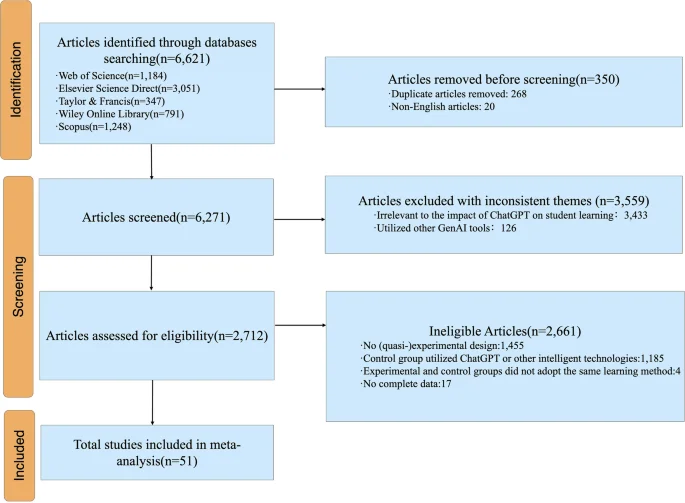
Nature (Humanities and Social Sciences Communications): The effect of ChatGPT on students’ learning performance, learning perception, and higher-order thinking: insights from a meta-analysis
Published: May 6, 2025
NEA: As ChatGPT Enters the Classroom, Teachers Weigh Pros and Cons
Seen on: Brave
MIT Technology Review: ChatGPT is going to change education, not destroy it
Published: April 7, 2023
Link: https://www.technologyreview.com/2023/04/06/1071059/chatgpt-change-not-destroy-education-openai
AIMultiple: Top 10 ChatGPT Education Use Cases in 2026
Seen on: Brave
Undetectable.ai: ChatGPT in Education: What Are the Pros and Cons?
Published: September 29, 2025
PMC: The application and challenges of ChatGPT in educational transformation: New demands for teachers' roles
Seen on: Brave
Taylor & Francis Online: ChatGPT enters the classrooms: Student perceptions of the incorporation of artificial intelligence tools in the teaching of Economics and Business
Seen on: Brave
Link: https://www.tandfonline.com/doi/full/10.1080/09523987.2024.2436737
Frontiers in Education: The use of ChatGPT in teaching and learning: a systematic review through SWOT analysis approach
Published: January 24, 2024
Link: https://www.frontiersin.org/journals/education/articles/10.3389/feduc.2024.1328769/full