
Recent statements by B. Unnikrishnan, general secretary of the Film Employees Federation of Kerala (FEFKA), have placed actors under scrutiny, alleging their involvement in budget overruns and production delays within the Malayalam film industry. These claims emerge against a backdrop of evolving labor practices and industry-wide challenges affecting filmmaking globally.
The FEFKA general secretary's remarks suggest a direct link between actor conduct and financial and timeline disruptions in film productions. This perspective contrasts with broader industry discussions about systemic causes for such issues.
Background of Production Challenges
Film production, a complex undertaking, frequently encounters obstacles that impact schedules and budgets. These challenges are not unique to any single region but are observed across international filmmaking hubs.
Common Causes: Delays can stem from various factors.
Weather conditions often disrupt planned shooting days.
Script changes mid-production can necessitate reshoots or significant alterations.
Location issues, such as permitting or accessibility problems, can create bottlenecks.
Talent availability, beyond just actors, including crew and essential personnel, is a critical component.
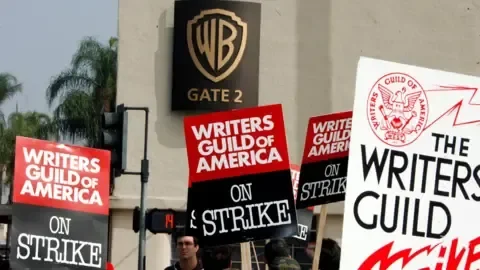
Industry-Wide Concerns: Global industries, including Hollywood, have grappled with production stoppages and financial strain. Strikes by actors and writers have significantly impacted output, leading to extended periods with little new content being produced. This has resulted in economic hardship for individuals working in these sectors.
FEFKA's Stance on Actor Involvement
FEFKA, representing film employees, has articulated a specific concern regarding the role of actors in production efficiency.

"FEFKA was ready to accept such an agreement if such actors were made part of it." - B. Unnikrishnan, FEFKA General Secretary
The federation's general secretary suggested that actors could be integrated into agreements that revise working conditions. This indicates a potential willingness to formalize expectations and responsibilities concerning production timelines and budgets.
Read More: Danny McBride finishes G.I. Joe script for Paramount by April 2026
A key development accompanying these statements is the signing of an agreement between FEFKA and the Kerala Film Producers’ Association. This agreement revises the service conditions for film workers, notably reducing the daily shift from 16 hours to 12 hours. The change is attributed to a recognition of the toll longer schedules take on workers' physical and mental well-being.
Broader Industry Context: Strikes and Economic Strain
The accusations against actors in Kerala occur while other major film industries are still navigating the aftermath of significant labor actions and evolving business models.

Hollywood's Labor Disputes: In Hollywood, strikes involving actors and screenwriters have demonstrably paralyzed production.
The Writers Guild of America (WGA) and the Screen Actors Guild‐American Federation of Television and Radio Artists (SAG-AFTRA) strikes caused widespread disruption.
Many series were placed on indefinite hold, affecting the autumn television season and halting work on large-scale films.
The rapid advancement of Artificial Intelligence (AI) was cited as an additional pressure point, raising concerns about job displacement.
Economic Repercussions: The prolonged strikes have led to severe financial difficulties for many industry professionals.
Some actors have reported extreme hardship, facing eviction and an inability to afford basic living expenses.
The reduced number of working days since the strikes concluded highlights a slower-than-anticipated ramp-up in production.
Operational Management and Cost Control
Discussions around budget overruns and production delays frequently lead to analyses of operational management and cost-saving strategies within the film industry.
Root Cause Analysis: Identifying the fundamental reasons for project delays and budget overruns is considered crucial for prevention.
Common deficiencies cited include a lack of standardized documentation processes and insufficient real-time tracking.
The use of project management software and tools for workload visibility is often recommended to improve efficiency.
Technological Integration: Systems designed to manage various aspects of film production are seen as beneficial.
Production management software can centralize tracking of budgets, schedules, equipment, and contracts.
This integration aims to streamline post-production by ensuring easy access to the latest project versions for editors, colorists, and VFX artists.
Expert Perspectives on Industry Challenges
Insights from industry stakeholders often highlight the multifaceted nature of production hurdles.

"It is utterly unsustainable and extraordinary." - A senior producer, commenting on the UK's scripted funding crisis.
Reports from other regions, such as the UK, indicate that the scripted funding crisis is a significant concern for top producers. Discussions at high levels, including meetings with BBC executives, have addressed the sustainability of current funding models. Efforts to influence government policy, such as lobbying for extended television tax credits for domestic productions, are part of ongoing dialogues.
Read More: Kerala Health and AYUSH Departments Link for Dengue Control in 2026
Conclusion
The allegation by B. Unnikrishnan that actors contribute to budget overruns and production delays in Kerala's film industry adds a specific regional dynamic to the global discourse on filmmaking challenges. While FEFKA has engaged in revised labor agreements, aiming for better worker conditions, the attribution of blame towards actors for financial and scheduling issues is a distinct point of contention.
This situation unfolds as major international film industries continue to recover from the economic and operational disruptions caused by widespread labor strikes and evolving technological landscapes. The common threads across these scenarios involve the inherent complexities of film production, the impact of labor relations, and the continuous search for effective management and cost-control strategies to ensure project viability and industry stability.
Sources Used
The Hindu: Reported on B. Unnikrishnan's allegations regarding actors and production delays in Kerala.
Link: https://www.thehindu.com/news/national/kerala/actors-to-blame-for-budget-overruns-and-production-delays-alleges-fefka-general-secretary-b-unnikrishnan/article70610290.ece
BBC News: Detailed the crisis in the Hollywood industry following strikes and the economic impact on actors.
Ouest-France: Explained how actor and writer strikes threatened to paralyze Hollywood and touched on AI's role.
Link: https://www.ouest-france.fr/monde/etats-unis/etats-unis-pourquoi-la-greve-des-acteurs-et-des-scenaristes-risque-de-paralyser-hollywood-505208e1-3a2f-4c2e-aa01-9229e94e89d4
Number Analytics: Provided a guide to common causes and minimization strategies for film production delays.
Link: https://www.numberanalytics.com/blog/ultimate-guide-to-film-production-delays
Deadline: Reported on discussions between BBC executives and top producers concerning the UK's scripted funding crisis.
Link: https://www.deadline.com/2025/01/bbc-tim-davie-crunch-meeting-top-producers-uk-scripted-funding-crisis-1236251098/
dev.to: Discussed root cause analysis for project delays and budget overruns in project management.
Link: https://dev.to/vaishnavilokhandeaf0b66/project-delays-budget-overruns-root-cause-analysis-to-the-rescue-l6l
APAGEN: Offered insights into how the entertainment industry can cut production costs and manage budget overruns, suggesting ERP solutions.
Link: https://www.apagen.com/how-entertainment-industry-cuts-production-costs-budget-overruns/