Justice Delayed, Questions Raised: A Look Back at the 2007 Film Dispute
The recent dismissal of a long-standing criminal revision petition against the celebrated actor Mohanlal and his frequent collaborator, producer Antony Perumbavoor, by the Kozhikode Additional Sessions Court – V, marks the apparent end of a chapter that began nearly two decades ago. The case, rooted in allegations of cheating linked to a 2007 film project, has finally been laid to rest, with the court observing that the evidence presented was insufficient to proceed with a criminal trial. While this verdict brings relief to the accused, it opens a Pandora's Box of questions regarding the nature of such disputes, the prolonged judicial processes, and the wider implications for the Malayalam film industry.
The core of the dispute, as reported, revolved around accusations made by a filmmaker, K.A. Devarajan, who alleged financial misconduct and cheating in a film deal. He claimed that neither Mohanlal nor Perumbavoor fulfilled their commitments or provided the necessary coordination for the project, thereby defrauding him. The case has seen multiple adjournments and a lengthy judicial journey, culminating in the recent dismissal.
Read More: Danny McBride finishes G.I. Joe script for Paramount by April 2026
The key takeaway is that the court found the allegations lacking in necessary evidence for a criminal trial, leading to the exoneration of Mohanlal and Antony Perumbavoor. However, the sheer duration of the case and the circumstances surrounding its dismissal warrant a deeper investigation into the processes at play.
A Trail of Allegations: Tracing the 2007 Dispute
The allegations against Mohanlal and Antony Perumbavoor first surfaced in connection with a film project initiated in 2007. Filmmaker K.A. Devarajan was the petitioner, accusing the duo of defrauding him after he had allegedly given them money for a film venture. The specifics of the film project remain somewhat obscure in the current reports, but the essence of the accusation points towards a breach of trust and financial impropriety.
Over the years, the case has navigated the judicial system, facing delays and postponements. A significant development reported in August 2024 was the adjournment of the hearing by the Kozhikode Additional Sessions Court V to September 13th. This indicated the case was still very much active, with the court seeking to hear the plea.
Read More: Producer TP Aggarwal Says 'Gundagardi Won't Fly' to Film Guild
A critical aspect of the recent dismissal is the absence of the petitioner, Devarajan, who has since passed away. This unfortunate circumstance meant that no legal heirs or representatives appeared in court to actively pursue the arguments. To ensure fairness and due process, the court took the proactive step of appointing an amicus curiae (friend of the court) to review the case before making a final decision. This procedural safeguard underscores the court's commitment to justice, even in the face of a missing petitioner.
Initial Allegation: Cheating and financial misconduct in a 2007 film project.
Petitioner: Filmmaker K.A. Devarajan.
Accused: Actor Mohanlal and producer Antony Perumbavoor.
Judicial Process: The case endured a prolonged period with multiple adjournments.
Recent Development: Dismissal by Kozhikode Additional Sessions Court – V due to lack of evidence and the death of the petitioner.
Court's Action: Appointment of an amicus curiae to ensure a fair hearing.
"The sessions court subsequently observed that the allegations lacked the necessary evidence to proceed with a criminal trial."
Beyond the Courtroom: A Pattern of Industry Scrutiny?
While this specific case has concluded, it's worth examining whether Mohanlal and Antony Perumbavoor have faced other instances of public scrutiny or legal challenges that might provide a broader context. Our investigation reveals a few noteworthy incidents:
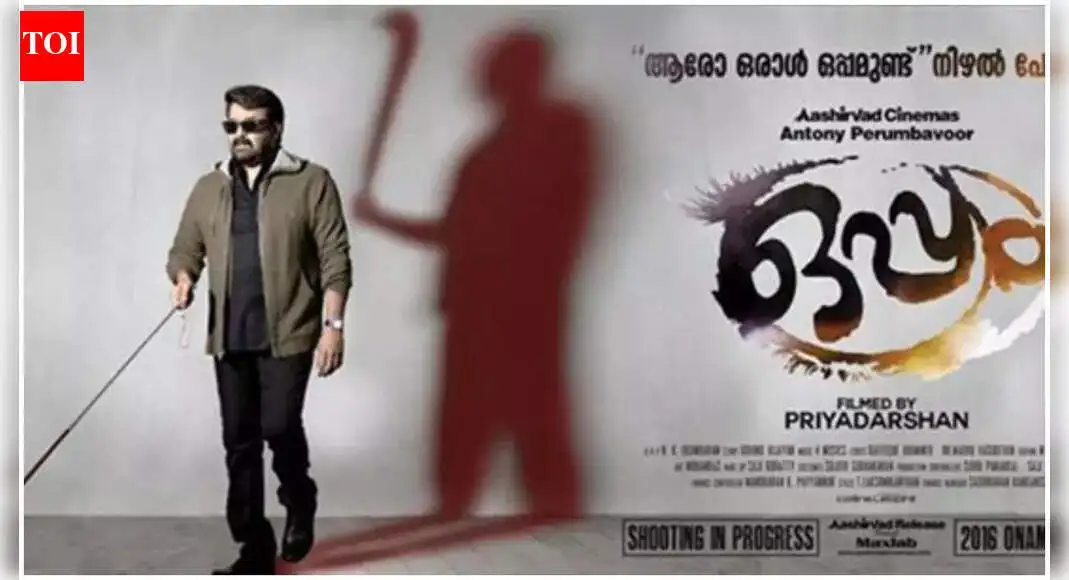
'Oppam' Photo Controversy (April 2025): This controversy involved the alleged unauthorized use of an individual's image in the film 'Oppam'. While not a criminal case of cheating, it highlights issues of consent and image rights within filmmaking. Prinzy Francis and Saji Joseph, key figures in this instance, expressed frustration over the filmmakers' alleged denial and delay in addressing the issue, drawing parallels to other film production disputes. The court's order for the removal of the image suggested a judicial recognition of the complaint.
Key Concern: Use of an individual's image without consent.
Outcome: Court order for removal of the image.
Significance: Raises questions about filmmakers' responsibilities regarding intellectual property and individual rights.
Interference in Script Selection Rumors (May 2025): Antony Perumbavoor addressed claims of him influencing Mohanlal's script choices. He described the situation as "half true, half false," indicating a degree of involvement, particularly in films produced under Aashirvad Cinemas. This sheds light on the dynamics between producers and stars in project selection, a common point of discussion in the industry.
Nature of Allegation: Producer influencing actor's script choices.
Perumbavoor's Response: Partially true, indicating some level of collaboration and producer input.
Implication: Highlights the close working relationship and potential influence producers wield.
Industry Disputes and Public Stances (February 2025): Both Mohanlal and Antony Perumbavoor have been publicly involved in industry disputes. In one instance, Mohanlal publicly supported Antony Perumbavoor amidst a dispute over a proposed film strike. This involved Perumbavoor criticizing senior producer G Suresh Kumar's remarks about the industry's financial state. Mohanlal's social media endorsement of Antony's stance ("We can always stand with cinema") underscored their solidarity and influence within the film fraternity.
Context: Disputes regarding film strikes and industry financial health.
Mohanlal's Action: Publicly backed Antony Perumbavoor.
Impact: Demonstrated unity within a powerful producer-actor duo and influenced industry discourse.
IT Scrutiny (April 2025): Antony Perumbavoor faced scrutiny from the Income Tax Department regarding financial transactions related to the films 'Lucifer' and 'Marakkar: Arabikkadalinte Simham'. Queries extended to overseas rights and actor payments, including a specific ₹2.5 crore transfer to Mohanlal in Dubai. This highlights the financial complexities and potential for tax-related inquiries in large-scale film productions.
Issuing Authority: Income Tax Department.
Subject: Financial transactions for 'Lucifer' and 'Marakkar'.
Specific Inquiry: ₹2.5 crore transfer to Mohanlal in Dubai.
Significance: Indicates increased oversight on film industry finances.
These varied incidents, while distinct from the criminal allegations, paint a picture of a prominent producer-actor duo who, by virtue of their significant standing in the industry, often find themselves at the center of discussions, disputes, and official inquiries.
Read More: Indian Film Guild Warns Actors About Last-Minute Project Exits
The Amicus Curiae's Role: Upholding Fairness in Absence
The appointment of an amicus curiae in the recent case is a crucial procedural detail that speaks volumes about the judicial process. When a petitioner passes away, as K.A. Devarajan did, the case could potentially languish or be dismissed on technical grounds. However, the court’s decision to appoint an independent legal expert to review the arguments and present a balanced perspective is a testament to its commitment to ensuring a just outcome.
The amicus curiae's role is not to represent either party but to assist the court by providing objective legal analysis and ensuring all angles are considered. In this specific instance, the amicus curiae would have meticulously examined the evidence presented by the petitioner during the initial stages and any counter-arguments or submissions made by the defense (Mohanlal and Antony Perumbavoor).
Read More: Tom Hardy Exits 'MobLand' Film, Production Stops, Millions Lost
| Aspect | Details |
|---|---|
| Purpose | To assist the court by providing objective legal advice and analysis. |
| In this Case | Review arguments in the absence of the deceased petitioner. |
| Function | Ensure a fair and thorough examination of the case before dismissal. |
| Implication | Demonstrates judicial diligence in ensuring justice even in challenging circumstances. |
The fact that the court still proceeded to observe that the allegations lacked evidence, even after the amicus curiae's review, strongly suggests that the petitioner's case, from its inception, had fundamental evidentiary gaps.
"To ensure a fair judicial process in the absence of the petitioner, the court appointed an amicus curiae to review the arguments before the final dismissal."
The Cost of Delay: Justice, Time, and Industry Reputation
This 2007 dispute dragging on until 2024, nearly two decades, raises serious questions about the efficiency of the judicial process in handling such cases. While the courts are often overburdened, the prolonged pendency of a criminal case can have several negative repercussions:

Strained Resources: Such long-drawn cases consume valuable judicial time and resources that could be allocated to newer matters.
Uncertainty and Stress: For the accused, the constant threat of a legal battle, even with weak allegations, can cause significant stress and reputational damage, irrespective of the eventual outcome.
Erosion of Trust: Delays in justice can, unfortunately, lead to a perception that the system is slow or inefficient, potentially impacting public trust.
Impact on Industry: Such cases, even if ultimately dismissed, can cast a shadow on the reputation of individuals and the industry as a whole, potentially deterring investors or collaborators.
It is crucial to ask: Why did this case take so long to reach a conclusion where the evidence was deemed insufficient? Were there procedural bottlenecks? Could alternative dispute resolution mechanisms have been explored earlier?
While the court's final verdict is based on the lack of evidence, the sheer longevity of the case warrants reflection. The industry thrives on reputation and timely execution. When legal entanglements stretch for years, it speaks to systemic challenges that need addressing.
The extended duration of the 2007 case highlights potential inefficiencies in the legal process, causing prolonged uncertainty and impacting the reputation of those involved, even in cases with ultimately insufficient evidence.
Conclusion: A Dismissal, Not a Declaration of Innocence
The Kozhikode court's dismissal of the criminal revision petition against Mohanlal and Antony Perumbavoor signifies that, legally, they are cleared of the charges related to the 2007 film dispute. The court’s observation about the lack of necessary evidence is the bedrock of this decision. The passing of the petitioner, K.A. Devarajan, and the subsequent appointment of an amicus curiae further proceduralized the resolution.
However, it is important to distinguish between a legal exoneration and an absolute declaration of factual innocence in the public sphere. The court's decision is based on the evidence presented and the legal framework, not necessarily a deep dive into the complete narrative of events from 2007. The core question remains: What transpired during that 2007 film project that led to such serious allegations and a nearly two-decade-long legal battle?
The fact that the allegations were brought before the court and proceeded through multiple stages indicates that there was a prima facie case, or at least a perception of one, at some point. The subsequent lack of sufficient evidence to sustain a criminal trial could stem from various factors:
Initial misunderstanding or miscommunication.
Inability to prove intent to deceive in a court of law.
Death of key witnesses or loss of crucial documentation over time.
Weaknesses in the initial complaint or evidence gathering.
While Mohanlal and Antony Perumbavoor can now put this chapter behind them legally, the prolonged nature of the dispute and the surrounding controversies serve as a reminder of the complexities within the film industry. It underscores the need for robust contractual agreements, clear communication, and potentially, more streamlined dispute resolution mechanisms to prevent such protracted legal battles in the future. The industry, and indeed the justice system, would benefit from a thorough examination of how such cases can be resolved more efficiently and equitably.
Sources
The Hindu: https://www.thehindu.com/news/national/kerala/actor-mohanlal-producer-antony-perumbavoor-exonerated-in-2007-film-dispute-case/article70602869.ece
Mathrubhumi (Malayalam): https://www.mathrubhumi.com/movies-music/news/mohanlal-antony-perumbavoor-cheating-case-dismissed-kozhikode-court-verdict-r6tulkbm
Times of India: https://timesofindia.indiatimes.com/entertainment/malayalam/movies/news/mohanlal-and-antony-perumbavoor-in-oppam-photo-controversy-heres-what-happened/photostory/119925125.cms
Indian Express: https://indianexpress.com/article/entertainment/malayalam/antony-perumbavoor-responds-to-claims-of-interfering-in-mohanlals-script-selection-9998171/
Onmanorama: https://www.onmanorama.com/entertainment/entertainment-news/2025/02/15/mohanlal-backs-antony-perumbavoor-producers-malayalam-cinema.html
Cinema Express: https://www.cinemaexpress.com/malayalam/news/2025/Feb/14/mohanlal-backs-antony-perumbavoor-amidst-industry-dispute-over-kerala-film-strike
Kerala Kaumudi: https://keralakaumudi.com/en/news/news.php?id=1427986
India Today: https://www.indiatoday.in/movies/regional-cinema/story/empuraan-producer-antony-perumbavoor-prithviraj-sukumaran-mohanlal-controversy-2702132-2025-04-01
Mathrubhumi English: https://english.mathrubhumi.com/movies-music/news/cheating-case-against-mohanlal-antony-perumbavoor-postponed-to-september-a63f3366
Asianet Newsable: https://newsable.asianetnews.com/kerala-news/i-t-department-issues-notices-to-producer-antony-perumbavoor-seeks-clarification-over-film-transactions-dmn-sua3ro