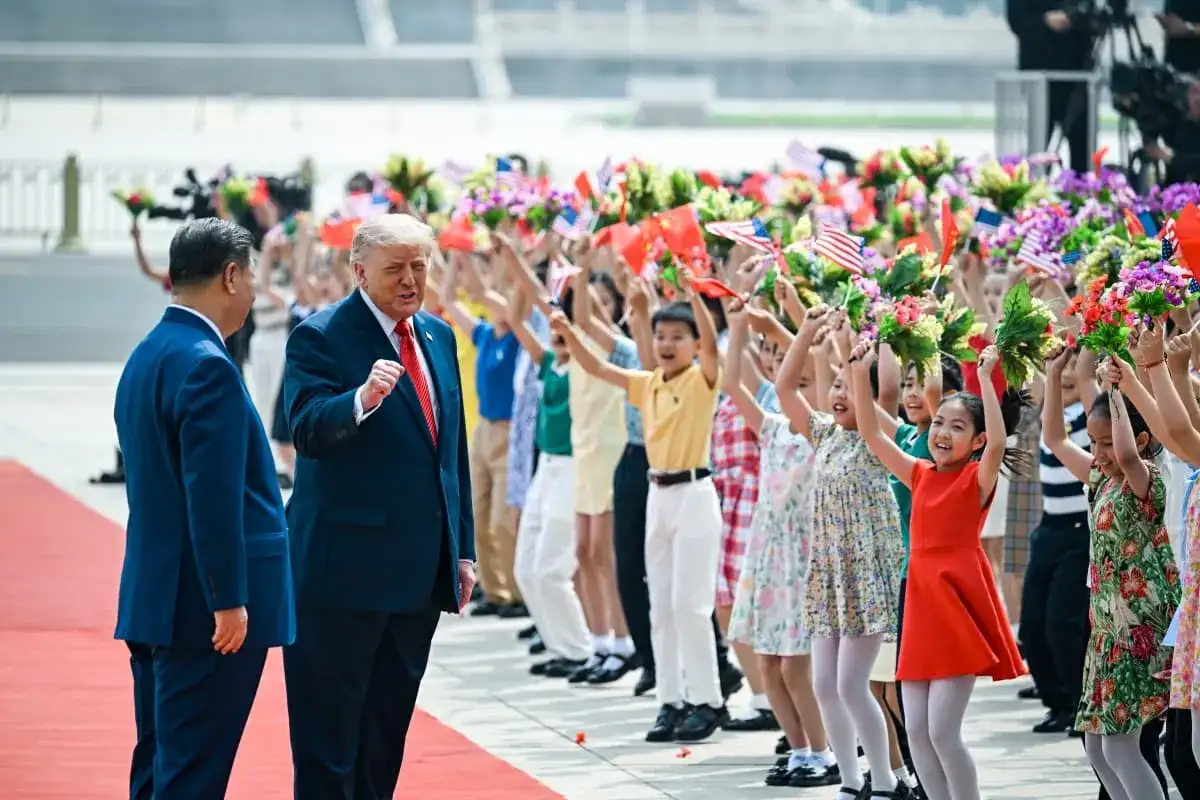
Beijing Summit Concludes with Trade Realignments, Strategic Posturing on Hormuz
The high-stakes meeting between President Trump and President Xi Jinping in Beijing has concluded, with both leaders characterizing the talks as "very successful." Despite pronouncements of progress, concrete, new multi-billion dollar deals remained conspicuously absent, suggesting a focus on managed expectations rather than outright breakthroughs. Discussions reportedly centered on enhancing economic cooperation, including expanded market access for U.S. companies in China and increased Chinese investment in American industries.

Key developments include firmed-up agreements on Chinese purchases of U.S. agricultural products, specifically soybeans. Additionally, both sides concurred that the 'Strait of Hormuz must remain open', a shared stance on restoring energy flows through the critical waterway, particularly in the context of the ongoing U.S. conflict with Iran.

Economic Dialogues and Strategic Echoes
While Trump told reporters that tariffs were not a subject of discussion, contrasting reports suggest potential discussions around extending a one-year truce on tariffs and the export of Chinese rare earth metals. The U.S. side also claimed deals were struck on American oil, soybeans, and Boeing jets, though the specifics and scale of these transactions were not immediately detailed.
Read More: Rahul Gandhi Foreign Trips Questioned by Minister for Protocol Breach

China's Foreign Minister, Wang Yi, confirmed that Xi would visit the White House in the autumn, signaling a continued engagement between the two nations. The summit also touched upon the volatile situation concerning Taiwan, with reports indicating Trump did not directly engage with Xi's remarks on the matter.

Background and Divergent Narratives
This summit follows a period of considerable tension, marked by Trump's imposition of tariffs on Chinese goods, leading to retaliatory measures from Beijing. China, in turn, has reportedly leveraged its dominance in rare earth minerals and diversified its trade partners to mitigate reliance on the U.S.
Read More: Bill Maher: Xi Jinping Outsmarted Donald Trump During China Summit
Notably, past engagements, such as one in October 2025, saw agreements on easing trade war measures, including tariff reductions and commitments on rare earth exports. China's past actions also involved suspending export restrictions on rare earth materials for a year. However, deeper strategic issues, such as China's access to high-end U.S. chips, a crucial element in technological competition, appear to remain unresolved. The presence of a high-profile business delegation accompanying Trump underscored the economic dimension of the summit, yet the absence of major new financial commitments from this delegation has drawn attention.