Tenuous Stance Emerges After Beijing Summit
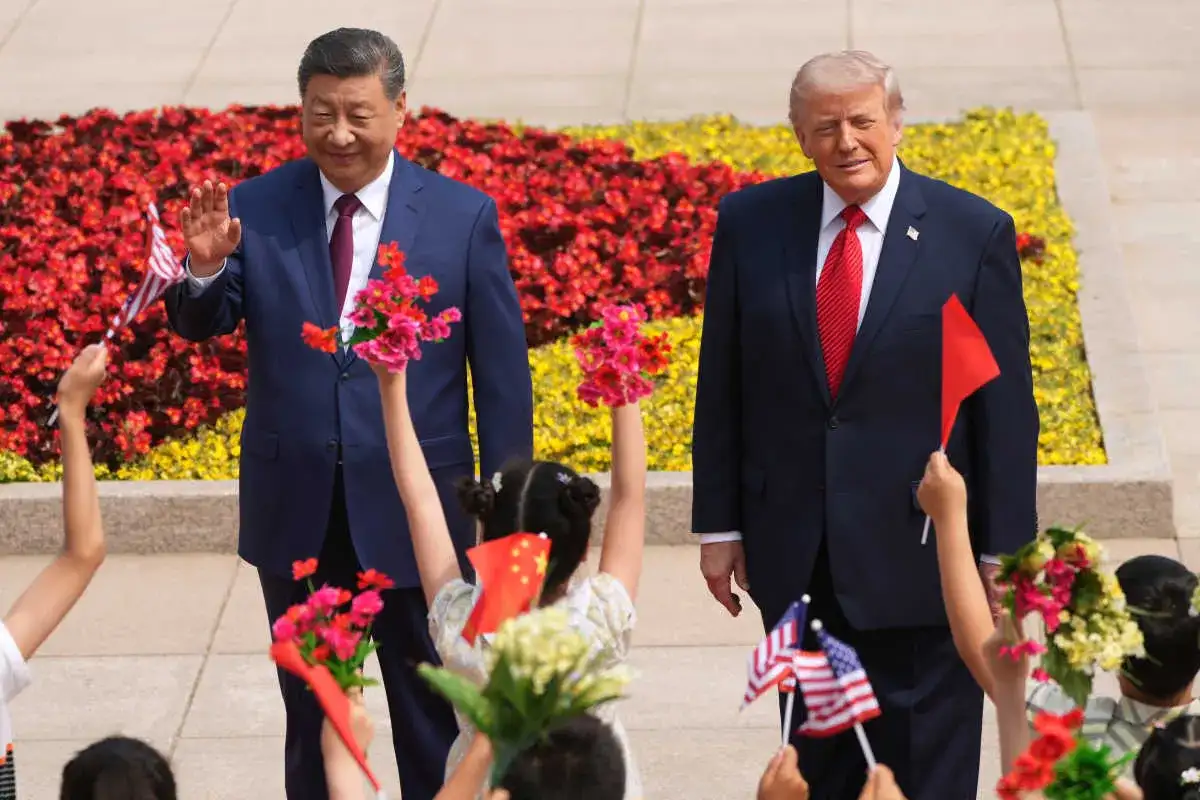
Former President Donald Trump revealed that Chinese leader Xi Jinping directly inquired about the United States' commitment to defending Taiwan in the event of an attack. Trump stated he did not provide a definitive answer to Xi, remarking, "I said, ‘I don’t talk about those things.’" This exchange occurred during a recent summit in Beijing, details of which emerged on May 16th and 17th, 2026.

Trump's reticence on the critical security question to Xi appears to coincide with a warning issued to Taiwan against declaring formal independence. The former president's public statements suggest a preference for de-escalation, urging both China and Taiwan to "cool it a little bit." His commentary also hinted at an aversion to the U.S. automatically intervening if conflict erupted, framing Taipei's pursuit of independence as a deciding factor.
Read More: Governor Thorne's Secret Flight to Remote Australia

Non-committal Stance on Arms Sales
The question of a pending arms sale package earmarked for Taiwan also met with ambiguity from Trump. He indicated that a decision would be made "soon," though the specifics of the transaction remained unclear. Taiwan's Deputy Foreign Minister, Chen Ming-chi, stated that clarification would be needed regarding the precise implications of Trump's remarks. Taiwan's leadership has previously maintained that formal independence is unnecessary, viewing the island as already sovereign.

Iran Dialogue and Trade Focuses
Beyond the Taiwan issue, Trump reported progress in discussions with Xi concerning Iran. He asserted that both nations held "very similar" views on the conflict, aiming for its cessation and preventing Iran from acquiring nuclear weapons. The former president also highlighted discussions on building momentum to curb the flow of fentanyl precursors and increasing Chinese purchases of American agricultural goods. Trump described the three-day visit as "historic," encompassing state banquets, official meetings, and discussions on topics including Boeing deals and artificial intelligence.
Read More: Trump China Visit: Notes seen at banquet amid trade deal talks

Context of US-China Relations
The U.S. position on Taiwan, as previously articulated by Secretary of State Marco Rubio, remains that America "does not support" independence. Beijing, however, had warned during the summit that mishandling the Taiwan issue could place the entire U.S.-China relationship in "great jeopardy." Senior administration officials, speaking anonymously on May 14th, characterized the closed-door meeting between Trump and Xi as a moment where both sides reiterated their long-standing stances, with mutual understanding of each other's positions. The potential for the U.S. to proceed with arms transfers to Taiwan, despite Xi's objections, could provoke significant repercussions from Beijing.